Black Magic Attacks Display Clear Symptoms and Practical Aura Cleansing Builds Strong Kavach
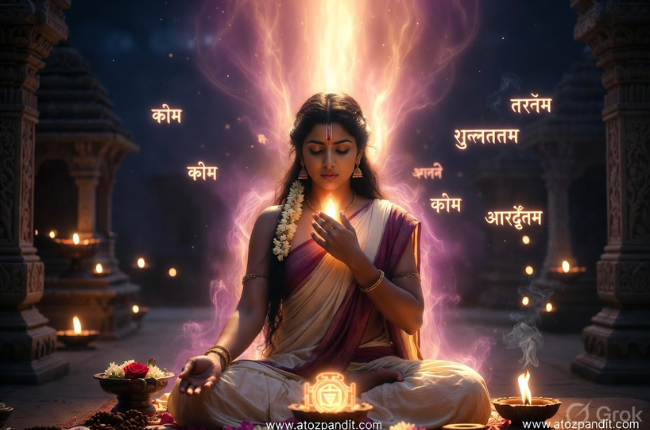
Every family knows that conversation. The one that happens after the lights are off, when everyone else is asleep. Good effort keeps failing without a clear reason. The doctor finds nothing wrong. The astrologer says the chart looks stable. But something invisible presses down — on health, on money, on the quiet warmth that a home should carry.
We do not encourage panic here. Nor do we dismiss this concern. What we have seen, across many years of guiding Indian families through exactly these situations, is that the real difficulty is almost never a shortage of remedies. It is the confusion of not knowing what you are actually facing.
Nazar, Muth, Kritrim Dosha, and full Abhichara are four entirely different experiences. They carry different origins, different symptom patterns, and require completely different responses. Treating the wrong one — which happens far more often than families realise — costs months of misdirected effort and growing despair.
This guide starts where every proper Vedic assessment should begin: clear identification. Then it moves through a practical aura cleansing protocol and a genuine method for building a layered Kavach. Not a product. Not a quick fix. A living protection rooted in classical tradition, built to hold.
The Three Tiers of External Negative Energy — Why Getting This Right Saves You Months
Classical Vedic tradition does not treat all external negative influence as one category. There is a precise hierarchy — and understanding it correctly is what determines which remedy your family actually needs to begin with. Nazar, Muth or Kritrim Dosha, and full Abhichara are three entirely distinct tiers that affect a person's aura and life circumstances in very different ways.
Nazar is the most common experience. It is an involuntary discharge of auric negativity from a jealous or intensely admiring person — often someone with no conscious intention to harm. It disturbs broadly: sleep, appetite, emotional stability, and minor health. It does not collapse a single life domain with surgical precision.
Muth and Kritrim Dosha are deliberate. A ritual object or substance, charged with specific intent, is placed near the target's home entrance, food, or belongings. The fingerprint is specificity — one area of life collapses sharply, usually after a particular visit, gift, or ceremony. Career only. Marriage only. Finances only. That targeted collapse separates it from general bad luck.
Full Abhichara — as classical Atharva Veda and tantrik lineages describe it — is the rarest tier. Most families fearing Abhichara are actually experiencing Muth. That single correction alone saves the wrong months.
Pandit's Tip
Before reaching for any remedy, pause and ask one question: Did this disruption begin after a specific event — a visit, a received gift, a particular function? And did one area of life collapse while the others held steady? If yes, Muth deserves your first attention. If the disruption is broad and gradual with no clear starting event, Nazar is the more honest starting point. Our rishis always said — name the problem correctly first. The right naming is itself the first act of protection.
Physical and Emotional Symptoms That Point to Intentional Negative Energy
What are the signs that someone has done black magic on you? The honest answer is that no single symptom is definitive on its own. A responsible Vedic assessment looks for a cluster of experiences that appeared together, often after a specific trigger event.
As described in classical tradition and observed across many family consultations, sustained external negative energy tends to manifest in recognisable patterns. Unexplained fatigue that does not improve despite rest and healthy diet is often the first signal. Disturbing or threatening dreams that repeat, particularly around Amavasya and Purnima nights. A strange, heavy reluctance to enter one's own home — as if the familiar walls have turned indifferent.
Behaviorally, the person withdraws from social contact, loses motivation without any clear reason, and experiences sudden irrational anger or grief. Relationships that were previously stable begin developing fractures over minor misunderstandings. Financial flow disrupts without a traceable business or market cause.
Here is a detail most articles miss entirely: symptoms often worsen sharply near a specific object — a gift recently received, a piece of jewellery, or an item found near the home threshold. If setting that object aside brings even slight relief, this observation carries meaning.
For families where the pattern also includes unusual physical sensations, altered sleep behaviour, or sudden personality shifts, a closer look at Pisach Badha physical signs and Vedic extraction protocols helps distinguish what may need a different remedy path entirely.
When fatigue, disturbed dreams, and relationship fractures cluster together after one specific life event — your attention is correctly placed.
Your Kundli Can Reveal Susceptibility — The 6th House, Moon and Badhakesh Signals
Can a Kundli show susceptibility to black magic? Yes — and this is one of the most consistently overlooked areas in modern Jyotish guidance. Classical texts indicate that a person's horoscope essentially represents their natural aura field. Certain planetary configurations weaken that field, making specific individuals more open to external negative energy than others around them.
The Three Indicators to Read First
The Moon governs the mind and emotional boundary. When Moon sits weakened — debilitated, closely conjunct Rahu or Ketu, or placed in the 6th, 8th, or 12th house without a benefic aspect — the natural psychic boundary becomes thinner. External negative intent finds entry more easily through this gap.
The 6th house and its lord govern enemies, interference, and obstruction. Heavy malefic influence here — especially from Rahu, Mars, or a debilitated Saturn — creates conditions that classical Jyotish lineages associate with sustained external attacks.
The Badhakesh — the lord of the obstruction house, which changes based on your specific Lagna — is the most targeted indicator. When the Badhakesh aspects or conjuncts the 1st house or Lagna lord, classical texts note an elevated susceptibility to invisible obstruction.
For a full reading of how Rahu and Ketu specifically modify these patterns in your chart, the guide on Rahu-Ketu effects and remedies in your Kundli offers a natural next step.
Knowing your Kundli's natural protection level is not about fear. It is about knowing where to strengthen before symptoms ever appear.
Kritrim Dosha vs Muth vs Abhichara — The Classical Three-Tier Distinction Families Almost Never Hear About
This is the section where the real gap in most online content sits. Our Vedic granthas, particularly within the tantrik and Agama traditions, treat these three categories with clinical precision. Bundling them into one vague term — "black magic" — is exactly what leads families to remedies that address the wrong level.
Kritrim Dosha is perhaps the most misunderstood. The word itself translates roughly to "artificially created affliction." It arises when a ritual practitioner with limited knowledge uses a basic tantrik method to generate an energetic disturbance — without the deeper entity invocation that Abhichara requires. The effect is real but comparatively surface-level. A Navgraha Shanti, as described in classical tradition, combined with specific Shani or Rahu-related upaya, often addresses this tier effectively.
Muth is more specific still. This form involves the deliberate preparation of a material object — cloth, a lemon, ash, or specific herbs — charged with mantric intent and placed to affect the target through proximity or ingestion. The object acts as a carrier. Classical texts describe this as one of the more commonly used forms because it requires a lower level of tantrik initiation to execute.
Full Abhichara, as described in Atharva Veda, involves the invocation of a specific Shabar entity and is performed over sustained ritual sessions. The results are more severe and harder to dislodge without corresponding expertise.
The treatment for each tier is different. This is why reading the tier correctly matters more than the speed of any remedy.
The Step-by-Step Aura Cleansing Protocol — What Classical Vedic Tradition Recommends
What is the best home remedy to cleanse the aura from black magic? The most effective aura cleansing, as described in traditional Vedic practice, is not a single act — it is a three-phase protocol applied over seven consecutive days. The individual steps are simple. The discipline of consistency is what gives them their effect.
Phase 1 — Purification of Body and Space (Days 1–3): Begin each morning before sunrise with a bath that includes rock salt (sendha namak) dissolved in the water. This is a practice described across multiple regional Indian traditions — from South Indian temple purification customs to North Indian Shaiva lineages. While bathing, hold the clear intention of releasing all accumulated negativity. After the bath, burn camphor in every room of the home — moving clockwise from the entrance.
Phase 2 — Mantra Anchoring (Days 4–5): On Days 4 and 5, add 108 repetitions of Hanuman Chalisa — specifically at sunrise or at dusk when an oil lamp is lit. As classical Jyotish texts note, the Hanuman mantra acts as a sound-based auric seal.
Phase 3 — Sealing and Releasing (Days 6–7): On the final two days, take a fresh lemon, roll it gently over your body from head to foot, and dispose of it outside the home. Sprinkle Gangajal at the four corners of each room.
As our Vedic granthas have long held, the sincerity of this practice shapes what unfolds more than the exact materials used.
Quick Remedy Box
Materials needed: Rock salt, camphor tablets, one fresh lemon, Gangajal, pure ghee diya When to begin: Start on a Tuesday or Saturday at sunrise Duration: Seven consecutive days without interruption Core intention: Each step should be performed with quiet focus on releasing, not on fear A reminder from classical tradition: The protocol opens the door — walking through it with genuine devotion is what creates the shift.
How to Build a Lasting Kavach — Not a Single Product but a Living System
Most families who approach protection against black magic end up purchasing one item — a yantra, a rudraksha, or a specific thread. This is understandable. But classical Vedic tradition never describes protection as a single object. It describes it as a system — layered across the body, the home, and the daily practice.
A genuine Kavach operates at three levels simultaneously.
Body-Level Protection: A properly energised rudraksha — typically a 5-mukhi for general protection or an 8-mukhi if Rahu is identified as the weakest point in the Kundli — should be worn with a specific mantra recitation performed at the time of wearing each morning. It is not the object alone that protects. It is the daily conscious activation of that object.
Home-Level Protection: Rock salt bowls placed in the four corners of the main living area, changed every new moon (Amavasya) night. A Tulsi plant at the home entrance, kept healthy and watered daily with attention. And a small Hanuman yantra or Narsimha yantra placed facing the entrance — as described in the Narsimha protection tradition for shielding against rivals and fear.
Practice-Level Protection: This is what most people skip. Daily recitation of even 11 repetitions of a protective mantra — Bajrang Baan or the Maha Sudarshana mantra — sustained over weeks, builds what classical texts describe as a standing auric wall. It cannot be installed. It must be built.
Regional Wisdom Note(End Remedy — Rotating Format #6)
In North Indian tradition, a black thread tied on Thursday after Hanuman puja is the standard wrist-level Kavach. South Indian Shaiva practice more commonly uses vibhuti (sacred ash) applied at the throat and forehead as a daily auric seal. Tantrik Kerala traditions recommend specific coconut-based rituals at the home threshold on Fridays. These variations reflect the same classical understanding — that protection must be applied at the body's vulnerable entry points. Neither approach is wrong. Both reflect the same wisdom through a different regional voice.
The AtoZPandit Framework — Understanding the Difference Between Protection and Removal
This is a distinction most families learn only after months of confusion. Protection and removal are not the same process. They require different rituals, different timing, and — in cases beyond Nazar — the involvement of an experienced Vedic practitioner.
Protection, as described above, is what you build before or alongside any active attack. It raises your natural auric resistance so that future negative intent finds less entry. The Kavach system works at this level.
Removal is what addresses energy that has already settled. Think of it this way: you can repaint a wall and strengthen it all you like, but if there is a hairline crack in the foundation, the paint alone does not fix the crack. Removal works at the foundation level.
For Nazar, home-based removal is generally sufficient — the salt bath protocol, camphor cleansing, and consistent mantra practice over seven to fourteen days, as our Puranas and regional folk traditions both describe.
For Muth and Kritrim Dosha, the classical approach involves a Homa or structured puja — specifically the Sudarshana Homa, Bagalamukhi puja, or a Navgraha Shanti performed by a knowledgeable pandit, as described in our Agama texts. The timing matters. Amavasya nights and specific nakshatra windows carry heightened ritual efficacy for removal work.
At AtoZPandit, our collective guidance always begins with this framework question: Are we building protection, performing removal, or both simultaneously? The answer shapes the entire remedy path. Everything depends on personal faith, sincere effort, and the grace of the chosen deity — not on the ritual alone.
For families dealing with Muth symptoms linked to financial collapse, the Vedic Kavach and spiritual shield guide offers a detailed framework for the next layer of protection.
When Home Remedies Are Not Enough — What Classical Guidance Says About Seeking Expert Help
How long does it take for black magic to fully clear after remedies are started? The honest answer is that it depends entirely on the tier of the attack and the consistency of the practice. Nazar-level disturbances often ease within one to two weeks of sincere daily practice. Muth and Kritrim Dosha can take four to six weeks of structured ritual work.
But there are clear signals that home-level effort has reached its useful limit.
When symptoms do not shift at all after fourteen days of sincere practice — the fatigue remains, the dreams continue, and the specific life domain stays collapsed — this is the first signal. When a new symptom appears after you have begun the remedy (which sometimes indicates the negative energy is being disturbed but not fully cleared), this is the second.
When there is an identifiable physical object involved — a cloth bundle, a buried item, or something found hidden within the home — classical texts are clear that this requires a practitioner's intervention. Handling charged ritual objects without the corresponding counter-mantra knowledge can sometimes redirect the energy rather than neutralise it.
Seeking expert guidance is not a sign of defeat. Our granthas show us the path. Walking it sincerely — and knowing when the path needs a guide — is always our own choice.
Protecting Your Home's Energy Field From the Inside — The Daily Practice Layer
The most overlooked layer of sustained protection is the simplest one. It requires no special materials, no specific auspicious date, and no large expenditure. It requires only consistency — the one thing that most modern households find hardest to maintain.
Our Vedic tradition describes the home as a living energy field — what we might understand as a collective auric body shared by the family that lives within it. This field is maintained daily through small, repeated, intentional acts. The morning lamp lit before the family deity. The Tulsi plant watered with quiet attention. The brief mantra recitation at the home threshold as the first family member leaves for the day.
These are not superstitions. They are the daily maintenance of the home's standing energy signature. A home with a consistent daily ritual rhythm carries a natural resistance that makes deliberate external negative intent far harder to establish.
Two habits stand above the rest in classical texts. First: never allow the home to fall into complete darkness and silence during the dusk hour (the sandhya period between approximately 6 and 7 PM). This is the window when the home's energy boundary is most porous. A single lit diya during this hour maintains the seal. Second: salt dissolved in the floor-wash water — practiced across Tamil, Bengali, and Rajasthani household traditions alike — regularly clears accumulated negative auric deposits from the space.
For Nazar-specific home protection linked to neighbours or frequent visitors, a deeper read of the Nazar and black energy protection guide shows how to extend this protection to your home's social boundary as well.
Simple. Consistent. Sincere. These three qualities are what sustain any Kavach at the home level.
Frequently Asked Questions
Can I perform the aura cleansing protocol during Navratri or any specific month? Classical tradition considers both Navratri periods — Chaitra and Ashwin — as particularly supportive for purification work. As our granthas teach us, the Devi energy active during Navratri adds a natural amplifying quality to cleansing rituals. Any day you begin with sincere intent, however, carries its own merit.
Is it safe to try Muth removal at home without a pandit? For Nazar, home protocols are entirely appropriate. For Muth and Kritrim Dosha, classical texts advise caution — particularly when a physical ritual object may be involved. The risk of partial clearing without full neutralisation is well-documented in traditional guidance. Consulting an experienced practitioner is the safer path for these tiers.
Does wearing a rudraksha alone provide Kavach? As classical Vedic tradition describes it, a rudraksha supports protection when combined with daily mantra activation. Worn passively without practice, its effectiveness remains limited. The object and the discipline work together.
Can Nazar come from family members who genuinely love you? Yes. This is one of the most important points our elders understood well. Nazar is involuntary. A loving grandmother admiring a new baby with intense focus can unintentionally cause Nazar. Intent and outcome are separate in this tradition.
What role does diet play during the aura cleansing protocol? Sattvic diet — avoiding non-vegetarian food, garlic, and onion during the seven-day protocol — is described in classical tradition as supporting the clarity of the internal energy field. It is not mandatory, but it supports the process sincerely.
Can I perform the aura cleansing during Navratri? Classical tradition considers both Navratri periods as naturally supportive for purification. As our granthas teach, the Devi energy active during this time adds an amplifying quality. Any day begun with sincere intent, however, carries its own merit.
Is Muth removal safe to attempt at home without a pandit? For Nazar, home protocols are fully appropriate. For Muth and Kritrim Dosha — particularly where a physical ritual object may be involved — classical texts advise involving an experienced practitioner. Partial clearing without full neutralisation can sometimes redirect rather than remove the energy.
Does a rudraksha alone provide a complete Kavach? As classical tradition describes it, a rudraksha supports protection when combined with daily mantra activation. Worn passively without practice, its contribution remains limited. The object and the discipline are intended to work together.
Can Nazar come from a family member who loves you? Yes — and this is one of the most important points our elders understood. Nazar is involuntary. A loving grandmother admiring a newborn child with intense feeling can unintentionally cause it. Intent and outcome are separate in this tradition.
What role does diet play during the cleansing protocol? Sattvic diet during the seven-day protocol — avoiding non-vegetarian food and pungent ingredients — is described in classical guidance as supporting the clarity of the energy field being cleansed. It is not mandatory but it supports the process honestly.
Conclusion
The fear that surrounds this topic is often greater than the problem itself. What families need most is not more remedies — it is a clear framework that tells them what they are facing, what tier it sits at, and what the appropriate response looks like. Nazar, Muth, Kritrim Dosha, and Abhichara each have their own classical response. The aura cleansing protocol described here, combined with a layered Kavach practice, covers the most common situations honestly and completely. Everything beyond that depends on personal sincerity, sustained practice, and the grace of the divine — nothing more, and nothing less.
If your family is experiencing sustained disruption and you need a clear assessment of the tier you are facing, reach out to AtoZPandit for a consultation with a verified Vedic practitioner who will guide you with honesty and care. We are here to help you identify the right path — not to promise outcomes, but to walk alongside you through the process.