
Gemstone Guide for Rashi and Lagna Which Stone Brings Wealth and Protection
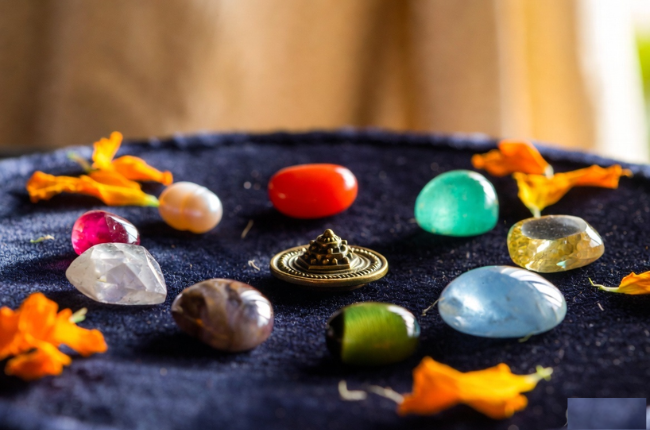
Someone in the family buys a blue sapphire because a friend told them it worked wonders for career. Three months later, their job is gone, the marriage is under strain, and a health issue that was manageable has become complicated. They go back to the same friend, who says: maybe the stone was not real. So they buy a certified one. The situation does not improve. Nobody thinks to ask whether the stone was right for that person's chart in the first place.
This is the most common and most avoidable harm in the world of Vedic gemstone advice. A blue sapphire is Saturn's stone. For a person whose Lagna chart makes Saturn a functional malefic — a planet that works against their core life interests — wearing Saturn's stone amplifies exactly the energy that their chart needs less of. The stone was genuine. The certification was valid. The prescription was wrong.
Gemstone selection in the classical Vedic tradition — documented in the Ratna Pariksha and endorsed through the Brihat Parashara Hora Shastra — is not about lucky colours or popular associations with wealth and protection. It is a precise science of matching the planet's energy, as expressed through its stone, to the specific planetary needs of the individual's birth chart. The Rashi gives one layer of guidance. The Lagna gives the deeper, more authoritative layer. The relationship between the two — and the yoga-karaka planet that emerges from that reading — determines which stone genuinely supports and which one harms.
This article covers both layers completely — the Rashi-based and Lagna-based frameworks, how to identify your yoga-karaka planet, which stones are safe to wear without a full chart reading and which absolutely require one, how to activate and wear a stone correctly, and what the classical tradition says about the stones that carry the highest risk when prescribed incorrectly.
Rashi-Based Gemstones — The First Layer of Selection
The Rashi-based system assigns a primary gemstone to each of the twelve zodiac signs based on the planet that rules that sign. This is the system most people encounter first — it is the most accessible layer of gemstone guidance and the correct starting point for anyone who does not yet have a full birth chart reading.
The Rashi system works through the concept of the ruling planet (Rashi Lord). Every zodiac sign is governed by a planet, and wearing that planet's associated stone strengthens the overall energy of the sign — supporting the qualities that sign naturally seeks to express.
Aries and Scorpio — Mars Rules Both
Both Aries (Mesh) and Scorpio (Vrishchik) are ruled by Mars (Mangal). The primary gemstone is Red Coral (Moonga) — set in copper or gold, worn on the ring finger of the right hand on a Tuesday. Red Coral strengthens courage, physical energy, decisiveness, and the capacity for sustained action. It supports careers in medicine, military, police, sports, and engineering. It is one of the safer stones in the Navaratna system for its own Rashi natives — but even here, the Lagna chart must confirm that Mars is a functional benefic before the stone is adopted for a sustained period.
Taurus and Libra — Venus Rules Both
Both Taurus (Vrishabh) and Libra (Tula) are ruled by Venus (Shukra). The primary gemstone is Diamond (Heera) or its classical substitute White Sapphire (Safed Pukhraj) or Zircon — set in silver or platinum, worn on the middle or ring finger of the right hand on a Friday. Diamond strengthens beauty, creativity, luxury, relationship harmony, and material comfort. It supports careers in the arts, hospitality, fashion, finance, and any beauty or pleasure-related field.
Gemini and Virgo — Mercury Rules Both
Both Gemini (Mithun) and Virgo (Kanya) are ruled by Mercury (Budha). The primary gemstone is Emerald (Panna) — set in gold or silver, worn on the little finger of the right hand on a Wednesday. Emerald strengthens intelligence, communication, analytical ability, and business acumen. It is one of the most consistently beneficial stones for its own Rashi natives and is particularly recommended for professionals in commerce, writing, teaching, and technology.
Cancer — Moon Rules
Cancer (Karka) is ruled by the Moon (Chandra). The primary gemstone is Pearl (Moti) or Moonstone — set in silver, worn on the little finger or ring finger of the right hand on a Monday. Pearl strengthens emotional stability, intuition, the relationship with the mother, and domestic harmony. It is among the gentlest and safest stones in the Navaratna system — its effects are rarely harsh even when worn without a full chart reading, making it one of the few stones that can be adopted based on Rashi alone.
Leo — Sun Rules
Leo (Simha) is ruled by the Sun (Surya). The primary gemstone is Ruby (Manik) — set in gold, worn on the ring finger of the right hand on a Sunday. Ruby strengthens authority, confidence, vitality, career recognition, and the father relationship. It is a powerful stone with significant uplift potential for its native — and a stone that requires confirmation from the Lagna chart before wearing, as the Sun's role as a functional benefic or malefic varies considerably across Lagnas.
Sagittarius and Pisces — Jupiter Rules Both
Both Sagittarius (Dhanu) and Pisces (Meen) are ruled by Jupiter (Brihaspati). The primary gemstone is Yellow Sapphire (Pukhraj) — set in gold, worn on the index finger of the right hand on a Thursday. Yellow Sapphire is widely considered the most universally beneficial stone in the Navaratna system — Jupiter is a natural benefic, and its stone amplifies wisdom, prosperity, spiritual growth, and family harmony with minimal risk of adverse effect. It is one of the few stones whose Rashi-based recommendation is rarely contradicted by the Lagna chart.
Capricorn and Aquarius — Saturn Rules Both
Both Capricorn (Makar) and Aquarius (Kumbha) are ruled by Saturn (Shani). The primary gemstone is Blue Sapphire (Neelam) — set in silver or gold, worn on the middle finger of the right hand on a Saturday. Blue Sapphire is the most powerful and the most dangerous stone in the Navaratna system. Its effects — positive or negative — manifest faster than any other Ratna. For a native whose Lagna chart confirms Saturn as a strong functional benefic, Blue Sapphire can produce rapid career gains and financial stability. For a native whose chart makes Saturn a functional malefic, it can produce equally rapid harm. Blue Sapphire must never be worn without a full Lagna chart reading from a qualified Jyotishi.
Pisces and Sagittarius — Additional Note on Rahu and Ketu
Rahu and Ketu do not rule any Rashi in the classical system — they are shadow planets without sign ownership. Their stones — Hessonite Garnet (Gomed) for Rahu and Cat's Eye (Lehsunia) for Ketu — are never prescribed on the basis of Rashi alone. Both require mandatory Lagna chart assessment before any recommendation can be responsibly made.
Internal link: For the complete framework of how planetary rulers and house positions interact in the birth chart, see the Complete Kundli Reading Guide to Understand Houses and Planets.
How to Wear Gemstones Correctly — Activation and Setting Rules
Choosing the right stone is half the work. How it is set, when it is worn, on which finger, in which metal, and with what intention at the moment of first wearing — all of these are governed by rules that the classical Ratna Pariksha tradition documents in specific detail. A genuine stone worn in the wrong metal on the wrong day without proper activation produces, at best, no effect. At worst, it produces a muted or distorted version of the planet's energy.
- Select the correct metal for the stone's ruling planet. Gold is associated with the Sun, Jupiter, and Mars — it suits Ruby, Yellow Sapphire, and Red Coral. Silver is associated with the Moon and Saturn — it suits Pearl, Moonstone, and Blue Sapphire. Mercury and Venus stones — Emerald, Diamond, White Sapphire — can be set in either gold or silver depending on the Lagna and the Jyotishi's specific recommendation. Rahu's Hessonite is typically set in silver or panchdhatu (five-metal alloy). Ketu's Cat's Eye is set in silver or ashtadhatu (eight-metal alloy).
- Wear the stone on the correct finger. Ruby and Red Coral — ring finger. Pearl and Moonstone — little finger or ring finger. Emerald — little finger. Yellow Sapphire — index finger. Blue Sapphire — middle finger. Diamond and White Sapphire — middle or ring finger. Hessonite — middle finger. Cat's Eye — middle or ring finger. These are classical assignments rooted in the finger-planet associations of the Hasta Rekha (palmistry) tradition.
- Begin wearing on the correct day and in the correct time window. Each stone is first worn on the day governed by its ruling planet — Sunday for Ruby, Monday for Pearl, Tuesday for Red Coral, Wednesday for Emerald, Thursday for Yellow Sapphire, Friday for Diamond, Saturday for Blue Sapphire. The time window is the Hora of the ruling planet — a one-hour window within the day where that planet's energy is most concentrated. A Jyotishi or Panchang can identify the correct Hora for any given day.
- Purify the stone before first wearing. Place the stone in a small copper or silver vessel with raw cow's milk, honey, gangajal (Ganges water or clean spring water), and tulsi leaves. Allow it to rest for a minimum of one hour — traditionally three hours or overnight. This purification removes any energetic residue the stone may have accumulated before reaching the wearer.
- Recite the planet's Beej Mantra before placing the stone on the finger. Ruby — Om Hraam Hreem Hraum Sah Suryaya Namah. Pearl — Om Shraam Shreem Shraum Sah Chandraya Namah. Red Coral — Om Kraam Kreem Kraum Sah Bhaumaya Namah. Emerald — Om Braam Breem Braum Sah Budhaya Namah. Yellow Sapphire — Om Graam Greem Graum Sah Brihaspataye Namah. Diamond — Om Draam Dreem Draum Sah Shukraya Namah. Blue Sapphire — Om Pram Preem Proum Sah Shanaischaraya Namah. Recite 108 times while holding the stone. Place it on the finger after the final repetition.
- Observe a trial period before committing to long-term wear. The classical tradition recommends a three-day trial wearing for powerful stones — particularly Blue Sapphire, Hessonite, and Cat's Eye. Wear the stone for three consecutive days and observe your experience across all life dimensions — sleep quality, mood, professional interactions, and physical wellbeing. If the experience is consistently positive or neutral, continue. If sleep becomes disturbed, anger or anxiety increases, or an unexpected negative event occurs within the three days, remove the stone and consult a qualified Jyotishi before proceeding.
Classical Warning
The Garuda Purana contains a detailed narrative on the consequences of wearing a flawed gemstone — one with internal fractures, cloudiness, dual colour, or dull surface. The text states that a stone with internal cracks brings injury to the body; one with cloudiness brings financial loss; one that appears dual-coloured creates conflict in the family; and one that is dull or lifeless brings misfortune to the wearer's descendants. This is not metaphor in the classical reading — it is a direct prescriptive warning that the physical quality of the stone is inseparable from its vibrational effectiveness. A flawed stone of the correct planet is worse than no stone at all. A certified, inclusion-free stone of the correct weight and planet from a qualified gemologist is the minimum standard the classical tradition sets before any prescription is followed.
Lagna-Based Gemstones — The Authoritative Layer of Selection
The Lagna-based system is the more authoritative and more complex framework — and the one that every serious Vedic gemstone prescription must ultimately rest on. Where the Rashi system tells you what planet rules your Moon sign, the Lagna system tells you which planets are functionally beneficial for your specific ascendant — and this is a different and more precise question.
The Lagna (ascendant) is the zodiac sign rising on the eastern horizon at the exact moment of your birth. It is the foundation of the birth chart and the reference point from which every house is counted. The planets that rule the trikona houses (1st, 5th, 9th) and the kendra houses (1st, 4th, 7th, 10th) from the Lagna are considered functionally beneficial — their stones strengthen the chart. The planets that rule the dusthana houses (6th, 8th, 12th) are considered functionally malefic — their stones weaken or harm the chart, regardless of how benefic those planets are by nature.
Yoga-Karaka — The Single Most Powerful Gemstone for Your Lagna
A yoga-karaka planet is one that rules both a trikona and a kendra house simultaneously from the Lagna — making it doubly beneficial for that ascendant. Wearing the yoga-karaka planet's stone is the single most powerful and unambiguous gemstone prescription in Vedic astrology. It produces the clearest and most consistently positive results because the planet it amplifies is working in full alignment with the native's core chart purpose.
The yoga-karaka assignments by Lagna are:
- Aries Lagna — Saturn (rules 10th and 11th — not a yoga-karaka; Sun rules the 5th — wear Ruby. Mars as Lagna lord — Red Coral is primary.)
- Taurus Lagna — Saturn rules 9th and 10th — Saturn is yoga-karaka. Blue Sapphire is the yoga-karaka stone.
- Gemini Lagna — Venus rules 5th and 12th — not a yoga-karaka. Saturn rules 8th and 9th — not a yoga-karaka. Mercury as Lagna lord — Emerald is primary.
- Cancer Lagna — Mars rules 5th and 10th — Mars is yoga-karaka. Red Coral is the yoga-karaka stone.
- Leo Lagna — Mars rules 4th and 9th — Mars is yoga-karaka. Red Coral is the yoga-karaka stone.
- Virgo Lagna — Venus rules 2nd and 9th — Venus is beneficial. Mercury as Lagna lord — Emerald is primary.
- Libra Lagna — Saturn rules 4th and 5th — Saturn is yoga-karaka. Blue Sapphire is the yoga-karaka stone.
- Scorpio Lagna — Moon rules 9th — beneficial. Jupiter rules 2nd and 5th — Jupiter is highly beneficial. Yellow Sapphire is strongly recommended.
- Sagittarius Lagna — Sun rules 9th — beneficial. Mars rules 5th and 12th — mixed. Jupiter as Lagna lord — Yellow Sapphire is primary.
- Capricorn Lagna — Venus rules 5th and 10th — Venus is yoga-karaka. Diamond or White Sapphire is the yoga-karaka stone.
- Aquarius Lagna — Venus rules 4th and 9th — Venus is yoga-karaka. Diamond or White Sapphire is the yoga-karaka stone.
- Pisces Lagna — Mars rules 2nd and 9th — beneficial. Jupiter as Lagna lord — Yellow Sapphire is primary.
The yoga-karaka stone is the one gemstone that a qualified Jyotishi can recommend with the highest confidence — because the planet it represents has no functional malefic role from that Lagna under any standard chart reading condition.
Internal link: For how the Lagna, planetary rulerships, and house positions combine to shape the complete birth chart reading, see theComplete Kundli Reading Guide to Understand Houses and Planets.
Gemstones for Wealth, Protection, and Career — What Actually Works
This is where most gemstone content fails the reader: it assigns a single stone to each life goal — "wear Yellow Sapphire for wealth, Blue Sapphire for career, Pearl for peace" — without acknowledging that the same stone that accelerates wealth for one Lagna can drain it for another. The correct framework is not goal-to-stone but goal-to-planet-to-Lagna.
For Wealth and Financial Growth
The planets most associated with wealth in Vedic astrology are Jupiter (dhana karaka — the natural significator of wealth), Venus (luxury and material abundance), and the lords of the 2nd house (accumulated wealth) and 11th house (income and gains) from the Lagna. Strengthening any of these through their gemstone — when the Lagna confirms them as functional benefics — produces the most direct support for financial growth.
Yellow Sapphire (Jupiter) is the most broadly recommended wealth stone across Lagnas — Jupiter's natural karaka status for wealth means that strengthening it rarely works against financial interests even when Jupiter's functional role is mixed. For Lagnas where Venus is the yoga-karaka — Capricorn and Aquarius — Diamond or White Sapphire is the more powerful wealth stone than Yellow Sapphire.
For Protection and Warding Off Negative Energy
The protection dimension of gemstone science is rooted in the classical understanding that certain stones strengthen the Lagna lord — the planet that governs the native's self, physical body, and overall life force. A strong Lagna lord, expressed through its stone, creates a protective envelope around the native's life that reduces vulnerability to external harm, negative planetary transits, and dristi (malefic aspects) from difficult planets.
Pearl (Moon) for Cancer Lagna, Ruby (Sun) for Leo Lagna, and Red Coral (Mars) for Aries and Scorpio Lagnas — these are Lagna lord stones that directly strengthen the protective dimension of the chart. Beyond Lagna lord stones, the Navaratna combination — all nine planetary stones worn together in a single setting — is the classical tradition's most comprehensive protection prescription, as it strengthens all planetary energies simultaneously and prevents any single planet's weakness from becoming a point of vulnerability.
For Career and Professional Success
Career in Vedic astrology is governed primarily by the 10th house and its lord, the Sun (authority and recognition), and Saturn (sustained effort and position). The 10th lord's gemstone, when the Lagna confirms it as a functional benefic, is the most targeted career stone available.
For Taurus and Libra Lagnas, where Saturn is the yoga-karaka, Blue Sapphire is the most powerful career stone — and also the one requiring the most careful prescription. For Cancer and Leo Lagnas, where Mars is the yoga-karaka, Red Coral supports career through its association with the 10th house. For Lagnas where the Sun rules a trikona — Sagittarius (Sun rules 9th), Aries (Sun rules 5th) — Ruby strengthens professional recognition and the relationship with authority figures.
Internal link: For how planetary periods determine when a gemstone's career-strengthening effect is most active, see the Vimshottari Dasha Complete Guide How Planetary Periods Affect Life Career.
Pandit's Tip — Focus: Shraddha
As many families discover when they sit with their Pandit, there is a quality of wearing that determines how a gemstone's effect manifests. A stone worn as an experiment — "let me try this and see what happens" — produces a different quality of result than a stone worn with a clear Sankalpa: a stated intention of what the native is asking the planet to support, offered at the moment of first wearing along with the Beej Mantra. The Sankalpa is not magical thinking — it is the classical method of aligning the conscious will with the stone's planetary energy so that both are moving in the same direction. Wear the stone as an act of devotion to the planet it represents, not as a commercial transaction with the universe.
What the Classical Texts Say About Gemstone Science
The Ratna Pariksha — the classical Sanskrit text dedicated entirely to the identification, quality assessment, and prescription of gemstones — establishes the foundational rules of Vedic gemstone science. It describes nine primary gemstones (Navaratna) each associated with one of the nine Vedic planets, and provides detailed criteria for assessing a stone's quality — its colour saturation, clarity, cut, and surface condition — as determinants of its vibrational effectiveness.
The Brihat Samhita of Varahamihira — one of the most comprehensive classical encyclopaedias of Vedic science — dedicates an entire chapter (Ratna Adhyaya) to gemstone qualities and their effects on the wearer. Varahamihira describes the physical characteristics of each Navaratna stone in detail and states explicitly that a stone of the correct planet but poor quality produces harm — consistent with the Garuda Purana's warning on flawed stones.
The Agni Purana provides the mythological and cosmological context for the Navaratna system — describing how the nine gemstones came into existence from the body of the demon Vala, each part of his body becoming a different stone associated with a different planet. This narrative is not merely cosmological decoration — it establishes the ontological basis for why a stone carries a planet's energy: the two are described as sharing the same original substance, which is why one can be used to strengthen the other.
Vedic Essence: The classical teaching holds that gemstones are not symbols of planetary energy but actual concentrations of it — crystallised forms of the same light and vibrational frequency that the corresponding planet emits. Wearing a stone in correct contact with the skin places the native's energy field in sustained resonance with the planet's frequency — which is why the quality of the stone, the correctness of the prescription, and the purity of the metal setting all matter as much as the stone's planetary identity.
The Stones That Carry the Highest Risk When Worn Incorrectly
This is the piece of information most absent from popular gemstone content — and the most important for anyone considering wearing a stone based on advice from a friend, a social media post, or a generic Rashi guide.
Three stones in the Navaratna system carry the highest risk of adverse effect when worn without a complete Lagna chart assessment: Blue Sapphire (Neelam), Hessonite Garnet (Gomed), and Cat's Eye (Lehsunia).
Blue Sapphire — Saturn's Stone
Blue Sapphire is the most powerful stone in the Navaratna system — in both directions. When prescribed correctly for a Lagna where Saturn is strongly functional — Taurus, Libra, and Capricorn Lagnas are the clearest candidates — it can produce rapid and substantial career, financial, and status gains. When worn by a Lagna where Saturn is a functional malefic — Aries, Cancer, Leo, and Scorpio Lagnas carry particular risk — the effects can be severe and fast-moving: sudden job loss, health deterioration, relationship rupture, or financial crisis within weeks of wearing.
The classical tradition's mandatory three-day trial rule exists precisely because of Blue Sapphire's fast-acting nature. A stone that harms will show its first signals within three days in most cases. If any negative signal appears during the trial period — disturbed sleep, sudden anger, an unexpected accident or loss, or a persistent sense of heaviness — remove the stone immediately and do not wear it again without consulting a qualified Jyotishi.
Hessonite Garnet — Rahu's Stone
Rahu does not rule a sign and has no natural friendship or enmity assignments in the classical system — its effects are contextual and highly chart-specific. Hessonite amplifies whatever Rahu is doing in the birth chart. For a native with a well-placed Rahu in a beneficial house, Hessonite can strengthen ambition, innovation, and unconventional success. For a native with Rahu in a harmful house or in a difficult Mahadasha, it amplifies confusion, obsession, and the destabilising qualities of Rahu's shadow energy.
Cat's Eye — Ketu's Stone
Cat's Eye carries Ketu's energy of detachment, sudden loss of what was valued, and sudden unexpected gain. Its effects are the most unpredictable of any stone in the Navaratna system — which is both its power and its risk. For a native in Ketu Mahadasha with a well-placed Ketu, Cat's Eye can accelerate spiritual clarity and sudden financial gain through unexpected channels. For a native with Ketu in a difficult position, it accelerates the loss dimension of Ketu's nature. Cat's Eye must never be worn without a full Mahadasha and Lagna chart assessment.
One Question No Article Answers: Can Two Family Members Wear the Same Stone
This question appears consistently in numerology and astrology community forums — particularly in Indian family contexts where a mother, daughter-in-law, or daughter may consider sharing gemstone advice — and receives almost no considered published answer.
The Ankashastra and Ratna Pariksha traditions are clear: a gemstone prescription is entirely personal to the individual's birth chart. The Lagna, the Rashi, the yoga-karaka planet, and the current Dasha period that make a stone beneficial for one family member may be completely different — or directly contradictory — for another.
A Blue Sapphire prescribed for a Taurus Lagna mother-in-law, where Saturn is the yoga-karaka, is the right stone for her chart. If her daughter-in-law is a Cancer Lagna, Saturn is a functional malefic in her chart — the same stone that strengthens the elder woman would harm the younger one. The stone itself has not changed. The chart context has.
The more nuanced question is about a single stone being worn by one person and whether it affects others in the household. The classical tradition does not endorse the idea that a stone worn by one family member radiates its planet's energy to others in the house — the stone works through direct skin contact with the wearer's energy field, not through ambient radiation. The family member who is not wearing the stone is not affected by its prescription, positively or negatively.
What the tradition does hold is that a family where multiple members are wearing incorrectly prescribed stones simultaneously creates a household environment of multiple misaligned planetary energies — each person experiencing their own stone's adverse effect — which can produce a cumulative quality of household difficulty that appears collective but is actually individual in origin.
The practical guidance: every family member who wishes to wear a Navaratna stone should have their own birth chart assessed independently. Never adopt another person's gemstone prescription — not a parent's, not a spouse's, not a respected elder's — regardless of how well it appears to be working for that person.
What Happens When You Stop Wearing a Gemstone Mid-Period
This is the second piece of Uncovered Territory that real families ask about and that published content almost universally ignores. The question arises when a stone is lost, damaged, or when the wearer experiences an adverse effect mid-prescription and removes it — and the question is: does stopping mid-period create its own disruption?
The classical tradition addresses this through the concept of Graha Priti — planetary relationship — and the analogy of beginning and ending a practice with proper intention. The same way a mantra practice begun with a Sankalpa should be concluded with a conscious closing rather than simply abandoned, a gemstone prescription has a beginning and, ideally, a planned conclusion.
When a stone is removed because it is causing clear adverse effects during the trial period, the classical tradition is unambiguous: remove it, conclude the relationship with a brief offering of gratitude to the planet — a simple water offering or a lamp lit to the planet on its day — and do not resume wearing until the prescription has been reassessed by a qualified Jyotishi.
When a stone is removed because it was lost or damaged, the tradition holds that the loss of a gemstone mid-prescription is itself a Jyotish event — particularly for powerful stones like Blue Sapphire and Cat's Eye. The loss of a Blue Sapphire is considered by many practising Pandits to indicate that the stone has absorbed a significant negative karmic event that was coming toward the wearer — in other words, the stone took the blow. In such cases, the prescription may be resumed with a new stone of the same quality, with a fresh purification and activation, without concern that the mid-period interruption has created an adverse condition.
When a stone is deliberately stopped after a sustained period of correct wearing — because the Mahadasha period for which it was prescribed has ended, or because the Jyotishi has recommended transitioning to a different stone — the correct method is to remove the stone on an auspicious day, ideally the day of the ruling planet, after a final recitation of the Beej Mantra and a water offering. Store the stone respectfully — do not discard it casually or give it to another person without informing them of its history.
Internal link: For how Mahadasha periods determine the timing of gemstone prescriptions and their duration, see the Mahadasha Complete Reading Guide to Know Best Success Periods.
FAQ
Q1: Which gemstone is right for my Rashi and Lagna for wealth? The wealth gemstone is determined by the planet governing the 2nd and 11th houses from your Lagna — the houses of accumulated wealth and income respectively. Yellow Sapphire (Jupiter) is the most broadly beneficial wealth stone across Lagnas. For Capricorn and Aquarius Lagnas, Diamond or White Sapphire (Venus, the yoga-karaka) is the stronger wealth prescription. A full Lagna chart reading from a qualified Jyotishi confirms which planet and which stone genuinely supports financial growth for your specific chart.
Q2: Can wearing the wrong gemstone cause real harm? Classical tradition is explicit: yes. Blue Sapphire, Hessonite, and Cat's Eye — the three stones with the fastest and most powerful planetary effects — can produce rapid adverse results when worn without correct Lagna assessment. Sudden career loss, health deterioration, and financial disruption are the most consistently reported adverse effects of incorrectly prescribed powerful stones. The three-day trial rule and a mandatory chart assessment before wearing these three stones are non-negotiable classical requirements.
Q3: How do I know if a gemstone is working positively for me? Positive effects of a correctly prescribed gemstone are typically gradual and cumulative — improved sleep quality, better communication flow, clearer decision-making, and a sense of increased ease in the life area the stone is supporting. These appear over weeks to months, not days. For Blue Sapphire specifically, positive effects can appear faster — within days to weeks. If the experience across all dimensions — sleep, mood, professional interactions, physical wellbeing — is consistently positive after the trial period, the stone is working in alignment with the chart.
Q4: What is the minimum weight a gemstone should be for astrological effect? The classical Ratna Pariksha tradition holds that a gemstone must reach a minimum weight to carry sufficient planetary energy for astrological effect. The general guidance across practising Jyotishis is a minimum of 2 carats for most stones, with Ruby, Blue Sapphire, and Yellow Sapphire ideally at 3 carats or above for reliable astrological effect. Stones below 1 carat are considered decorative in the classical framework — they carry the planet's colour but insufficient vibrational mass for prescription purposes. As astrological tradition holds, individual prescription varies with the Jyotishi's assessment of the specific chart.
Q5: Can I wear multiple gemstones at the same time? Multiple gemstones can be worn simultaneously when their ruling planets are natural friends in the classical system. Sun, Moon, Mars, and Jupiter are natural friends — their stones (Ruby, Pearl, Red Coral, Yellow Sapphire) can be worn together without conflict. Mercury and Venus are compatible — Emerald and Diamond can be worn together. The combinations to avoid are those between natural enemies: Sun and Saturn (Ruby and Blue Sapphire should not be worn together), Moon and Rahu (Pearl and Hessonite together are contraindicated). A qualified Jyotishi must assess multi-stone combinations from the full chart before recommendation.
Q6: Is a natural gemstone always better than a lab-grown one for astrology? The classical Ratna Pariksha tradition is unambiguous on this point: only natural gemstones formed through geological processes carry the planetary energy that the astrological prescription requires. Lab-grown stones have identical chemical composition but lack the vibrational formation history that the classical tradition holds as the source of a stone's planetary resonance. For astrological purposes, a smaller natural stone of good clarity is always preferable to a larger lab-grown stone of identical appearance.
Q7: How long should I wear a gemstone before expecting results? The classical guidance varies by stone and by the life area being targeted. Pearl and Yellow Sapphire — the gentler stones — typically show their first supportive effects within 30 to 90 days of consistent wearing. Ruby and Red Coral — medium-strength stones — within 30 to 60 days. Blue Sapphire — the most fast-acting stone — within 3 to 30 days, which is precisely why its trial period assessment is so critical. Results are assessed over a minimum of three to six months before a prescription is considered confirmed as correct.
Conclusion
Gemstone science in the Vedic tradition is not about wearing a stone that matches your birth month or that a trusted person said worked for them. It is a precise system of planetary prescription — one that begins with the Rashi, deepens through the Lagna, and reaches its most powerful and most precise expression through the yoga-karaka planet that is unique to each ascendant.
The most responsible step any family can take before adopting a gemstone is to have the complete birth chart assessed — Lagna, current Mahadasha, the functional benefic and malefic status of the planet whose stone is being considered — before any stone touches the skin for sustained wear. The Rashi guide in this article gives the correct starting point. The Lagna framework gives the authoritative answer.
As classical tradition holds, a gemstone worn with the right prescription, in the right quality, with the right intention, and at the right time is among the most sustained and effective tools Vedic science offers for aligning a person's daily life with the planetary forces that govern their birth chart. Worn carelessly, the same stone becomes a source of the very problems the wearer hoped to resolve.
If you want a complete gemstone prescription — Lagna assessment, yoga-karaka identification, stone quality guidance, and activation timing — connect with an experienced Jyotishi at AtoZPandit.com. Our Pandits provide a full Ratna Shastra-based gemstone reading built from your precise birth chart, not a generic Rashi recommendation.
Disclaimer:This article is written for educational and cultural awareness purposes only. The information provided does not substitute professional medical, psychological, or legal advice. For personalised Vedic guidance on your specific situation, connect with a qualified Pandit at AtoZPandit.com.