Black Thread and Iron Ring Benefits Vedic Rules for Wearing Them Correctly
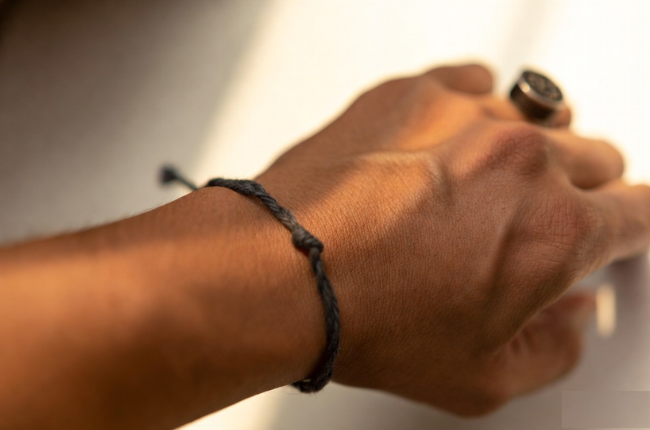
Most people who wear a black thread on their wrist or an iron ring on their finger were given these by someone older in the family — a grandmother who tied the thread without explaining why, an uncle who slipped the ring on after a difficult year and said simply that it would help. The object arrived with the weight of the elder's confidence behind it but without the knowledge that gave the elder that confidence. And so the thread is worn, the ring is kept, but a quiet uncertainty follows the person who carries them — am I wearing this correctly, does it actually do anything, and is there something I am supposed to know that nobody has told me.
What the Vedic tradition holds about Kala Dhaga — the black thread — and the Loh Ring or iron ring is not folk belief dressed up in classical language. The black thread appears in the Atharva Veda in the context of protective binding rituals — the Raksha Vidhi tradition that prescribes specific materials, colours, and intentions for objects worn on the body as energetic shields. The iron ring appears in the Lal Kitab — the nineteenth-century Urdu-Persian remedial astrology text that codified folk Jyotish traditions from the Punjab — as a primary upaya (remedy) for Saturn affliction, and is cross-referenced in the classical Navagraha remedial traditions that predate it. Neither object is arbitrary. Both carry a specific rationale in classical Indian knowledge — a rationale that determines not just whether they work but how they work, under what conditions, for which specific problems, and what makes them effective or ineffective depending on how they are worn.
What most articles on this subject miss is the mechanism — why black absorbs rather than deflects, why iron is specifically associated with Saturn and not with any other planet, what the correct wearing protocol is and why deviating from it matters, and the two situations in which wearing either object without proper guidance can produce the opposite of the intended effect. This guide covers the complete classical framework for both objects — their Vedic source, their specific protective and remedial function, the correct protocols for wearing and removing them, who should and should not wear them, and what a trained Jyotishi assesses before prescribing either as a formal remedy.
What the Black Thread Is and Where Its Power Comes From
The black thread — Kala Dhaga in Hindi, Karuppu Nool in Tamil — is the simplest and most universally accessible protective object in the Indian ritual tradition. Its use predates recorded text. Its classical rationale, however, is precisely documented.
The Atharva Veda and the Raksha Vidhi Tradition
The Atharva Veda — the foundational classical text for protective rituals, Dosha remedies, and household safety — contains within its Raksha Kanda (protective section) specific hymns prescribing the use of protective threads, amulets, and binding objects worn on the body. The thread in the Atharva Veda context is tied with a Sankalpa — a specific intention — and with mantra recitation that consecrates the object with protective vibrational energy before it is placed on the person.
The colour black carries a specific energetic quality in the classical Vedic framework — Tamas in its protective aspect. While Tamas is generally associated with inertia and dullness in the context of the Gunas, in the protective ritual tradition it is understood as the quality of absorption — the capacity to take in and contain rather than reflect or transmit. A black thread worn on the wrist with correct intention and proper consecration is held to absorb incoming negative energy — Nazar Dosha, Abhichara (directed negative intent), and dispersed environmental negativity — before it reaches the wearer's energetic field.
Why Black Thread Works — The Classical Mechanism
The classical explanation for why black absorbs negative energy is rooted in the Pancha Bhuta (five-element) framework. Black is associated with the Akasha (space) element in its densest, most receptive form — a void that draws in rather than deflecting. When a black thread is properly consecrated with mantra and tied with sincere protective intention, it functions as an energetic receptor — accumulating the incoming negative charge within its structure rather than allowing it to penetrate the wearer's Prana field.
This is also why a consecrated black thread must be replaced — typically on a Saturday, within one to three months of first wearing — because the classical tradition holds that a thread that has absorbed a significant quantity of negative energy becomes saturated and requires disposal and replacement. A black thread that has been worn too long without replacement is not neutral — it is a saturated vessel that has stopped absorbing and may begin to release what it has accumulated back into the wearer's field.
Black Thread — Who Should Wear It, Where, and How
The black thread is one of the most democratically accessible protective tools in the Vedic tradition — unlike gemstones, which require precise Kundli assessment, or specific mantras, which require initiation, the black thread can be worn by virtually anyone as a general protective measure. However, the where and how of wearing it determines its effectiveness entirely.
The Correct Placement — Wrist, Ankle, and Waist
- Wrist — the most common placement. The left wrist is prescribed for women in most North Indian traditions — the left side is considered the receptive, Chandra (lunar) side of the body in classical Indian physiology, and placing a protective object on the receptive side shields the person's incoming energy field. The right wrist is prescribed for men in many traditions, though regional variations exist. In South Indian traditions, both wrists may carry protective threads without gender distinction.
- Ankle — prescribed specifically for children under five and for adults experiencing Grihya Dosha (home-based negative energy) affecting the lower body — repeated foot and leg problems, difficulty walking, or instability in movement. The ankle thread in the classical tradition is tied by the eldest woman of the household and replaced monthly on a Saturday.
- Waist — prescribed in the Tantra protective tradition for women during pregnancy, new mothers in the forty-day post-delivery period, and individuals experiencing Nazar Dosha affecting the Manipura Chakra (solar plexus — governing digestion, confidence, and personal power). A black thread worn at the waist as a simple cord is among the most classical protective practices for pregnant women in the Indian tradition.
How It Must Be Tied — The Sankalpa and the Saturday Rule
The black thread must be tied — not merely placed — with a specific protective Sankalpa (intention) held in the mind of the person tying it. The classical prescription is:
- Tied on a Saturday — Saturn's day, which governs the black colour and the protective Tamas quality
- By a person who holds genuine affection and protective intention toward the wearer — a mother, grandmother, or trusted elder in the family. In the absence of such a person, it may be tied at a Hanuman temple after the Pandit consecrates it with mantra
- With three or seven knots — odd numbers are prescribed in the Raksha Vidhi tradition as complete, self-contained, and resistant to loosening
- The thread must be cotton or wool — synthetic thread is not prescribed because it does not carry the elemental properties the classical tradition attributes to natural fibres
When to Remove and Replace the Black Thread
- Replace every one to three months on a Saturday
- Remove and dispose of at a road crossing — never in the home's own dustbin or bathroom
- Remove before entering a cremation ground or attending a funeral, and replace with a new thread before returning home
- Do not wear a broken black thread — a thread that breaks spontaneously is interpreted in the classical tradition as having absorbed a significant negative charge and must be disposed of immediately at a road crossing with a brief protective prayer
How to Perform the Black Thread Ritual at Home — Step by Step
- Choose the correct day and time. Saturday is the prescribed day for black thread protection rituals. Perform the tying during the first two hours after sunrise — before the Rahu Kalam period begins. Check the Rahu Kalam time for your city and complete the tying before it starts.
- Source a pure black cotton thread. The thread must be natural fibre — cotton or wool — undyed with chemical dyes if possible. Many temple shops carry pre-blessed black cotton thread. If unavailable, source unbleached black cotton thread and have it consecrated by a Pandit before tying.
- Hold the thread in your right hand and set the Sankalpa. Close your eyes. State silently or aloud: the name of the person being protected, the specific protection being sought (Nazar Dosha, general protection, child protection), and the sincere intention that the thread serve as a shield for that person. Hold this for one full minute.
- Recite the Hanuman Chalisa or the Maha Mrityunjaya Mantra once while holding the thread before tying. This consecrates the thread with protective vibrational energy before it touches the skin.
- Tie the thread with three or seven knots. For the wrist, tie it snugly enough to remain in place but not so tight as to restrict circulation. For a child's ankle, ensure the thread can be slipped over the foot easily — it should rest comfortably, not be pulled taut.
- Dispose of the old thread correctly. The thread being replaced — if one was previously worn — must be taken to a road crossing and left there. Do not simply cut it off and place it in the rubbish at home. The classical tradition holds that the disposed thread carries the accumulated negative energy it absorbed and must be released away from the home.
- Mark the replacement date. Count three months from the tying date and note it in your calendar. Set the replacement for the first Saturday on or after that date.
What the Iron Ring Is and Its Classical Connection to Saturn
The iron ring — Loh Mudrika in Sanskrit, Lohe Ki Angoothi in Hindi — is among the most powerful and most commonly misused remedial objects in the Indian astrological tradition. Its power is real. Its misuse is equally real. Understanding both requires beginning with what the classical tradition says about the specific relationship between iron and Saturn.
Iron and Saturn — The Classical Correspondence
Saturn — Shani Dev — is the planetary deity associated with Lauha (iron) across every classical Indian astrological text that addresses planetary material correspondences. The Brihat Parashara Hora Shastra lists iron as Saturn's primary metal. The Navaratna tradition, which assigns gemstones to planets, assigns blue sapphire to Saturn for gemstone therapy — but the parallel metal remedy tradition assigns iron as Saturn's primary material remedy, accessible to anyone regardless of financial means.
The reason iron is Saturn's metal in the classical framework is found in the elemental and mythological traditions simultaneously. Iron is the densest commonly available metal — its heaviness, its dark colour, and its association with labour, tools, and the earth correspond precisely with Saturn's qualities in Vedic astrology: discipline, karmic weight, patience, hard work, and the slow but irreversible grinding of karmic consequence. Wearing iron in contact with the skin is held in the classical tradition to create a continuous material resonance with Saturn's energy — which can produce either strengthening or appeasement of Saturn's influence depending on the specific nature of the Saturn placement in the wearer's natal chart.
The Lal Kitab and the Iron Ring Prescription
The Lal Kitab — the remedial astrology text that systematised many folk Jyotish practices into a coherent framework — specifically prescribes the iron ring as a primary remedy for:
- Saturn placed in the first, second, or tenth house of the natal chart — where Saturn's influence on the self, speech, or career requires material grounding
- Sade Sati — the seven-and-a-half-year period of Saturn's transit through the Moon sign and its neighbours — where the iron ring is prescribed as a daily-wear protective and stabilising object
- Saturn Mahadasha or Antardasha — particularly for individuals whose natal Saturn is debilitated or placed in a challenging house, where the Mahadasha period intensifies Saturn's difficult qualities
- Shani Dosha in the Ashtakoot compatibility system — where the iron ring is prescribed for the affected partner in a marriage alliance
Iron Ring — Which Finger, Which Hand, and the Rules Nobody Explains
This is where most guides on the iron ring fail the person asking. Every article says "wear an iron ring for Saturn." Almost none specifies the finger, the hand, the weight of the ring, or the conditions under which the ring should not be worn.
The Correct Finger
The middle finger of the right hand is the classical prescription for the iron ring across both the Lal Kitab and the Jyotish Ratnamala traditions. The middle finger is associated with Saturn in classical Indian hand physiology — the longest finger, governing patience, discipline, and karmic endurance, corresponds to Saturn's qualities precisely. The right hand is prescribed because it is the active hand in most right-handed individuals — the hand that initiates action — and placing Saturn's metal on the active hand creates the most consistent material resonance with daily karma.
Regional variations exist — some South Indian traditions prescribe the middle finger of the left hand for women, maintaining the left-side rule for protective objects. Some Tantra traditions prescribe the index finger for specific Saturn afflictions involving authority and career. These variations require a Pandit's or Jyotishi's guidance before application.
The Correct Weight and Form
- The ring must be made of pure iron — not steel, not iron alloy, not iron-plated base metal. Steel contains carbon and other elements that alter its elemental composition from pure Lauha (iron). The classical prescription is for the simple, dense quality of unalloyed iron.
- The ring must be plain — no gemstones, no decorative elements, no engravings other than the Shani Yantra or Om if specifically prescribed by a Jyotishi. The protective function is in the material and the wearing — not in decorative complexity.
- Weight should be moderate — heavy enough to be felt, light enough to be worn continuously without discomfort. A ring that causes physical irritation will be removed — and a remedy object that is not worn continuously produces no continuous effect.
The Saturday Activation Ritual
An iron ring must be activated before first wearing — placed directly on the finger without activation produces a fraction of its potential benefit. The classical activation:
- On a Saturday evening, pour mustard oil over the ring while reciting the Shani Beej Mantra: Om Pram Prim Prom Sah Shanaischaraya Namah — 108 times.
- After the mantra, wipe the ring clean with a black cloth and place it at the feet of a Shani deity image or a Shani Yantra for the night.
- Sunday morning — after bathing and before eating, place the ring on the middle finger of the right hand with the mental Sankalpa of receiving Saturn's protective and steadying influence.
- Do not remove the ring for forty days after activation — the classical prescription for establishing a sustained material resonance with Saturn's energy.
Who Should Not Wear an Iron Ring Without Jyotishi Guidance
This is the section that almost no article includes — and it is the most important section for anyone considering wearing an iron ring based on general advice rather than a proper chart reading.
When the Iron Ring Can Worsen the Situation
The iron ring strengthens Saturn's influence in the wearer's life. For individuals whose natal Saturn is already strong — exalted in Libra, placed in its own signs of Capricorn or Aquarius, or functioning as the Lagna lord or Yogakaraka in specific ascendant combinations — additional Saturn strengthening through iron contact can amplify the qualities the person already carries in excess. Excess Saturn produces:
- Increased rigidity, pessimism, and difficulty experiencing joy or spontaneity
- Deepened tendency toward isolation and social withdrawal
- In extreme cases, worsening of Saturn-ruled health concerns — bones, joints, the nervous system at old age, and chronic illness
For individuals with Leo Lagna or Cancer Lagna — where Saturn rules challenging houses (the sixth and seventh for Leo, the seventh and eighth for Cancer) — the iron ring is specifically contraindicated without a thorough Jyotishi assessment, because strengthening Saturn in these configurations can intensify the difficult significations Saturn governs in those charts.
The Pitta Constitution Caution
Classical Ayurveda notes that individuals with a dominant Pitta constitution — characterised by intensity, heat, competitive drive, and a tendency toward inflammation — can experience increased internal heat, agitation, and irritability when wearing iron continuously. Iron's Rajasic and Tamasic qualities interact with Pitta in ways that require dietary and lifestyle balancing alongside the ring's wearing. A Vaidya (Ayurvedic practitioner) or a Jyotishi familiar with Ayurvedic principles can identify this concern before it develops.
Myth vs. Fact
MYTH: Anyone can wear a black thread and iron ring together at any time — they are simple folk remedies with no contraindications.
FACT: The black thread is broadly safe as a general protective measure when correctly tied with proper Sankalpa. The iron ring, however, strengthens Saturn's specific influence in the wearer's natal chart — and for individuals with strong natal Saturn or specific Lagna configurations where Saturn rules difficult houses, an unguided iron ring can amplify the wrong qualities. A Jyotishi reading the full chart before prescribing the iron ring is the classical standard, not an optional extra.
The Combined Wearing of Black Thread and Iron Ring — When and Why Both Together
The classical tradition prescribes wearing both the black thread and the iron ring simultaneously in specific situations — not as a general recommendation, but as a layered protective and remedial protocol for individuals facing a combination of Nazar Dosha and Saturn affliction simultaneously.
When Both Are Prescribed Together
- Sade Sati with simultaneous Nazar Dosha — when an individual is in the seven-and-a-half-year Saturn transit period and is also experiencing visible life success that draws concentrated external attention, both the iron ring (for Saturn appeasement and karmic grounding) and the black thread (for Nazar protection) are prescribed as complementary layers.
- Saturn Mahadasha with career exposure — professionals who have entered a Saturn Mahadasha period while simultaneously moving into positions of public visibility, leadership, or competitive environments benefit from the combined protection.
- Children entering school or competitive environments — the black thread on the wrist for Nazar protection, combined with a small iron bangle or thread-tied iron piece for Saturn grounding, is prescribed in some traditions for children entering highly competitive academic environments during difficult Saturn transit periods.
How They Work as a System
The black thread and the iron ring address different dimensions of the same protective need. The black thread is receptive — it absorbs incoming negative energy before it reaches the wearer's field. The iron ring is grounding — it anchors the wearer's own energetic field in Saturn's stabilising, disciplined quality, making the field more resistant to disturbance from outside. Together, they create a dual-layer protection: the thread absorbs what is incoming, the ring stabilises what is internal.
As many practitioners discover when they sit with their Pandit for a complete assessment — the combination of black thread and iron ring, when both are correctly prescribed and activated, produces a quality of steadiness that neither object achieves alone. The thread alone provides protection without grounding. The ring alone provides grounding without the absorptive shield. Together, correctly worn and maintained, they function as the most accessible complete protective system the classical tradition makes available to every household regardless of financial means.
What Almost No Article Answers: What Happens to the Negative Energy the Black Thread Absorbs — Where Does It Go?
This question appears consistently in online Jyotish communities — sincere practitioners who understand that the black thread absorbs negative energy but want to know what happens to that energy when the thread is disposed of. If the thread is tied to a tree, burned, or left at a road crossing — does the negative energy it carries simply transfer to the tree, the earth, or the next person who walks past?
The classical answer from the Atharva Veda Raksha tradition and the Tantra household protection lineages is careful and specific.
When a consecrated black thread that has absorbed negative energy is disposed of correctly — at a road crossing, a crossroads, or flowing water — the energetic charge it carries is returned to the Kshetra (field) of the earth, where it undergoes what the classical tradition calls Bhoomi Shodhana — dissolution back into the earth's own purifying capacity. The earth, in the Vedic framework, is the ultimate receptacle and purifier of energetic residue — Bhumi Devi is described in the Skanda Purana as having the capacity to absorb and neutralise what is placed into her care with sincere intention.
This is why the disposal location matters — a road crossing or crossroads is specifically prescribed because it is a point of maximum earth-energy flow, where the earth's purifying capacity is most actively present. Disposing of the thread in the home's own space returns the charge to the home's energetic field. Disposing of it in a rubbish bin — where it is mixed with domestic waste — neither returns it to the earth properly nor removes it from the home's proximity.
The tree option — tying the thread to a large, healthy tree — is prescribed in some regional traditions because the tree's Prana field is considered capable of absorbing and neutralising the charge within its own vital energy system. Only a healthy, large tree with strong vital energy is appropriate — a dying or diseased tree cannot absorb additional charge without harm to itself.
FAQ
What are the benefits of wearing a black thread on the wrist? A properly consecrated black thread worn on the wrist absorbs incoming Nazar Dosha, Abhichara (directed negative intent), and dispersed environmental negative energy before it reaches the wearer's Prana field. The Atharva Veda Raksha tradition documents this as the thread's primary function. Secondary benefits include a grounding effect on the nervous system and a constant reminder of the protective Sankalpa held at the time of tying — which itself reinforces the wearer's sense of energetic security.
Which finger should the iron ring be worn on for Saturn benefits? The classical prescription across both the Lal Kitab and the Jyotish Ratnamala traditions is the middle finger of the right hand. The middle finger corresponds to Saturn in classical Indian hand physiology. The right hand is prescribed for most individuals as the active hand governing daily karma. Regional and chart-specific variations exist — a Jyotishi reading the full natal chart may prescribe a different finger for specific Saturn configurations.
Can anyone wear a black thread and iron ring without consulting a Pandit? The black thread as a general protective measure is broadly safe for anyone when correctly tied with sincere Sankalpa on a Saturday. The iron ring requires more caution — it strengthens Saturn's influence in the natal chart, and for individuals with strong natal Saturn or Lagna configurations where Saturn rules difficult houses, an unguided iron ring can amplify unwanted qualities. A Jyotishi assessment before wearing the iron ring is the classical standard.
How do I activate an iron ring before wearing it for the first time? On a Saturday evening, pour mustard oil over the ring while reciting the Shani Beej Mantra 108 times. Place the ring at the feet of a Shani deity image overnight. Sunday morning, after bathing and before eating, place the ring on the middle finger of the right hand with a Sankalpa of receiving Saturn's protective and stabilising influence. Do not remove it for forty days after activation. As astrological tradition holds, individual outcomes vary with karma and sincerity.
How often should I replace the black thread for protection? Replace the black thread every one to three months on a Saturday. A thread that breaks spontaneously before the replacement date must be disposed of immediately at a road crossing — the classical tradition interprets a spontaneous break as the thread having absorbed a significant negative charge. Do not retie a broken thread — replace it with a new one. The old thread is never disposed of inside the home.
What is the difference between a black thread and a red thread for protection? The black thread is prescribed specifically for Nazar Dosha protection and general negative energy absorption — its Tamasic absorptive quality makes it the most effective protective colour. The red thread — Mauli or Kalava — is prescribed for auspiciousness, divine blessing, and protection through the active Rajasic quality of Mars and the Sun. Red threads are tied by Pandits during Poojas and religious ceremonies. Black threads are tied for protective purposes outside the Pooja context. Both serve distinct functions and are not interchangeable.
Can children wear an iron ring for Saturn protection? Classical tradition does not prescribe the iron ring for children under twelve — the child's energetic and physical constitution is still developing, and a strong Saturn material influence on an undeveloped constitution can produce the excess Tamas qualities (lethargy, heaviness, emotional withdrawal) that Saturn in excess generates. For children requiring Saturn protection during difficult transit periods, a small black thread on the ankle and regular Hanuman Chalisa recitation are the appropriate classical alternatives until the child is old enough for a proper Jyotishi assessment.
Conclusion
The black thread and the iron ring are among the most democratically accessible tools in the entire Vedic protective tradition — available to every household regardless of financial means, requiring no elaborate ceremony in their basic form, and grounded in classical sources that document their mechanism with genuine precision. Their simplicity is not their limitation — it is their genius.
Begin today: source a pure black cotton thread and tie it on the correct wrist this Saturday with a sincere protective Sankalpa and three knots. If your Jyotishi has indicated Saturn affliction in your chart, begin the process of sourcing a pure iron ring and consulting for the correct activation protocol. Hold both practices with consistency — the thread replaced every three months, the ring worn without interruption for the prescribed period.
As is commonly observed among families who maintain these practices correctly and consistently — the protection they provide is not dramatic or visible. It is the quiet, steady absence of the disturbances that used to arrive. Classical Vedic tradition holds that the outcomes depend on karma, the sincerity of the Sankalpa, and the correctness of the practice. The thread and the ring have held this protective function for three thousand years. The knowledge of how to use them correctly is what makes the difference between wearing an object and receiving its full protection.
If you want a complete Jyotish assessment to determine whether a black thread, iron ring, or formal Graha Shanti Puja is the correct remedy for your specific chart configuration — AtoZPandit.com connects you with verified Jyotish experts and trained Vedic Pandits who prescribe remedies based on your full natal chart, not general advice. Book your personalised remedy consultation on AtoZPandit.com and receive the correct protection prescription your chart actually requires.
Disclaimer This article is written for educational and cultural awareness purposes only. The Vedic and Jyotish information provided here does not substitute professional medical, psychological, or legal advice. For a complete and personalised Graha Shanti or protective remedy assessment, connect with a qualified Pandit or Jyotishi at AtoZPandit.com.