16 Vedic Sanskars Complete Rituals Every Hindu Family Must Preserve
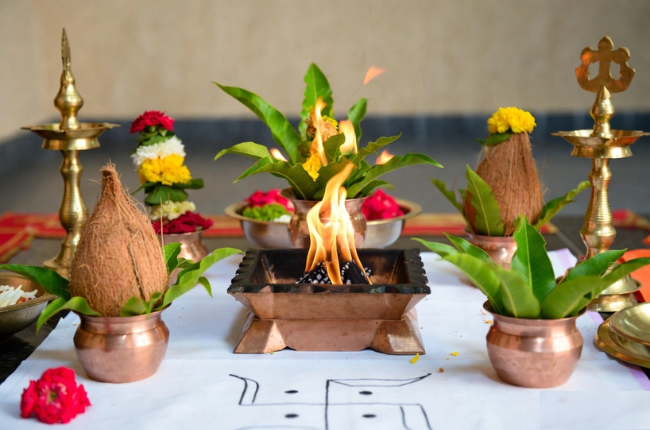
Most Indian families today perform at least a few of the Sanskars — a naming ceremony for the newborn, a first rice-feeding when the baby is ready, a thread ceremony for a son, a wedding with the seven Pheras. They perform them because it feels right, because the grandparents insist, because something in the family knows that these moments deserve more than a cake and a photograph. But very few families can name all sixteen. Fewer still know what each one is actually doing — what it is marking in the life of the person who receives it, and what the family loses when it is skipped.
The Shodasha Sanskar — the sixteen sacred rites of passage — are not a list of religious ceremonies. They are a complete map of a human life, drawn by the Dharmashastra tradition, that identifies the moments when a person is most open to transformation and most in need of ritual protection and blessing. From the moment a child is conceived to the moment the body is returned to the five elements, the sixteen Sanskars track the turning points where the individual crosses from one quality of existence to another. Each crossing deserves acknowledgement. Each crossing, done without acknowledgement, is a crossing made alone.
What almost no popular account of the Sanskars explains is that the sixteen are not a uniform list agreed upon by all classical texts — the Grihyasutras of different Vedic schools assign slightly different Sanskars, and the number sixteen itself comes from the synthesis that the Paraskarasmriti and Manusmriti traditions eventually produced. Understanding which Sanskars have the widest classical agreement, which are specific to particular lineages, and which have been condensed or merged in modern practice — this is the layer of knowledge that separates a family performing a ceremony from a family understanding why. This article covers all sixteen, their sequence, their purpose, what each one actually does at the level of the individual's development, and how modern families can approach each one correctly.
What the Shodasha Sanskar System Actually Is
The word Sanskar — from the Sanskrit sam (complete, well) and kara (doing, making) — means a complete making, a refining, a perfecting. The Sanskar tradition holds that a human being is not born complete — they are born with the raw material of a complete human life, and the Sanskars are the ritual acts through which that raw material is progressively refined, consecrated, and prepared for its fullest expression.
The Manusmriti, the Yajnavalkya Smriti, and the Grihyasutras — particularly the Paraskara Grihyasutra and the Ashvalayana Grihyasutra — are the primary classical texts governing Sanskar Vidhi. These texts do not agree on every detail — the specific number of Sanskars listed varies from twelve in some Grihyasutra traditions to eighteen in others — but the synthesis of sixteen, called Shodasha Sanskar, is the framework that has achieved the broadest acceptance across the main Hindu dharmic traditions.
The sixteen Sanskars span three broad phases of life. The first phase covers the prenatal and early childhood period — from the Garbhadhana Sanskar at conception through the educational beginning marked by Vidyarambha. The second phase covers the student and householder period — from Upanayana through Vivaha. The third phase covers the elder and final stages — from Vanaprastha acknowledgement through Antyeshti, the cremation rite.
Why the Sanskars Are Timed as They Are
The timing of each Sanskar is not arbitrary. The classical tradition identifies specific developmental thresholds — moments when the body, mind, or social identity of the individual undergoes a genuine qualitative change — and places the corresponding Sanskar at that threshold. The Namkaran Sanskar on the eleventh day after birth corresponds to the period when the birth ashaucha (ritual impurity) of childbirth has passed and the child's individual identity is ready to be formally established. The Annaprashan Sanskar at the sixth month corresponds to the developmental readiness of the digestive system for solid food. The Upanayana between ages eight and twelve corresponds to the cognitive readiness for formal intellectual training.
When a Sanskar is performed at the correct developmental threshold, the ritual act and the developmental moment reinforce each other — the outer ceremony meets an inner readiness and leaves a deeper impression. When it is performed significantly out of sequence, the ritual loses some of its formative power, though the classical tradition holds that it retains its consecrating value at any age.
Internal link: For the specific wedding Sanskar and the complete significance of the Saptapadi ceremony within Vivaha, see the Seven Pheras and Saptapadi Vows Complete Meaning in Marriage.
The First Five Sanskars — From Conception to Early Childhood
The first five Sanskars accompany the most vulnerable and most formative period of a human life — the period before the child has the capacity to protect or shape itself. These are the Sanskars performed entirely by the parents on behalf of the child, and their purpose is to create the most supportive possible environment for the new life's entry and early development.
Garbhadhana — The Sanskar of Conscious Conception
Garbhadhana is the first of the sixteen Sanskars and the one most rarely performed in modern families — not because families no longer wish for children, but because the idea of a ritual at the moment of conception feels unfamiliar in the contemporary context. The Sanskar consists of a short Havan and the recitation of specific Vedic mantras from the Atharvaveda and Rigveda asking for the blessing of a healthy, dharmic soul to enter the union. The Ashvalayana Grihyasutra specifies the ritual in detail, including the auspicious Muhurat — the lunar phase, the Nakshatra, and the time of day most conducive to the conception of a soul with strong spiritual potential.
The philosophical purpose of Garbhadhana is the one that most distinguishes the Vedic view of conception from a purely biological understanding: the tradition holds that the quality of the parents' state of mind, their intention, and the cosmic environment at the moment of conception influences the nature of the soul that enters. The ritual creates a conscious, consecrated space for that entry — the difference between a door opened with awareness and a door left ajar by accident.
Punsavana — The Sanskar for the Child's Wellbeing in the Womb
Punsavana is performed in the third month of pregnancy — specifically on an auspicious day when the Moon is in a male Nakshatra, traditionally Pushya, Hasta, or Ashvini. The ceremony involves a ritual preparation using herbs, specific mantras from the Atharvaveda, and a prayer for the healthy development of the child in the womb. The Paraskara Grihyasutra describes the ritual as one that protects the foetus from environmental harm and strengthens the vital energy (prana) of the developing child.
In the contemporary context, Punsavana is often combined with the Simantonnayan Sanskar into a single ceremony — both being prenatal rites that most families have compressed into one occasion, typically held between the third and seventh month of pregnancy.
Simantonnayan — The Baby Shower With a Deeper Purpose
Simantonnayan — sometimes called Seemant — is performed between the sixth and eighth month of pregnancy. The name means the parting of the hair — the husband traditionally parts the wife's hair upward with a porcupine quill or a stick of the Udumbara tree while reciting specific Vedic mantras of protection and blessing. The ceremony is surrounded by music, the presence of married women whose husbands are living, and an atmosphere of celebration and protective joy.
The classical purpose of Simantonnayan is the emotional and psychological wellbeing of the mother in the final trimester — when the child's nervous system is most actively developing and when the mother's emotional state most directly influences the child's prenatal experience. The Charaka Samhita — the classical Ayurvedic text — independently endorses the importance of the mother's mental peace in the third trimester, creating a rare point of convergence between the Dharmashastra and Ayurvedic traditions on the same developmental moment.
Jatakarma — The Welcoming of the Newborn Soul
Jatakarma is performed immediately after birth — ideally before the umbilical cord is cut in the classical description, or as soon as possible after birth in the practical contemporary context. The ceremony is brief: the father places a small amount of ghee and honey on the newborn's tongue using a golden implement or, where gold is not available, a clean copper spoon, while whispering the child's secret name (guhya nama) into its right ear. Specific mantras from the Rigveda are recited asking for long life, intelligence, and strength.
Jatakarma is the first direct ritual act performed for the child as an individual — the first moment the family formally acknowledges the new soul's presence and makes its first offerings on the child's behalf. As is commonly observed among families who follow this tradition carefully, the whispered secret name — known only to the parents and the officiating Pandit — creates a private sacred dimension to the child's identity that coexists with the public name given at the Namkaran ceremony.
Namkaran — The Naming Ceremony
Namkaran is the most widely performed of the early childhood Sanskars — and the one that most urban Indian families still observe in some form, even when they have not performed the preceding four. It is held on the eleventh day after birth, though the Yajnavalkya Smriti and some regional traditions place it on the twelfth day or at the end of the first month depending on the family's Kula tradition.
The ceremony establishes the child's formal name — vyavahara nama — in the presence of the family, the community, and the Navagraha. The Pandit draws the child's Nakshatra and Lagna from the birth time and uses these to recommend the auspicious first syllable for the name, which is then formally announced. The name is whispered into the child's ear, the Havan is performed, and the family witnesses the child's first formal entry into the social world with an identity.
The classical texts — particularly the Manusmriti — specify that the name should contain an even number of syllables for a girl and an odd number for a boy, should not be the name of a river, a mountain, or a tree in its plain form, and should ideally carry the quality of the deity or virtue the parents wish to cultivate in the child's character. These specifications are not uniformly followed in modern practice, but they reflect the depth of thought the tradition applied to what most families today treat as an aesthetic choice.
Pandit's Tip — Focus: Shraddha
A Pandit familiar with your Kula tradition will tell you something that gets lost in the simplified modern Namkaran: the Nakshatra-based first syllable is not merely a tradition — it is a precise astrological alignment. The first syllable of a child's name, in the classical Ankashastra reading, carries the vibrational frequency of the Nakshatra the Moon occupied at birth. When the name begins with the syllable that matches that Nakshatra, the name reinforces the child's strongest lunar energy rather than working against it. This is why two children with the same calendar date of birth but different birth times — and therefore different Moon Nakshatras — receive different recommended syllables from the Pandit. The calculation is individual, not generic.
The Middle Sanskars — Childhood Through Education
The next group of Sanskars accompanies the child through the years of physical development and the formal entry into learning. These Sanskars shift from the purely protective purpose of the early childhood rites to a formative purpose — they are designed not just to protect but to actively shape the child's character, diet, sensory life, and intellectual readiness.
Nishkramana — The First Outing
Nishkramana is performed when the child is taken outside the home for the first time — traditionally in the fourth month after birth, on an auspicious day, to see the Sun and then the Moon. The child is carried to a temple or to an open space with a clear view of the sky. Specific mantras are recited invoking the Sun's strength, the Moon's peace, and the protection of the Navagraha for the child's first encounter with the world outside the domestic space.
The philosophical significance of Nishkramana is the child's first conscious relationship with the cosmos — the first time the small, protected world of the home expands to include the sky, the elements, and the community. The ritual frames this expansion as a sacred crossing rather than a routine trip outside.
Annaprashan — The First Solid Food
Annaprashan is one of the most joyfully celebrated Sanskars in contemporary Indian families — the ceremony of the child's first solid food, performed between the fifth and seventh month for boys and the sixth and eighth month for girls, according to the Paraskara Grihyasutra. The first food is traditionally cooked rice (anna) prepared with ghee, honey, and curd — offered first to the presiding deity and the fire, then fed to the child with the recitation of specific mantras asking that this food bring the child strength, intelligence, and long life.
The modern Annaprashan has expanded — in many regions — to include a playful divination ceremony where objects representing different future professions are placed before the child and the family observes which one the child reaches for first. This practice, while charming and widely photographed, is a regional folk addition and is not part of the classical Grihyasutra Vidhi — though it has been absorbed into the ceremony's contemporary form across much of North and West India.
Chudakarma — The First Haircut
Chudakarma — also called Mundan or Chaul Karma — is the ceremony of the child's first complete shaving of the head, performed between the first and third year of life. The Ashvalayana Grihyasutra specifies the first or third year as the ideal timing. The ceremony is performed by a barber of the family's traditional community, with the Pandit reciting specific mantras of protection at each stage of the shaving.
The classical purpose of Chudakarma is twofold. The first is the removal of the birth hair — considered ritually impure in the sense that it was formed in the womb and carries the residue of the prenatal environment. The shaving and the new growth that follows is a genuine physical renewal. The second purpose is the protection of the child's skull at a developmental stage when the cranial fontanelles are closing — the mantras recited during Chudakarma specifically invoke protection for the developing brain and sense organs.
Many families perform Chudakarma at a sacred pilgrimage site — Tirupati in Andhra Pradesh, Kashi in Uttar Pradesh, Shirdi in Maharashtra — where the offering of the birth hair becomes simultaneously a Sankalpita Seva (an offered service) at a place of divine power. This tradition of performing the Mundan at a sacred site has no direct Grihyasutra basis but is a deeply rooted regional practice that has been consistently validated by practising Pandits as an auspicious amplification of the ceremony's protective intent.
Karnavedha — The Ear Piercing
Karnavedha is the Sanskar of ear piercing, performed between the sixth month and the fifth year according to different Smriti texts. The Sushruta Samhita — the classical Ayurvedic surgical text — independently recommends ear piercing on the grounds that specific ear points correspond to the protection of abdominal health and reproductive vitality through the body's marma point system. This makes Karnavedha one of the rare Sanskars where the Dharmashastra tradition and the Ayurvedic tradition provide independent classical support for the same practice.
The ceremony is performed by the family's traditional goldsmith or by a qualified practitioner. Specific mantras are recited at the moment of piercing for both ears. The first piercing is typically made in the right ear for boys and the left ear for girls in the North Indian tradition, with both ears pierced in the same ceremony across most regional traditions.
Vidyarambha — The Beginning of Learning
Vidyarambha — sometimes called Aksharabhyasa or Vidhyarambham — is the Sanskar that formally initiates the child into the world of knowledge. It is performed between the ages of four and six, on an auspicious day, ideally on the festival of Vijayadashami (Dussehra) — which is considered in the tradition to be the most powerful day of the year for beginning any educational endeavour.
The ceremony involves the child writing or tracing their first letter — traditionally the sacred syllable Om or the first letter of the regional script — on a tray of raw rice or on a slate, guided by the father's hand or the presiding Pandit's hand. Saraswati, the goddess of learning, is invoked specifically. The Vishnu Purana describes Saraswati's blessing as the animating force behind all genuine learning — the Vidyarambha ceremony is the moment the child formally places themselves under her patronage.
Did You Know
The Grihyasutras of different Vedic schools — the Ashvalayana, Paraskara, Gobhila, Apastamba, and Hiranyakeshi traditions among others — were composed for different regional and lineage communities and do not agree on every detail of the sixteen Sanskars. The Apastamba Grihyasutra, followed primarily in South Indian Brahmin communities, lists some Sanskars with slightly different timing specifications than the Paraskara tradition followed in North India. This is not contradiction — it is the legitimate regional variation of a living tradition adapting itself to local climate, agricultural cycles, and community structure. A Pandit performing a Sanskar in a Marathi household and a Pandit performing the same Sanskar in a Tamil household will follow different Vidhi details — both are classically correct within their respective lineages.
The Upanayana — The Sanskar That Changes Everything
Upanayana — the sacred thread ceremony, called Janeu ceremony in common parlance — stands apart from the other Sanskars not simply because it is the most elaborate of the pre-marital rites but because it marks the single most significant threshold crossing in the classical system: the child's formal entry into the student life (Brahmacharya Ashrama) and their first direct, personal relationship with Vedic knowledge.
The word Upanayana means leading near — specifically, leading the student near the teacher. The ceremony marks the moment the child is entrusted to a Guru for formal Vedic education. In the original gurukul system, Upanayana was the ceremony on the day the child left home and entered the Guru's household as a full-time student. In the contemporary context, where the gurukul system no longer operates in its classical form, the ceremony retains its full symbolic and spiritual weight as the moment the individual takes personal responsibility for their own intellectual and spiritual development.
The Sacred Thread and Its Meaning
The Yajnopavita — the sacred thread that the initiated student wears across the left shoulder and under the right arm — is made of three strands twisted together. The classical interpretation of the three strands varies by text and tradition: the Manusmriti associates them with the three Vedas, the three debts (Rinas) — to the sages, the ancestors, and the gods — and the three gunas of nature. Whatever the specific symbolic assignment, the thread's function is consistent: it is a daily physical reminder of the student's commitment to the life of learning, discipline, and dharmic conduct.
The Upanayana is traditionally performed for boys of the Brahmin, Kshatriya, and Vaishya communities at different prescribed ages — eight years for Brahmins, eleven for Kshatriyas, and twelve for Vaishyas, according to the Manusmriti. The Ashvalayana Grihyasutra provides the full ritual Vidhi, which includes the investiture of the thread, the teaching of the Gayatri Mantra — whispered into the student's ear by the presiding Pandit — and the student's first Bhiksha (alms collection), which is a symbolic act of humility at the beginning of the student life.
The Gayatri Mantra — The Central Gift of Upanayana
The whispered transmission of the Gayatri Mantra — Om Bhur Bhuvah Swaha, Tat Savitur Varenyam, Bhargo Devasya Dhimahi, Dhiyo Yo Nah Prachodayat — is the spiritual heart of the Upanayana ceremony. This mantra, from the Rigveda (Mandala 3, Sukta 62, verse 10), is addressed to Savitri — the solar deity — and asks for the illumination of the intellect. It is the mantra the student is expected to recite three times daily — at dawn, noon, and dusk — for the rest of their life as a personal practice of intellectual and spiritual orientation.
The classical tradition holds that the Gayatri Mantra, received directly from the teacher or the Pandit through the ear in a consecrated context, carries a different quality of power than the same mantra read from a book or heard on an audio recording. The transmission is as important as the content. Personal results, as always, depend on individual karma, the sincerity of the student's practice, and the quality of the daily recitation maintained after the ceremony.
Internal link: For the complete science of mantra transmission and how sound frequencies operate in the Vedic system, see the Mantra Power and Sound Frequencies Complete Guide for Mind Body.
Vedarambha, Keshanta, Snatak — The Completion of Student Life
Three Sanskars mark specific phases within and at the conclusion of the formal student period — Vedarambha (the formal beginning of Vedic study after Upanayana), Keshanta (the first shaving of the beard at the end of student life, for male students), and Snatak (the ceremony of graduation — the formal bathing that marks the student's return to household life after the completion of their education).
Vedarambha in the contemporary context is often merged with Vidyarambha or treated as a sub-ritual within the Upanayana ceremony itself — the formal beginning of Vedic recitation immediately after the thread investiture. Keshanta is the least commonly performed of the sixteen Sanskars in modern practice — it belongs to a world where the student spent eight to twelve years in the gurukul and emerged as a young adult whose entire face and beard were shaved for the first time at the graduation ceremony. Snatak similarly belongs to the formal close of gurukul education.
In the contemporary adaptation, practising Pandits typically acknowledge these three Sanskars within the Upanayana ceremony or at the time of the young person's academic graduation, using a simplified but classically informed Vidhi that honours the developmental threshold even where the traditional institutional structure no longer exists.
Vivaha — The Householder Sanskar
Vivaha — marriage — is the sixteenth Sanskar in some classical enumerations and the fourteenth in others, depending on how the student-phase Sanskars are counted. It is, across all enumerations, the Sanskar that marks the entry into Grihastha Ashrama — the householder stage — and is considered the most socially complex and cosmologically significant of all sixteen.
The Vivaha ceremony in its full classical form is not a single ceremony but a sequence of rituals spread across one or more days, each with its own Vidhi, its own mantra set, and its own specific cosmological purpose. The Kanyadan — the giving of the daughter — the Mangalsutra tying, the Saptapadi — the seven steps — and the Sindoor ceremony are each distinct ritual acts within the larger Vivaha structure, each drawn from specific Grihyasutra prescriptions.
The Saptapadi — the seven steps taken together around the sacred fire — is the legal and spiritual heart of the Hindu marriage in the classical tradition. Each step is accompanied by a specific vow from the Paraskara Grihyasutra, covering nourishment, strength, wealth, happiness, progeny, seasonal wellbeing, and friendship as the seven pillars of the marital life. The marriage is considered complete and binding at the moment of the seventh step — all other elements of the ceremony are preparatory or celebratory.
Vivaha Muhurat — Why Timing Is Not Optional
The Muhurta Chintamani by Ramadaivagna devotes significant attention to the calculation of the auspicious Vivaha Muhurat — the specific window of time within which the Saptapadi must be completed. The Muhurat calculation considers the Panchang (Tithi, Vara, Nakshatra, Yoga, and Karana), the Lagna at the time of the ceremony, the positions of Jupiter and Venus (both must be free from combustion and retrogression for an auspicious marriage), and the compatibility of both partners' birth charts.
A Vivaha performed without a properly calculated Muhurat is, in the classical view, a ceremony that has missed its most protective element — the cosmic alignment that places the marriage's beginning under the most favourable possible planetary conditions.
Internal link: For the complete significance of the Saptapadi within the Vivaha ceremony, see the Seven Pheras and Saptapadi Vows Complete Meaning in Marriage.
Community Voice
A question that appears repeatedly in Hindu family forums: "We are a working couple who missed several of the early childhood Sanskars for our son — Jatakarma, Nishkramana, Karnavedha. He is now four years old. Is it too late to perform them?"
The classical tradition's position on this is more compassionate and practical than most families expect. The Dharmashastra texts acknowledge that circumstances — illness, distance, ignorance of the tradition — can prevent timely performance of early Sanskars. The general principle, stated across the Smriti tradition, is that a Sanskar performed late retains its consecrating and protective value, though it loses some of the precise developmental timing that makes it most powerful. A qualified Pandit can assess which of the missed Sanskars can be combined into a single ceremony, perform them with a specific Sankalpa acknowledging the delayed timing, and restore the ritual continuity of the child's Sanskar journey. Missing a Sanskar is not an irreversible error — leaving it permanently unperformed is.
Vanaprastha and Antyeshti — The Final Sanskars
The final two Sanskars accompany the most profound transitions a human life makes — the transition from active household engagement to spiritual retirement, and the transition from embodied life to the elements.
Vanaprastha — The Entering of the Elder Stage
Vanaprastha — literally, forest dwelling — is the Sanskar that acknowledges the transition from the householder stage to the elder stage, when the children are established and the grandchildren have arrived. In the original classical description, Vanaprastha involved a literal withdrawal from the village to the forest for a life of tapas and study. In the contemporary context, it is interpreted as the conscious decision to reduce worldly engagement and increase spiritual practice — handing the household's primary responsibilities to the next generation while the elder devotes more of their time and energy to dharma, seva, and preparation for the final stage.
The Vanaprastha Sanskar is among the least formally performed of the sixteen in modern family life — there is no commercial ceremony industry around it, no catering or photography — and this invisibility reflects a broader cultural shift away from acknowledging the elder stage as a distinct and valued phase of life with its own ritual dignity.
Antyeshti — The Final Rite
Antyeshti — the cremation ceremony — is the last of the sixteen Sanskars and, in the classical view, among the most important. The Garuda Purana and the Antyeshti Paddhati — the specific liturgical text for funeral rites — describe the Antyeshti as the final act of service the family performs for the departing soul: the purification of the body through the sacred fire, the release of the soul from its attachment to the physical form, and the beginning of the ancestor's journey in the subtle world.
The ceremony includes the Dah Karma (cremation), the Asthi Sanchayana (collection of the bones and ashes), the Asthi Visarjan (immersion of the ashes in sacred water — traditionally the Ganges), and the Shraddha ceremonies performed on specific days following the cremation that sustain the departing soul through the transition period. The tenth-day Dasagatra and the thirteenth-day ceremony that marks the formal conclusion of the mourning period are integral parts of the Antyeshti system.
The Garuda Purana's description of what the soul experiences in the days following death — and why the specific days of the Shraddha ceremony are timed as they are — provides the metaphysical basis for practices that many modern families continue without knowing their classical rationale. The Pind Daan offered on the specified days corresponds, in the classical understanding, to the stages of the subtle body's formation and journey in the period immediately after death.
Internal link: For the complete Pitru Paksha Tarpan and Shraddha ceremony that sustains the ancestor after death, see the Pitru Paksha Tarpan Complete Guide for Pind Daan and Ancestor Peace.
What Happens When Sanskars Are Skipped — The Honest Answer
Many families carry this question quietly — not as a theological concern but as a practical one. The grandparents performed all the ceremonies. The parents performed fewer. The children may perform fewer still. What does the tradition actually say about the consequences of a Sanskar going unperformed?
The Dharmashastra tradition distinguishes between the immediate ritual consequence and the developmental consequence. At the immediate ritual level, the Manusmriti and Yajnavalkya Smriti note that a person for whom the early Sanskars have not been performed exists in a state of anasanskrita — unsanctified, uninitiated — which means they lack the specific protective and formative impressions those ceremonies were designed to create. This is not described as a punishment — it is described as an absence, the way a field that has not been prepared lacks the conditions for the crop to grow at its best.
At the developmental level, the tradition holds that Sanskars missed in childhood can be partially compensated for in adulthood through sustained spiritual practice — daily mantra recitation, Havan on auspicious days, pilgrimage, and service. The Prayashchitta (atonement) tradition within the Dharmashastra provides specific remedial practices for families who have missed Sanskars and wish to restore the spiritual continuity of the lineage.
The most practically important guidance from the classical tradition on this question: the Antyeshti Sanskar must never be skipped or abbreviated. The classical texts are more insistent on the completeness of the final rite than on any other Sanskar — because the consequences of an incomplete Antyeshti, in the classical understanding, affect not just the departing soul but the living family members and the lineage for generations. A family that has skipped many of the earlier Sanskars but performs the Antyeshti completely and correctly has maintained the most critical ritual continuity of all.
One Question No Article Answers: Should Adopted Children Receive All Sixteen Sanskars
This is a question that appears in Hindu family forums and Dharmashastra discussion groups — and that receives almost no clear, classically grounded answer in any published content. The question is asked by families who have adopted a child and who genuinely wish to raise that child within the full Vedic tradition: do the sixteen Sanskars apply to an adopted child, and if so, from which point in the sequence?
The classical tradition addresses adoption through the concept of Dattaka — the formal adoption rite described in the Manusmriti and in the Narada Smriti. The Dattaka ceremony is itself a Sanskar of transition — it formally transfers the child from one lineage (Gotra) to another and establishes the child's new ritual identity within the adoptive family's tradition. Once the Dattaka ceremony has been performed, the classical texts are consistent: the adopted child is fully a member of the adoptive family's lineage and is entitled to — and should receive — all Sanskars appropriate to their current age and developmental stage.
For Sanskars that have already passed the child's age at adoption — Garbhadhana, Jatakarma, and often Namkaran — the tradition recommends a combined ceremony in which the Pandit performs a consolidated acknowledgement of the missed Sanskars with a specific Sankalpa noting the circumstances, before moving to the age-appropriate Sanskars that begin from the point of adoption. This is the same compassionate-practical approach the tradition uses for missed Sanskars in biological children.
The Namkaran Sanskar is particularly significant for adopted children — giving the child a new name within the adoptive family's tradition, chosen with reference to the child's birth Nakshatra if the birth time is known, is the most direct way to establish the child's new ritual identity and the beginning of their Sanskar journey within the new lineage.
FAQ
Q1: What are the sixteen Vedic Sanskars in the correct order? The sixteen Sanskars in classical sequence are: Garbhadhana (conception), Punsavana (third month of pregnancy), Simantonnayan (sixth to eighth month), Jatakarma (at birth), Namkaran (eleventh day), Nishkramana (fourth month), Annaprashan (fifth to seventh month), Chudakarma (first to third year), Karnavedha (sixth month to fifth year), Vidyarambha (fourth to sixth year), Upanayana (eighth to twelfth year), Vedarambha (after Upanayana), Keshanta (end of student life), Snatak (graduation), Vivaha (marriage), and Antyeshti (cremation). Regional and lineage traditions may vary the sequence slightly.
Q2: Which of the sixteen Sanskars can be performed at home without a Pandit? Simantonnayan, Nishkramana, and Vidyarambha can be performed at home with a simplified Vidhi when a Pandit is not available — they require fewer fire ritual elements and rely primarily on mantra recitation and intention. Namkaran is best performed with a Pandit for the Nakshatra-based name syllable calculation. Upanayana, Vivaha, and Antyeshti should always be performed with a qualified Pandit — these three carry the most complex Vidhi requirements and the most significant consequences for errors in the classical tradition.
Q3: What is the most important Sanskar in the sixteen for a child's development? The Upanayana is the most formative Sanskar for the child's intellectual and spiritual development — it initiates the personal relationship with Vedic knowledge and establishes the daily Gayatri Mantra practice that the tradition considers the single most sustained spiritual protection a person can carry. For early childhood, Namkaran establishes the individual identity, and Annaprashan and Chudakarma address the physical developmental thresholds most directly.
Q4: Can daughters receive Upanayana and the sacred thread in the Vedic tradition? The classical texts are not unanimous on this point. The Harita Smriti — a minor but classically cited text — describes a category of Brahmavadini women who underwent Upanayana and studied the Vedas directly. The Manusmriti and the more mainstream Smriti tradition largely restrict the formal Upanayana to male members of the upper three varnas. Many contemporary Hindu families and teachers hold that the spiritual entitlement to Gayatri initiation applies to all individuals regardless of gender — a position that has significant classical precedent even if it is not the mainstream Smriti position.
Q5: What is the difference between a Sanskar and a puja in the Vedic tradition? A Sanskar is a rite of passage — a ritual that marks and facilitates a genuine threshold crossing in the individual's life, leaving a permanent formative impression (Sanskar in the psychological sense). It is performed once at the appropriate developmental moment. A puja is a devotional offering — a ritual act of worship directed toward a deity, performed repeatedly as an ongoing practice of relationship with the divine. The two serve different functions: Sanskars shape who the person becomes; pujas maintain the relationship between the person and the divine throughout life.
Q6: Why do different families perform Sanskars differently across India? The variation in Sanskar Vidhi across Indian regions reflects the legitimate diversity of the Grihyasutra tradition — different Vedic schools (Rigvedic, Samavedi, Yajurvedic, Atharvavedi) developed distinct Grihyasutras for their communities, with somewhat different ritual sequences, mantra texts, and timing specifications. A Tam Brahm family in Chennai following the Apastamba Grihyasutra will perform Upanayana differently from a Saraswat Brahmin family in Goa following their regional tradition — both are classically correct within their own lineage framework.
Q7: Is it possible to perform multiple missed Sanskars in a single ceremony? Yes — the Dharmashastra tradition provides for combined ceremonies when multiple Sanskars have been missed. A qualified Pandit performs these with a specific Sankalpa that names each Sanskar being performed, acknowledges the delay, and establishes the correct intention for each rite within the combined ceremony. This is the recommended approach when a family wishes to restore Sanskar continuity for a child who has reached school age without having received the early childhood rites.
Conclusion
The sixteen Vedic Sanskars are not a list of religious obligations — they are a complete map of a human life drawn by a tradition that understood, with great precision, that the moments of greatest vulnerability and greatest transformation are also the moments of greatest opportunity for consecration. Every threshold the individual crosses — from the first breath to the last — was seen by the classical tradition as a door that could be opened with awareness and blessing, or crossed alone in the dark.
The most useful step any family can take today is to identify where their children and family members currently stand in the Sanskar sequence — which have been performed, which have been missed, and which are approaching — and to consult a qualified Pandit about the correct approach for each. For families beginning with a newborn, Namkaran is the natural starting point. For families with older children, Vidyarambha or Upanayana may be the most immediately relevant.
As classical tradition holds, outcomes depend on individual karma, sincerity of practice, and the grace that comes from approaching the great thresholds of life with awareness and reverence. Every Sanskar performed correctly and completely is a gift given to the individual — not just for the day of the ceremony, but for every day of the life that follows it.
If your family is planning a Sanskar ceremony — from Namkaran to Upanayana to Vivaha — and you want a qualified Pandit who understands the correct Grihyasutra Vidhi for your lineage tradition, connect with an experienced Pandit at AtoZPandit.com. Our Pandits perform every Sanskar with the complete Vidhi, the correct Sankalpa, and the precise Muhurat — not a shortened or generic ceremony.
Disclaimer: This article is written for educational and cultural awareness purposes only. The information provided does not substitute professional medical, psychological, or legal advice. For personalised Vedic guidance on your specific situation, connect with a qualified Pandit at AtoZPandit.com.