
Pooja Selection Guide Which Vedic Ritual Solves Which Life Problem
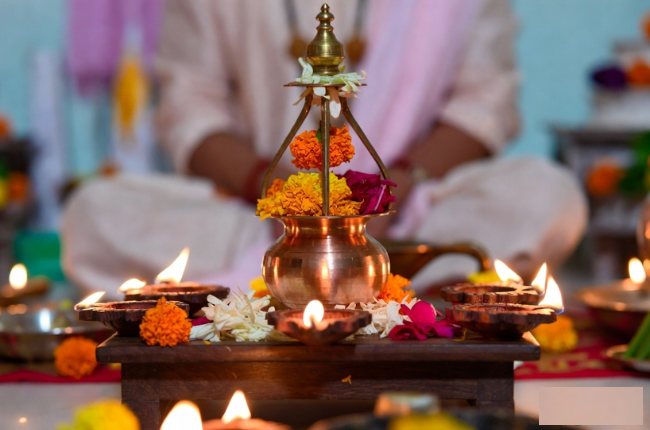
When something in life is stuck — a job that never comes, a marriage that keeps getting delayed, a health problem that no doctor fully explains — most families feel helpless. They know something is wrong. They just do not know what to do or where to start. That helplessness is the worst part: not the problem itself, but the silence around it, the sense that nobody in the family knows the next right step.
This is exactly the gap that Vedic Pooja selection is meant to fill. In classical Vedic thought, every form of suffering has a root — a planetary imbalance, an unfulfilled ancestral debt, a dosha in the Kundali, or an inauspicious period in the Vimshottari Dasha cycle. Each root has a corresponding remedy. The right Pooja, performed at the right time and with the correct Sankalpa, is not a superstition — it is a precise Vedic prescription matched to the cause.
What almost no Pooja article explains is the matching logic itself — why a particular ritual is prescribed for a particular problem and what happens when the wrong Pooja is selected for the wrong root cause. This guide covers that matching logic in full, from marriage delay and career blocks to debt, health, and dosha removal. By the end, every family reading this will know exactly which Pooja addresses which problem — and why.
Why Choosing the Wrong Pooja Gives No Results
Performing a Pooja with sincerity but without the correct problem-to-ritual match is one of the most common reasons families feel that "Pooja did not work." The Vedic ritual system is not a one-size prescription — it is a structured remedial science where each ceremony targets a specific planetary force, ancestral obligation, or elemental imbalance.
The Brihat Parashara Hora Shastra, the foundational text of classical Jyotish, establishes a direct relationship between planetary afflictions and their corresponding upayas — remedial actions. When a family performs a Satyanarayan Pooja to resolve a career block caused by a debilitated Saturn, no benefit follows — not because the Pooja is ineffective, but because Satyanarayan Pooja addresses Vishnu's grace for general wellbeing and vow fulfilment, not Saturn's karmic pressure on the tenth house.
Three Reasons Wrong Selection Fails
- Root mismatch: The problem has a planetary root (such as Rahu in the seventh house causing marriage delay) but the Pooja selected addresses a different deity or principle entirely
- Timing mismatch: The Pooja is performed outside its effective Muhurat window — for instance, a Saturn remedy performed on a Tuesday rather than a Saturday, when Saturn's receptivity is classical low
- Sankalpa gap: The Sankalpa — the formal statement of intent recited at the start of every Pooja — is not aligned to the specific problem. Without a precise Sankalpa, the ritual's remedial energy is unfocused
What Correct Selection Requires
Correct Pooja selection requires knowing three things before any ritual begins: the root cause (planetary, ancestral, elemental, or karmic), the life area affected (marriage, career, health, finance, property), and the Kundali configuration that is sustaining the problem. A complete Kundli reading is the foundational step — not an optional one.
As is commonly observed among families who follow this tradition carefully, a single well-matched Pooja performed once with a precise Sankalpa produces clearer results than five mismatched ceremonies performed over years.
How to Identify Your Root Cause Before Selecting a Pooja
The root cause of a life problem is the single most important piece of information in Pooja selection. Without it, even the most sincerely performed ritual addresses the wrong level of the problem.
Here is a practical step-by-step process any family can use to identify their root cause before approaching a Pandit for Pooja selection.
Step-by-Step Root Cause Identification
- Write down the problem in one sentence. Be specific: "My son has been unemployed for two years despite good qualifications" is a root cause statement. "Things are not going well" is not.
- Note when it started. Problems that began suddenly often correspond to a planetary Dasha or Bhukti change. Check the Kundali's Vimshottari Dashaperiod active at the time the problem began.
- Check for family pattern. If the same problem — delayed marriage, financial loss, recurring illness — has affected two or more generations, ancestral debt (Pitra Dosha) is a likely secondary root alongside any planetary factor.
- Identify the house under pressure. Career problems point to the tenth house and its lord. Marriage problems point to the seventh house. Health problems point to the sixth house and the ascendant. A Jyotishi reading your Kundali will confirm which house lord is afflicted and by which planet.
- Check for named Doshas. If a Jyotishi has previously mentioned Kaal Sarp Dosha, Manglik Dosha, or Shani Sade Sati, these named configurations each have specific prescribed Poojas — the general-purpose remedies will not resolve a named Dosha.
- Note your current emotional state and sleep quality. Chronic anxiety, disturbed sleep, and a feeling of being watched or followed often point to Nazar (evil eye) or negative energy interference — which requires a different Pooja category entirely from planetary remedies.
- Bring all of this to your Pandit as a written summary. A Pandit who receives this information can match the correct Pooja in one sitting rather than guessing from symptoms alone.
📿 MICRO-REMEDY BOX 1 — Community Voice
A question that appears repeatedly in Quora and Reddit threads on Vedic remedies: "I have done three different Poojas in the last two years for my marriage delay. None of them worked. What am I doing wrong?"
In classical Vedic practice, marriage delay has at least four distinct root causes — Manglik Dosha, Rahu in the seventh house, a weak Venus, and unfulfilled ancestral obligations — and each requires a different remedy. Performing Satyanarayan Pooja repeatedly for a Rahu-caused delay is like taking a fever medicine for a fracture. The medicine is not wrong. It is simply addressing the wrong problem. The first step is always a Kundali-based root cause reading, not another Pooja booking.
Pooja Selection by Life Problem — The Complete Matching Map
This is the core of Vedic Pooja selection: each life problem maps to a specific planetary cause, which maps to a specific deity or principle, which maps to a specific Pooja. The matching map below covers the eight most common life problem categories.
Marriage Delay and Relationship Problems
- Root cause: Manglik Dosha (Mars afflicting the seventh house), Rahu in the seventh house, weak Venus, or Kundali matching incompatibility
- Primary Pooja:Katyayani Pooja — prescribed specifically in the Skanda Purana for unmarried individuals facing delay; performed on Fridays of the Margashirsha month for maximum efficacy
- Supporting Pooja:Mangal Shanti Pooja for confirmed Manglik Dosha; Rahu-Ketu Shanti for seventh-house Rahu interference
- Avoid: Satyanarayan Pooja as the primary remedy for marriage delay — it is a general-blessing ceremony, not a targeted marriage remedy
Career Block and Job Loss
- Root cause: Afflicted tenth house, debilitated Saturn or Sun, adverse Mahadasha of Rahu or Ketu, or weak Dashamesh (lord of the tenth house)
- Primary Pooja:Navagraha Shanti Pooja targeting the specific afflicting planet — not a generic Navagraha ceremony but one with Sankalpa naming the tenth house and its lord
- Supporting Pooja:Surya Pooja for Sun-related authority and government job blocks; Shani Pooja for Saturn-ruled industries (law, construction, mining, labour)
- Internal link anchor: For a detailed reading of which planet governs your career house, see the career astrology guide
Debt and Persistent Financial Loss
- Root cause: Afflicted second house (accumulated wealth) or eleventh house (income), Ketu in the second house, or Pitra Dosha blocking ancestral prosperity
- Primary Pooja:Kuber Pooja with Shri Yantra consecration for wealth recovery; Lakshmi Pooja for sustained income restoration
- Supporting Pooja:Pitra Dosha Shanti if two or more generations in the family share the same financial pattern
- Note: The Kuber Mantra and Yantra guide covers the complete activation protocol
Health Problems and Chronic Illness
- Root cause: Afflicted sixth house, weak ascendant lord, Saturn or Rahu transiting the first or sixth house, or Graha Peeda (planetary suffering) in the Navamsha chart
- Primary Pooja:Maha Mrityunjaya Havan — prescribed in the Rigveda for recovery from serious illness and protection from untimely death; requires a qualified Pandit and a minimum 108-repetition Japa commitment
- Supporting Pooja:Dhanvantari Pooja for chronic conditions with no clear medical diagnosis; Surya Namaskar Pooja for immunity and vitality restoration
Property and Home Disputes
- Root cause: Afflicted fourth house, Vastu defects in the existing property, or Saturn in the fourth house creating obstruction in property acquisition
- Primary Pooja:Vastu Shanti Pooja — a full Vedic property-purification ceremony that corrects negative energy alignment without demolition. For Vastu correction methods, the Vastu remedies guide details the full process
- Supporting Pooja:Griha Pravesh Pooja for new homes before first entry
Child-Related Problems (Delay in Conception, Child Health)
- Root cause: Afflicted fifth house (the house of children and progeny), weak Jupiter (the Putrakaraka — the planet of children), or Santaan Dosha
- Primary Pooja:Santaan Gopal Pooja — directly addressed to Lord Krishna as the protector of children; widely prescribed in the Vaishnavagama tradition for conception delay
- Supporting Pooja:Griha Shanti if the child is experiencing repeated illness or disturbance
Negative Energy and Evil Eye (Nazar)
- Root cause:Nazar (evil eye), Abhichara (negative intent from another person), or accumulated negative energy in the home environment
- Primary Pooja:Baglamukhi Pooja for protection from deliberate ill-intent; Nazar Utarna ritual for general evil eye removal. The evil eye protection guide covers home-based removal methods
- Supporting remedy: Black thread and iron ring — details in the black thread and iron ring guide
Ancestral Debt and Pitra Dosha
- Root cause: Unfulfilled obligations to deceased ancestors, Pitra Dosha in the ninth house, or repeated generational suffering patterns
- Primary Pooja:Pitra Dosha Shanti Pooja performed during Pitru Paksha for maximum efficacy; Tarpan ritual as the foundational ancestral obligation. For complete Pitru Paksha guidance, see the Pitru Paksha Tarpan guide
- Supporting Pooja:Narayan Nagbali for severe ancestral karmic cases as prescribed in the Garuda Purana
The Classical Authority Behind Pooja-to-Problem Matching
The idea that each ritual remedy must match a specific planetary or karmic root is not a modern Pandit's opinion — it is a structured doctrine laid out in classical Vedic texts across multiple traditions.
The Brihat Parashara Hora Shastra, composed by the sage Parashara and regarded as the foundational text of Vedic Jyotish, dedicates multiple chapters to upaya vidhi — the science of remedial action. Parashara's teaching is precise: the remedy must address the specific graha (planet) causing the affliction, the specific bhava (house) under pressure, and the specific dasha period in which the affliction is active. A remedy applied to the wrong planet or outside the active dasha period is described as ineffective — not harmful, simply without result.
What the Garuda Purana Adds
The Garuda Purana extends the remedial framework from planetary afflictions to ancestral obligations. It holds that no planetary remedy fully resolves a problem that has an unaddressed ancestral root — the Pitra Dosha must be discharged through Tarpan, Shraddha, or Pinda Daan before the planetary upaya can produce its full effect. This is why families sometimes find that Navagraha Poojas produce only partial results: the planetary pressure eases, but the ancestral layer remains untouched.
The Muhurta Dimension
Muhurta Chintamani by Ramadaivagna — the classical authority on auspicious timing — establishes that even a correctly matched Pooja produces diminished results when performed at an inauspicious time. The correct Tithi (lunar day), Vara (weekday), and Nakshatra (birth star) combination is not optional — it is structurally part of the remedy. A Panchang reading gives families the framework to understand why timing matters as much as the Pooja itself.
As many practitioners note, the families who receive the clearest results from Pooja are those who follow all three dimensions — correct matching, correct Sankalpa, and correct Muhurat — rather than treating the ceremony as a standalone event disconnected from the Kundali and the calendar.
📿 MICRO-REMEDY BOX 2 — Myth vs. Fact
MYTH: Satyanarayan Pooja is a general-purpose Pooja that can be performed for any life problem and will address it.
FACT: Satyanarayan Pooja is a Sankalpa-based vow fulfilment ceremony addressed to Lord Vishnu. It is prescribed for general wellbeing, gratitude after a wish is fulfilled, and household peace — not for targeted dosha removal or planetary affliction. Performing it as a remedy for Kaal Sarp Dosha or Manglik Dosha is a category mismatch. Classical texts prescribe Satyanarayan Pooja after a problem resolves — as an act of gratitude — not as the remedy that resolves it.
Named Doshas and Their Specific Pooja Prescriptions
When a Jyotishi has identified a named Dosha in the Kundali, the Pooja selection question is already partially answered — because each named Dosha in the classical system has a prescribed remedial ritual attached to it. Performing a general Pooja when a named Dosha is present is the single most common selection error.
Kaal Sarp Dosha
All seven planets sitting between Rahu and Ketu in the Kundali creates Kaal Sarp Dosha — a configuration described in the Phaladeepika as one that intensifies struggle in the areas governed by the afflicted houses. The prescribed remedy is Kaal Sarp Dosh Shanti Pooja, ideally performed at Tryambakeshwar (Maharashtra) or Ujjain on a Panchami Tithi during the waxing lunar fortnight. For families who cannot travel, the ritual can be performed at home by a qualified Pandit who holds the complete Vidhi, including the Nagbali prayer component. Full details are in the Kaal Sarp Dosha removal guide.
Manglik Dosha
Mars in the first, second, fourth, seventh, eighth, or twelfth house creates Manglik Dosha — a configuration that classical tradition associates with friction, delay, and separation in marriage. The Mangal Shanti Pooja is the primary prescribed remedy, performed on a Tuesday during the Shukla Paksha (waxing fortnight). A complementary practice from the Parashar tradition is Kumbh Vivah — a symbolic pre-marriage ritual to discharge the Dosha before the actual wedding.
Pitra Dosha
Sun, Saturn, or Rahu afflicting the ninth house creates Pitra Dosha — the classical marker of unfulfilled ancestral obligation. As the Garuda Purana teaches, this Dosha does not resolve through planetary worship alone. The prescribed sequence is: Tarpan on every Amavasya (new moon), Pitra Dosha Shanti Pooja during Pitru Paksha (the 16-day lunar period dedicated to ancestors), and Pind Daan at Gaya for severe cases.
Rahu-Ketu Dosha
When Rahu or Ketu occupy the ascendant, fourth, seventh, or tenth house with high affliction, the family experiences confusion, sudden reversals, and a persistent sense that effort produces no proportionate result. Rahu-Ketu Shanti Pooja, performed with a Navagraha Havan, is the classical prescription. The Rahu Ketu negative effects guide covers the full effect profile and remedy protocol.
As many families discover when they sit with their Pandit for the first time after years of unexplained struggle — the name of the Dosha in their Kundali has been visible all along. The suffering was not mysterious. The remedy was always specific. The gap was simply the knowledge of how to read the matching logic.
What Happens When the Pooja Does Not Work — The Honest Answer
Many families come to this question after spending real money and real faith on a Pooja that produced no visible change. This question deserves a plain, honest answer — not a deflection.
A Pooja may produce no visible result for one of four distinct reasons, and it is important to know which applies before abandoning the Vedic remedial path entirely.
The Four Reasons Pooja Appears Ineffective
1. Root cause misidentification. The most common reason. The Pooja addressed the wrong planet, the wrong house, or the wrong Dosha. This is not a failure of the ritual — it is a diagnostic error. The solution is a precise Kundali reading, not abandonment of the practice.
2. Incomplete Vidhi. Some Doshas — particularly Kaal Sarp and Pitra Dosha — require a multi-step ritual sequence to produce full results. A single ceremony that covers only one step of a three-step prescribed sequence will produce partial results. This is described in the Muhurta Chintamani as a common practitioner error, not a flaw in the classical system.
3. Active Dasha pressure. When a person is in the peak phase of a difficult Mahadasha — such as the middle phase of Shani Mahadasha or the peak of Rahu Mahadasha — the planetary pressure is at its strongest. A correctly matched Pooja performed during this phase may reduce suffering without eliminating it entirely, because the karma-phala (the karmic fruit) of that Dasha period must still run its course. The Pooja eases the severity — it does not cancel the Dasha. A Mahadasha reading confirms whether this applies.
4. Deep ancestral karma. Vedic tradition holds, as the Garuda Purana teaches plainly, that some karma runs across multiple lifetimes and cannot be fully discharged in a single remedy cycle. In such cases, consistent practice — annual Tarpan, regular Pooja, sincere daily discipline — produces cumulative relief over time rather than a single dramatic shift.
Personal results, as always, depend on individual karma, the quality of practice, and divine grace. A Pooja is a conversation with the divine — not a transaction with a guaranteed receipt.
One Question Almost No Article Answers — Pooja Sequence When Two Doshas Are Present Together
When a Kundali carries more than one named Dosha at the same time — for instance, both Kaal Sarp Dosha and Pitra Dosha — a question arises that almost no published article addresses: which Dosha is remedied first, and does the sequence matter?
This question appears repeatedly in Reddit's r/jyotish threads and Quora discussions with no satisfying answer in any existing web article. Here is what classical tradition actually says.
Why Sequence Matters
The Garuda Purana's teaching on Pitra Dosha is explicit: ancestral debt (pitru rina) must be discharged before planetary remedies produce their full effect. The reasoning is structural — if the ancestral channel is blocked, the planetary remedy's energy has no clean path through which to act. Think of it as clearing the pipe before running the water.
The practical sequence for a Kundali carrying both Pitra Dosha and a planetary Dosha (such as Kaal Sarp or Manglik) is therefore:
- First cycle: Address Pitra Dosha through Tarpan on three consecutive Amavasyas and a Pitra Dosha Shanti Pooja during Pitru Paksha
- Second cycle: After the Pitra Dosha ritual sequence is complete (typically one full lunar month), begin the planetary Dosha remedy (Kaal Sarp Shanti, Mangal Shanti, or Rahu-Ketu Shanti as applicable)
- Ongoing: Maintain a consistent monthly Amavasya Tarpan practice throughout the planetary remedy period — do not stop ancestral observance once begun
What If Both Need Urgent Attention
When circumstances require both to be addressed within a short window — for instance, an approaching marriage date with both Manglik and Pitra Dosha present — classical tradition permits a combined Havan that addresses both in one ceremony with a dual Sankalpa, provided a Pandit trained in both Vidhi sequences performs it. This is not a shortcut — it is an established classical provision. A Pandit familiar with your Kula tradition will know whether your family's lineage tradition permits this combined format.
What Families Never Think to Ask — Which Poojas Require a Pandit and Which Can Be Done Alone
Another question that sits in thousands of Reddit and Quora threads with no clean answer: for which Poojas is a trained Pandit absolutely necessary, and for which is sincere home practice sufficient?
Poojas That Require a Trained Pandit — No Exceptions
- Kaal Sarp Dosh Shanti Pooja — requires specific Naga Devata invocation and Rahu-Ketu propitiation Vidhi that cannot be performed without proper training
- Narayan Nagbali — a multi-day ancestral ritual prescribed by the Garuda Purana; incorrect Vidhi can have adverse consequences according to classical texts
- Baglamukhi Pooja — a Tantric Pooja in the Shakta tradition; its Vidhi requires Diksha (initiation) from a qualified Guru; performed incorrectly it produces no result and may agitate the household energy
- Maha Mrityunjaya Havan at scale (above 1008 repetitions) — requires a group of trained priests (Ritviks) for the correct Ahuti (oblation) sequence
Poojas Fully Suited to Sincere Home Practice
- Daily Surya Namaskar Pooja — water offering (Arghya) to the rising sun each morning; no Pandit required; deeply effective for Sun-related career and health afflictions
- Satyanarayan Pooja — a household ceremony with an accessible Vidhi; traditionally performed by family members themselves after major life events
- Lakshmi Pooja on Fridays — straightforward Bhakti-based practice; highly effective for sustained income when performed consistently with a clear Sankalpa
- Hanuman Chalisa recitation as a Saturn and Rahu remedy — 40 verses recited on Tuesdays and Saturdays; prescribed in the Vaishnav tradition; no initiation required
The Middle Category — Pandit Guidance Strongly Advisable
For Poojas involving named Doshas (Manglik Shanti, Pitra Dosha Shanti, Rahu-Ketu Shanti), a Pandit is not technically required for the ceremony itself but is strongly advisable for the initial Kundali assessment, the Sankalpa formulation, and the Muhurat selection. The ritual steps can in some cases be followed at home — but without a precise Sankalpa, the ceremony lacks its directional force. For a complete look at authentic Vedic Pooja services, AtoZPandit.com provides verified Pandits for all Dosha-specific rituals across India.
FAQ
Q1. How do I know which Pooja is right for my problem? The correct Pooja is identified by knowing the root cause — planetary, ancestral, elemental, or karmic. A Kundali reading by a qualified Jyotishi identifies which house and planet are under pressure, which Dosha is active, and which Dasha period is running. These three data points together determine the correct Pooja with precision. Personal results vary with karma and sincerity.
Q2. Can I perform a Pooja at home without a Pandit? Many Poojas — Satyanarayan, Lakshmi Pooja, Surya Arghya — are entirely suited to sincere home practice. Dosha-specific rituals such as Kaal Sarp Shanti, Narayan Nagbali, and Baglamukhi Pooja require a trained Pandit and in some cases initiation. Performing complex Tantric or multi-Ritvij Havans at home without proper training produces no classical result.
Q3. How do I reduce the effects of a Kundali dosha at home? Daily Hanuman Chalisa recitation on Tuesdays and Saturdays reduces Manglik and Saturn-related pressure. Tarpan on Amavasya discharges ancestral debt consistently over time. Surya Arghya each morning addresses Sun and career-related afflictions. These home practices support but do not replace the prescribed Dosha Shanti Pooja for severe configurations.
Q4. Why did my Pooja not give any result even after full faith? Four reasons explain this: root cause was misidentified and the wrong Pooja was selected; the Vidhi was incomplete for a multi-step remedy; the Pooja was performed during peak Mahadasha pressure where relief comes gradually; or the karma involved runs deeper than a single remedy cycle. A follow-up Kundali reading is the next correct step.
Q5. Which Pooja is best for marriage delay and finding a good match? Katyayani Pooja is the classical prescription for unmarried individuals facing delay — prescribed in the Skanda Purana and performed on Fridays of the Margashirsha month. Where Manglik Dosha is confirmed, Mangal Shanti Pooja is performed first. Where Rahu is in the seventh house, Rahu-Ketu Shanti is the indicated remedy. The specific Dosha drives the selection.
Q6. Is Satyanarayan Pooja good for all types of problems? Satyanarayan Pooja addresses general household wellbeing, gratitude after fulfilled wishes, and Vishnu's blessings for family peace. Classical tradition prescribes it after a problem resolves — as a vow fulfilment ceremony. It is not the prescribed remedy for named Doshas, planetary afflictions, or ancestral debt. Using it as the primary remedy for career blocks or marriage delay is a category mismatch.
Q7. Which Pooja solves financial problems and debt fastest? Kuber Pooja with Shri Yantra consecration is the classical remedy for wealth recovery. Lakshmi Pooja performed on Fridays consistently restores income flow. Where the financial problem has a generational pattern, Pitra Dosha Shanti is addressed first. As astrological tradition holds, individual outcomes depend on karma, sincerity, and the completeness of the Vidhi.
Conclusion
In Vedic thought, every problem has a root, and every root has a remedy — this is the principle of upaya, the science of remedial action that runs through the entire classical tradition from the Brihat Parashara Hora Shastra to the Garuda Purana. The Pooja system is not a collection of ceremonies to choose from by preference — it is a precise matching science where the correct ritual, the correct Sankalpa, and the correct Muhurat together address the specific force creating the suffering.
The most practical step any family can take today is this: write down the problem in one sentence, note when it started, and book a Kundali reading that identifies the active Dasha, the afflicted house, and any named Dosha present. That reading will tell you exactly which Pooja to perform, when to perform it, and whether a Pandit is required.
Outcomes, as classical tradition consistently teaches, depend on karma, sincerity, and divine grace — not on the ceremony alone. A Pooja performed with genuine intent and precise preparation is the beginning of the conversation. The rest belongs to the divine.
Not sure which Pooja addresses your specific Kundali Dosha or life problem? AtoZPandit.com connects you with verified Pandits and qualified Jyotishis who identify the correct Pooja, the precise Muhurat, and the complete Vidhi — for every life situation, across India.
DISCLAIMER This article is published for educational and cultural awareness purposes only. The Vedic remedies and Pooja recommendations described here are part of India's classical tradition and do not substitute for qualified medical, legal, or financial advice. For personalised guidance, connect with AtoZPandit.com.