
Rudraksha Selection Guide Which Mukhi Bead Is Right and How to Wear It
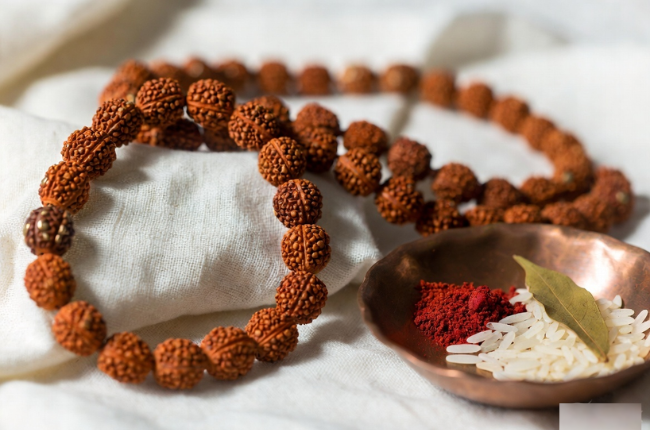
A person who has been wearing the wrong Rudraksha for three years does not know it is wrong — they simply notice that nothing has changed. The sleep is still disturbed. The career is still stalled. The health problem that prompted the purchase has not resolved. They assume the bead did not work, when the actual problem is that the bead was never selected for their situation to begin with. Rudraksha selection is not a single decision — it is a three-part matching process between the bead's governing planet, the wearer's birth chart and current planetary period, and the specific life challenge being addressed. The Shiva Purana, which contains the most authoritative classical account of Rudraksha's origin and the properties of each Mukhi, makes this matching explicit: each of the fourteen primary Mukhis corresponds to a specific deity, a specific planet, and a specific category of human experience. Wearing a bead without knowing which planet it governs and whether that planet is relevant to your current situation is the equivalent of taking a medicine prescribed for someone else.
What most articles and YouTube videos on this subject miss entirely is the second level of selection — the difference between wearing a Rudraksha for your Rashi or Lagna versus wearing one for your current Mahadasha lord. These two approaches produce different beads for the same person at different points in their life, and a prescription that was correct during Jupiter Mahadasha may be entirely wrong during Saturn Mahadasha. This article covers the complete three-tier selection framework, every primary Mukhi and its classical properties, the authentic energisation process, the wearing rules that most new Rudraksha wearers get wrong, and the practical tests for identifying a genuine bead before purchase.
What Rudraksha Is and Where Its Authority Comes From
Rudraksha is a Sanskrit compound: Rudra is a Vedic name for Shiva, and Aksha means eye. The literal meaning is the eye of Rudra — and the Shiva Purana narrates its origin in the tears that fell from Shiva's eyes after thousands of years of deep meditation for the welfare of all beings. Where those tears fell, the Rudraksha trees grew. This is not merely a devotional story — it establishes the classical position that the Rudraksha bead is not a manufactured spiritual tool but a natural object that carries a specific energetic charge from the moment of its formation.
The Rudraksha tree — Elaeocarpus ganitrus in botanical classification — grows primarily in the Himalayan foothills of Nepal and India, and in Indonesia (Java and Bali). The bead is the dried seed of the tree's fruit, and its most important structural feature is the number of natural vertical lines running from the top to the bottom of the seed. These lines are the Mukhis — the faces — and they determine the bead's planetary association, its presiding deity, and its specific energy properties.
The Classical Textual Sources
Three primary classical texts document Rudraksha's properties and selection rules:
- Shiva Purana — The most authoritative source, covering the origin of Rudraksha, the properties of each Mukhi from one to fourteen, and the general wearing rules
- Srimad Devi Bhagavata Purana — Provides additional detail on Rudraksha's energetic properties and contains one of the most complete accounts of the rules for wearing and maintaining Rudraksha
- Mantra Maharnava — A classical Tantric text that details the mantra-based energisation protocols for each Mukhi and the specific planetary remediation uses
The Ratna Pariksha tradition — the classical science of gem and sacred object testing — also addresses Rudraksha authenticity, providing the physical tests that distinguish genuine beads from imitations.
Nepal Rudraksha Versus Java Rudraksha
This distinction matters practically, and it is consistently either ignored or misstated in popular content:
Nepal Rudraksha — Larger in size (typically 18-25mm diameter), darker brown, with deeper and more clearly visible Mukhis. Classical Tantric tradition considers Nepal Rudraksha more powerful for remedial and spiritual purposes because of the altitude and specific soil conditions of the Himalayan growing region. The Shiva Purana's descriptions of bead size and Mukhi clarity align more closely with the Nepal variety.
Java Rudraksha — Smaller in size (typically 8-14mm diameter), lighter brown, with finer and more numerous natural surface details. Java Rudraksha is genuine and energetically valid — the same species of tree, the same Mukhi count system. It is more affordable and more available, and is particularly suitable for mala (rosary) use because its uniform smaller size threads more evenly.
The classical position, as understood across the North Indian and Nepali Rudraksha traditions, is that Nepal beads are preferred for single-bead wearing (pendant or wrist) for remedial purposes, while Java beads are entirely appropriate for mala wearing and regular devotional use.
The Three-Tier Rudraksha Selection Framework
Most Rudraksha articles give a flat list: "wear 5 Mukhi for general wellbeing, 6 Mukhi for focus, 8 Mukhi for Rahu." This surface-level advice ignores the classical selection hierarchy entirely. Classical Rudraksha prescription follows three tiers, and the correct bead is determined by which tier's need is most urgent for the wearer.
Tier 1 — Rashi and Lagna Based Selection
Every Rudraksha Mukhi is governed by a specific planet. The planet that rules the wearer's Moon sign (Janma Rashi) or Ascendant (Lagna) determines the baseline Rudraksha that supports the wearer's fundamental energetic constitution. This is the most stable and long-term prescription — it does not change unless the person's life situation changes fundamentally.
Rashi / Lagna | Ruling Planet | Primary Rudraksha |
Aries, Scorpio | Mars | 3 Mukhi |
Taurus, Libra | Venus | 6 Mukhi or 13 Mukhi |
Gemini, Virgo | Mercury | 4 Mukhi |
Cancer | Moon | 2 Mukhi |
Leo | Sun | 1 Mukhi or 12 Mukhi |
Sagittarius, Pisces | Jupiter | 5 Mukhi |
Capricorn, Aquarius | Saturn | 14 Mukhi or 7 Mukhi |
Rahu-influenced | Rahu | 8 Mukhi |
Ketu-influenced | Ketu | 9 Mukhi |
Tier 2 — Mahadasha Based Selection
The Mahadasha lord at any given point in the person's life determines the most currently relevant Rudraksha — the one most aligned with the active planetary energy of the moment. This prescription changes as Mahadashas change. A person in Jupiter Mahadasha benefits most from a 5 Mukhi. The same person entering Saturn Mahadasha benefits most from a 14 Mukhi or 7 Mukhi. The Mahadasha-based bead works alongside the Rashi-based bead — they are not substitutes for each other but complementary prescriptions addressing different time horizons.
For understanding which Mahadasha is currently running and which planetary energies need the most support, the Mahadasha Complete Reading Guide provides the full Dasha identification and interpretation framework.
Tier 3 — Challenge Based Selection
The third tier addresses a specific current life problem — career obstruction, marriage delay, health deterioration, financial loss, or relationship conflict. This is the most commonly used tier and the one most Rudraksha sellers focus on exclusively — but it is the least stable prescription. A challenge-based bead corrects a specific imbalance and may become unnecessary once the imbalance resolves. Classical Rudraksha tradition treats challenge-based prescriptions as temporary remedial tools, not permanent wearings.
As many families discover when they sit with their Pandit for the first time, the correct prescription typically combines all three tiers — one bead for the Rashi, one for the current Mahadasha, and one for the specific challenge — worn together as a combination or as separate pieces for specific time periods.
Every Primary Mukhi — Classical Properties and Who Should Wear It
The following descriptions draw from the Shiva Purana, the Srimad Devi Bhagavata Purana, and the Mantra Maharnava. Each bead's governing planet, presiding deity, classical benefit, and contraindications are listed as documented in these sources.
1 Mukhi Rudraksha — The Rarest and Most Powerful
Governing planet: Sun. Presiding deity: Shiva himself — specifically in the Sadashiva form.
Classical properties: The Shiva Purana describes the 1 Mukhi as the most spiritually potent of all beads, representing the undivided consciousness of Shiva. Classical texts associate it with liberation (moksha), the dissolution of ego, and the highest states of meditation. For material life, it strengthens the Sun in the birth chart — supporting government authority, leadership, health of the heart and spine, and the father's wellbeing.
Who should wear: Those with a weakened Sun in the birth chart, those in Sun Mahadasha seeking to strengthen its positive expression, and those in leadership roles requiring sustained authority and clarity.
Important note: Genuine round 1 Mukhi Rudraksha from Nepal is extremely rare and correspondingly expensive. The most commonly sold "1 Mukhi" is a half-moon shaped bead (kaju shaped) from South India — the Shiva Purana's descriptions align more closely with the round Nepali variety. Families should be aware that the majority of round 1 Mukhi beads in the market are artificial or from other plant species.
2 Mukhi Rudraksha
Governing planet: Moon. Presiding deity: Ardhanarishvara (Shiva-Shakti united).
Classical properties: The 2 Mukhi governs the mind, emotions, relationships, and the mother's wellbeing. The Srimad Devi Bhagavata Purana specifically recommends it for harmonising relationships — between husband and wife, between mother and child, and between any two people in close emotional bond. It stabilises the Moon in the chart, reducing emotional volatility, anxiety, and sleep disturbances.
Who should wear: Those with a weak or afflicted Moon, those experiencing relationship instability or emotional anxiety, and those in Moon Mahadasha who need emotional grounding. Particularly recommended for couples wearing together — one bead each — as a relationship harmony tool.
3 Mukhi Rudraksha
Governing planet: Mars. Presiding deity: Agni (the fire god).
Classical properties: The 3 Mukhi carries the energy of fire — it purifies past karma, dissolves accumulated guilt and inferiority, and generates the physical energy and courage associated with a well-placed Mars. The Shiva Purana specifically names the 3 Mukhi as the remedy for karma dosha — the accumulated burden of past actions — and classical tradition recommends it for those who carry a persistent sense of shame, self-blame, or low self-worth that has no identifiable current cause.
Who should wear: Those with Mars affliction in the birth chart, those recovering from illness or surgery (Mars governs blood and physical energy), those experiencing persistent low confidence, and those in Mars Mahadasha needing physical vitality.
4 Mukhi Rudraksha
Governing planet: Mercury. Presiding deity: Brahma.
Classical properties: The 4 Mukhi governs intelligence, speech, creative expression, and learning. The Mantra Maharnava associates it with the activation of Vak Siddhi — the power of speech to be effective and persuasive. Students, teachers, writers, speakers, and anyone whose career depends on communication and precise expression benefit most from this bead.
Who should wear: Those with Mercury affliction, children with learning difficulties, those in Mercury Mahadasha, professionals in education, law, journalism, and business communication.
5 Mukhi Rudraksha — The Universal Bead
Governing planet: Jupiter. Presiding deity: Kalagni Rudra (a form of Shiva governing time and karma).
Classical properties: The 5 Mukhi is the most widely recommended Rudraksha across all classical texts — it is described as appropriate for all wearers regardless of Rashi, Lagna, or Mahadasha. The Shiva Purana states that the 5 Mukhi purifies five categories of great sin and promotes health, wisdom, peace, and general wellbeing. Its Jupiter association makes it the strongest single bead for dharmic living, higher education, children's welfare, and spiritual growth.
Who should wear: Everyone — the 5 Mukhi is the classical default recommendation when no specific prescription applies. It forms the base of all Rudraksha malas and is the standard bead for general spiritual practice.
Vedic Essence: The classical teaching holds that the 5 Mukhi Rudraksha does not amplify a specific planetary force so much as it harmonises all five elements within the wearer's energy field — making it uniquely suitable as a foundational bead regardless of chart specifics.
6 Mukhi Rudraksha
Governing planet: Venus. Presiding deity: Kartikeya (Skanda).
Classical properties: The 6 Mukhi governs willpower, focus, artistic expression, and relationships. The Srimad Devi Bhagavata Purana associates it with the energy of Kartikeya — courage in action combined with disciplined beauty. It is particularly beneficial for those whose Venus is afflicted in the birth chart, producing difficulties in relationships, creative work, or reproductive health.
Who should wear: Those with Venus affliction, those in Venus Mahadasha experiencing relationship difficulties, artists and creative professionals, and those dealing with reproductive health challenges.
7 Mukhi Rudraksha
Governing planet: Saturn. Presiding deity: Mahalakshmi and Ananga (a form of Shiva).
Classical properties: The 7 Mukhi is the primary bead for financial recovery and the removal of obstacles caused by Saturn's difficult placement or transit. The Shiva Purana specifically names it for those experiencing poverty, chronic illness, persistent bad luck, and the effects of Saturn's malefic aspects. It does not speed Saturn up — it helps the wearer navigate Saturn's demands with greater endurance and less suffering.
Who should wear: Those in Saturn Mahadasha or Sade Sati, those with Saturn afflicting the second or eleventh house (houses of wealth), those experiencing chronic health conditions, and those whose career progress is consistently blocked despite sustained effort.
For families dealing with Saturn-related difficulties across multiple life areas, the Shani Sade Sati Remedies Guide provides the complete Saturn pacification framework within which the 7 Mukhi prescription sits.
8 Mukhi Rudraksha
Governing planet: Rahu. Presiding deity: Ganesha.
Classical properties: The 8 Mukhi removes Rahu-related obstacles — sudden reversals, hidden enemies, deception in partnerships, confusion about direction, and the disorientation that characterises a difficult Rahu period. Its Ganesha association adds the quality of obstacle removal to Rahu's energy of transformation, creating a bead that specifically addresses the experience of being blocked by forces that cannot be clearly identified or confronted directly.
Who should wear: Those in Rahu Mahadasha experiencing confusion, sudden reversals, or deceptive partnerships. Also recommended for those with Rahu in the first, seventh, or tenth house creating identity confusion or relationship difficulties.
9 Mukhi Rudraksha
Governing planet: Ketu. Presiding deity: Durga (Navadurga — the nine forms of the goddess).
Classical properties: The 9 Mukhi carries the energy of Ketu — dissolution, spiritual insight, liberation from attachment, and protection from unseen forces. The Mantra Maharnava associates it with fearlessness (abhaya) and with protection from negative energies, black magic, and the effects of evil eye (nazar). It is the strongest Rudraksha for spiritual seekers and for those experiencing Ketu Mahadasha's characteristic sense of dissolution and disorientation.
Who should wear: Those in Ketu Mahadasha, those in spiritual practice seeking deeper meditation states, those experiencing fear, anxiety from unknown causes, or susceptibility to negative energies. For families also dealing with evil eye concerns, the Evil Eye Protection Complete Rituals Guide provides the complementary protection framework.
10 to 14 Mukhi — The Higher Mukhis
10 Mukhi — Governs all planets simultaneously; presiding deity is Vishnu. Recommended for those whose charts show multiple planetary afflictions simultaneously — it does not address any single planet with the intensity of a single-planet bead, but provides broad-spectrum balancing.
11 Mukhi — Governing deity is Hanuman and the eleven Rudras. The Shiva Purana describes the 11 Mukhi as the bead of wisdom, adventure, and protection in all directions. Particularly recommended for frequent travellers and those in fields requiring physical courage.
12 Mukhi — Sun's higher-octave bead; presiding deity is the twelve Adityas (forms of the Sun). Stronger than the 1 Mukhi for Sun-related issues in material life — recommended specifically for those in authority roles experiencing sustained challenges to their leadership.
13 Mukhi — Venus's higher-octave bead; presiding deity is Indra and Kamadeva. The Srimad Devi Bhagavata Purana associates it with the fulfilment of all desires (sarva kama siddhi) and with attraction, charisma, and the magnetic quality that Venus governs at its finest expression.
14 Mukhi — Saturn and Hanuman; the Mantra Maharnava calls it Deva Mani — the jewel of the gods. The 14 Mukhi is the strongest single bead for intuition, foresight, and protection from negative karmic forces. It directly activates the Ajna chakra (third eye centre) and is the most powerful Rudraksha for those seeking deep intuitive clarity in decision-making.
📖 Did You Know The Srimad Devi Bhagavata Purana contains one of the most specific classical descriptions of Rudraksha quality standards ever documented — it describes four grades of bead based on size, shape, and Mukhi clarity. The text specifies that beads the size of an amalaki fruit (Indian gooseberry) are the finest and most powerful, beads the size of a plum are medium grade, and beads smaller than a chickpea are the most affordable but least potent for serious remedial use. This size-to-potency relationship is documented by name in a classical Purana — yet it appears in almost no modern Rudraksha content anywhere.
How to Energise Rudraksha Before Wearing — The Correct Classical Protocol
A Rudraksha bead purchased from a shop is not ready to wear. Classical Tantric tradition holds that the bead must be energised — pranapratishtha performed — before it is placed on the body. An unenergised Rudraksha is like a lamp with oil but no flame: the potential is present, the effect is not yet activated.
The Home Energisation Protocol
This protocol is drawn from the Mantra Maharnava's guidelines for individual bead energisation and can be performed at home without a Pandit present. For higher Mukhis (above 8) and for beads being worn for serious remedial purposes, a Pandit-performed energisation is always more complete.
- Choose the day. Monday is the most auspicious day for Rudraksha energisation — it is Shiva's day. Alternatively, begin on the Shukla Paksha Panchami (fifth day of the waxing moon) for maximum energetic receptivity.
- Prepare the bead. Place the Rudraksha in a small copper or clay bowl. Cover with pure cow's milk (Panchagavya — five cow products mixed together — is the classical medium, but pure milk is acceptable as the minimum). Leave overnight.
- Wash in the morning. Rinse the bead with clean water, then with Gangajal (Ganga water) if available. Pat dry with a clean white cloth. Never use chemical cleaning agents on Rudraksha at any point.
- Apply Panchamrit. Bathe the bead sequentially in the five sacred substances: raw milk, curd, honey, ghee, and sugar water — each poured over the bead individually while sitting facing east.
- Apply sacred marks. Touch the bead with a small amount of sandalwood paste (chandan) and then kumkum. Place a single fresh bilva leaf underneath it.
- Recite the energisation mantra. For general energisation, recite Om Namah Shivaya 108 times while holding the bead in cupped hands. For Mukhi-specific energisation, recite the bead's specific Beej mantra 108 times (listed in the next section).
- Set the Sankalpa. State clearly — aloud, in your own words — your name, your gotra if known, and the specific purpose for which you are wearing the bead. This Sankalpa is the energetic contract between the wearer and the bead.
- Wear immediately after the recitation. Do not place the energised bead down on an unclean surface or leave it unattended before wearing. The first wearing completes the energisation process.
Mukhi-Specific Beej Mantras
Each Rudraksha Mukhi carries a specific Beej mantra for energisation and daily activation:
- 1 Mukhi:Om Hreem Namah
- 2 Mukhi:Om Namah
- 3 Mukhi:Om Kleem Namah
- 4 Mukhi:Om Hreem Namah
- 5 Mukhi:Om Hreem Namah (universal — used for all five-faced beads)
- 6 Mukhi:Om Hreem Hoom Namah
- 7 Mukhi:Om Hoom Namah
- 8 Mukhi:Om Hoom Namah
- 9 Mukhi:Om Hreem Hoom Namah
- 10 Mukhi:Om Hreem Namah Namah
- 11 Mukhi:Om Hreem Hoom Namah
- 12 Mukhi:Om Kraum Sraum Raum Namah
- 13 Mukhi:Om Hreem Namah
- 14 Mukhi:Om Namah
Wearing Rules — What Classical Tradition Actually Requires
This section addresses the rules that cause the most confusion and the most mistakes among first-time Rudraksha wearers. The classical sources — primarily the Shiva Purana and the Srimad Devi Bhagavata Purana — are specific and consistent on these points.
Thread and Metal Rules
- Rudraksha should be strung in red or white silk thread, or set in silver or copper wire. Gold is acceptable but the classical texts give preference to silver for most Mukhis.
- Never string Rudraksha in black thread for primary wearing — black thread carries a Shani (Saturn) association that conflicts with most Mukhis unless specifically prescribed for a Saturn remedy.
- The knot between beads in a mala must be tied correctly — the classical mala has 108 beads plus one Sumeru bead (the anchor bead that marks the beginning and end of the counting cycle).
Body Placement Rules
- Single bead pendant: Worn at the heart centre (Anahata chakra) — the bead should rest at the sternum level, neither too high at the throat nor too low at the stomach.
- Wrist mala: The classical texts support wrist wearing but specify the right wrist for most Mukhis. The left wrist is specified only for Rahu and Ketu related beads (8 Mukhi and 9 Mukhi) in certain Tantric traditions.
- Full mala (108 beads): Worn around the neck, resting on the chest. The Sumeru bead should not be crossed during counting — the mala is reversed at the Sumeru, never counted past it.
Daily Maintenance Rules
- Remove before sleep: The Srimad Devi Bhagavata Purana recommends removing Rudraksha before sleep in most circumstances — particularly full malas. Single beads worn as pendants may remain on during sleep if the wearer is in consistent spiritual practice.
- Remove before non-vegetarian food and alcohol: Classical texts are consistent that Rudraksha should not be worn while consuming meat, fish, or alcohol. The bead's Shaiva energy is considered incompatible with tamasic food consumption.
- Oil periodically: Rub the bead with a small amount of sandalwood oil or pure sesame oil once per month to prevent the wood from cracking. Dry Rudraksha loses energetic potency over time.
- Recite the Beej mantra daily: The bead requires daily activation through its mantra — minimum 11 repetitions each morning after bathing, before putting it on.
Rules for Women
This is one of the most consistently misrepresented topics in Rudraksha content, and the classical position is clear:
- Women can and should wear Rudraksha — the Srimad Devi Bhagavata Purana explicitly states that Rudraksha's blessings are available to all people regardless of gender
- The classical texts do not prohibit women from wearing Rudraksha during menstruation in an absolute sense — the practical instruction is that the bead should be removed and kept respectfully during the first three days of the cycle and resumed on the fourth day after bathing
- Pregnant women are generally recommended to wear a 2 Mukhi specifically — the Ardhanarishvara energy is considered protective for both mother and child during pregnancy
🗣️ Community Voice A question that appears repeatedly across r/hinduism and Quora threads: "I bought a Rudraksha mala online and wore it immediately without any energisation. Now I feel strange — sometimes anxious, sometimes nothing at all. Did I do something wrong, and can I still energise it now?"
Classical tradition holds that an unenergised Rudraksha bead is not harmful — it simply carries latent potential rather than activated energy. The anxious or neutral feeling reported by wearers of unenergised beads reflects the bead's energetic interaction with the wearer's own field without a directed Sankalpa shaping that interaction. The bead can absolutely be energised at any point after purchase — the home protocol described above applies fully to beads already purchased and worn. Remove the bead, perform the complete energisation with a clear Sankalpa, and resume wearing. The prior wearing period without energisation is not considered a fault by classical tradition — it is simply an incomplete beginning that can be completed at any time.
How to Test Whether a Rudraksha Is Genuine
The Ratna Pariksha tradition documents physical tests for Rudraksha authenticity that are practical, equipment-free, and reliable for home use. The following tests distinguish genuine Elaeocarpus ganitrus beads from plastic imitations, coated counterfeits, and beads from other plant species sold as Rudraksha.
Test 1 — The Water Test (Reliable for Density)
Place the bead in a glass of water. A genuine Rudraksha sinks to the bottom — its natural density causes it to settle. A plastic or hollow fake floats. This test is not definitive on its own — some low-quality genuine beads also float if they are very dry — but a bead that floats is almost certainly not genuine.
Test 2 — The Copper Coin Test (Reliable for Energy)
Hold the Rudraksha between two copper coins and observe whether it rotates. Classical Rudraksha testing tradition holds that a genuinely energised bead will show a very slight rotational response to the copper's electrical field. This test is more reliably used for energised beads and is less definitive for unenergised ones.
Test 3 — The Visual Mukhi Count (Most Reliable)
Examine the bead under natural daylight or a magnifying glass. The Mukhis — the natural vertical lines running from top to bottom — must be:
- Naturally formed — not carved, painted, or burned into the surface
- Continuous from tip to base — a genuine Mukhi line runs the full length of the bead without interruption
- Consistent in depth — all Mukhis on the same bead have similar natural depth. A bead where some lines are deep and others are barely visible is likely machine-engraved
Test 4 — The Milk Test (Traditional but Inconclusive)
Classical texts mention that genuine Rudraksha placed in milk will cause the milk to curdle slightly at the point of contact. This test is difficult to control for modern use and should be treated as supplementary rather than definitive.
The Most Reliable Practical Advice
Purchase Rudraksha only from suppliers who provide a certificate of origin specifying Nepal or Java, allow physical examination before purchase, and have a verifiable reputation in the Rudraksha community. For families purchasing online, AtoZPandit.com's verified Rudraksha selection includes authenticated beads with energisation options. For those seeking guidance on which gemstone or sacred tool best complements their Rudraksha prescription, the Gemstone Complete Guide for Rashi and Lagna provides the full compatibility framework.
One Question No Article Answers: Can Wearing the Wrong Rudraksha Cause Harm
This specific question — not "does Rudraksha work" but "can the wrong Rudraksha cause negative effects" — appears consistently in Reddit discussions on r/jyotish and r/hinduism, in Quora threads on Rudraksha selection, and in YouTube comments under Rudraksha prescription videos. It has received no satisfying classical answer in any published article or video content. The families asking are real, their concern is genuine, and it deserves the classical response.
The Shiva Purana addresses this question indirectly through its treatment of what it calls Rudraksha Dosha — the fault created when a bead is worn incorrectly. The text identifies three categories of incorrect wearing: wearing a damaged or cracked bead, wearing a bead that has been contaminated (touched by impure hands, kept in impure spaces, or worn during specifically prohibited activities), and wearing a bead that has been incorrectly selected relative to the wearer's planetary constitution.
The classical position on the third category — wrong Mukhi for the wrong person — is nuanced and important. A wrong Rudraksha does not create the opposite of its intended effect in the way a wrong medicine creates toxicity. What it creates is non-alignment — the bead's planetary energy operates in the wearer's field without direction or resonance, which in sensitive individuals produces the disorientation, restlessness, or emotional flatness that families report. The Srimad Devi Bhagavata Purana's instruction in this situation is clear: remove the bead respectfully, perform a brief Visarjan (release ceremony) by immersing it in flowing water or placing it at a Shiva temple, and begin the selection process again with correct classical guidance. The bead has not harmed the wearer — it has simply not served them.
The one genuine contraindication identified in classical sources is wearing a severely afflicted planet's Rudraksha during that planet's worst Antardasha when the planet is also poorly placed in the natal chart. Example: wearing a 14 Mukhi (Saturn) during Saturn-Rahu Antardasha for a chart where Saturn is placed in the eighth house debilitated. This combination does not create illness — but it amplifies the Saturnine energy in a field already under maximum Saturnine pressure, which classical tradition compares to adding weight to a structure that is already at its load limit. This is precisely why the three-tier selection framework and a qualified Jyotishi's input are both necessary before wearing any bead for serious remedial purposes.
FAQ: Rudraksha Selection and Wearing
Q1. Which Rudraksha Mukhi is best for beginners who do not know their chart? The 5 Mukhi Rudraksha is the classical universal recommendation for those without a specific prescription — it is the only Mukhi that all classical texts describe as appropriate for all wearers regardless of Rashi, Lagna, or Mahadasha. Begin with a genuine 5 Mukhi, properly energised, and add a Rashi-specific or Mahadasha-specific bead after consulting a Jyotishi. As astrological tradition holds, individual outcomes vary with karma and the quality of practice.
Q2. How do I know which Mukhi Rudraksha to wear for career and financial growth? Career growth is primarily governed by the tenth house and its lord, and the Rudraksha for the planet ruling your tenth house is the most targeted selection. As a general guide: 5 Mukhi for Jupiter-ruled charts, 7 Mukhi for Saturn Mahadasha-related career blockage, 4 Mukhi for Mercury-ruled careers in communication and business, and 12 Mukhi for those in authority and leadership roles needing Sun's support. A Jyotishi reading the full chart gives the precise prescription.
Q3. Can I wear multiple Rudraksha Mukhis at the same time? Classical tradition permits and in some cases recommends wearing multiple Mukhis simultaneously — provided they are planetary compatible. Combinations that classical texts specifically endorse include 5 Mukhi with any other Mukhi (as the universal harmoniser), and 1 Mukhi with 12 Mukhi for Sun-related issues. Combinations to avoid without guidance: wearing both the Rahu bead (8 Mukhi) and Saturn bead (7 or 14 Mukhi) simultaneously without a qualified prescription — Rahu and Saturn together amplify karmic pressure rather than resolving it.
Q4. How often should Rudraksha be re-energised after the first wearing? The initial energisation is the most important. After that, the Srimad Devi Bhagavata Purana recommends re-energising the bead once per year — on Maha Shivaratri is the most auspicious timing. Daily mantra recitation of the bead's Beej mantra is the continuous maintenance practice that keeps the energisation active between annual renewals. A bead that has been removed for more than 30 days should be re-energised before wearing again.
Q5. Can Rudraksha be worn while bathing and sleeping? Classical texts permit wearing Rudraksha while bathing — water does not harm a genuine bead and the Shiva Purana makes no prohibition against it. The monthly oiling practice is specifically to compensate for water exposure over time. For sleep, single-bead pendants may be kept on by those in consistent spiritual practice. Full malas are generally removed before sleep — the practical reason is that the beads' weight and texture disrupt rest, and the classical reason is that the mala's sacred status is better honoured through intentional wearing during waking hours.
Q6. Where should I buy genuine Rudraksha and how do I avoid fakes? Purchase from suppliers who specify Nepal or Java origin with documentation, allow physical inspection, and have a verifiable reputation. The most common fake in the current market is a machine-engraved bead from other plant species with chemically deepened Mukhis that appear natural to the naked eye but reveal uniform artificial depth under magnification. A genuine bead's Mukhis show natural variation in width and depth across the same bead — machine-engraved Mukhis are unnaturally uniform.
Q7. What is the right way to wear Rudraksha for the first time at home? What should I do before wearing a Rudraksha bead for the very first time? Soak the bead overnight in pure cow's milk, wash it in the morning with clean water and Gangajal, bathe it in Panchamrit, apply chandan and kumkum, place it on a bilva leaf, recite Om Namah Shivaya 108 times while holding it in cupped hands, state your Sankalpa clearly aloud, and wear it immediately. Monday morning after bathing is the most auspicious time for the first wearing.
Conclusion
Rudraksha holds a principle that runs through the heart of Shaiva tradition — that the sacred is not separate from the material, and that a natural object, properly received and properly honoured, becomes a living instrument of transformation in the wearer's life. The selection process is not about finding the most expensive bead or the rarest Mukhi — it is about finding the bead whose planetary energy genuinely matches where you are in your life and what your chart most needs right now. Begin with a genuine, properly energised 5 Mukhi if you are starting without guidance — and then seek a Jyotishi's prescription for the Rashi-based and Mahadasha-based additions that will make your Rudraksha wearing a complete rather than a partial remedy. Classical Vedic practice holds that the bead works when the selection is correct, the energisation is complete, the wearing is consistent, and the intention is genuine — and the reminder always applies that outcomes rest with karma, sincerity, and Shiva's grace working through the natural world he created.
Book a personalised Rudraksha selection consultation or energisation ceremony with a verified Pandit through AtoZPandit.com — conducted onsite or as a Live E-Pooja with full Beej mantra recitation and Sankalpa. For Mukhi selection based on your full birth chart, Mahadasha alignment, and specific life challenge, connect with AtoZPandit.com today.
Disclaimer: This article is intended for educational and cultural awareness purposes only. The Rudraksha and Vedic information provided is rooted in classical Shaiva and Jyotish tradition and does not substitute for professional medical advice. Rudraksha is a spiritual and energetic tool — it is not a treatment for any medical condition. For personalised prescription and energisation, connect with AtoZPandit.com.