
Grahan Safety Rules Protect Food Pregnant Women and Family During Eclipse
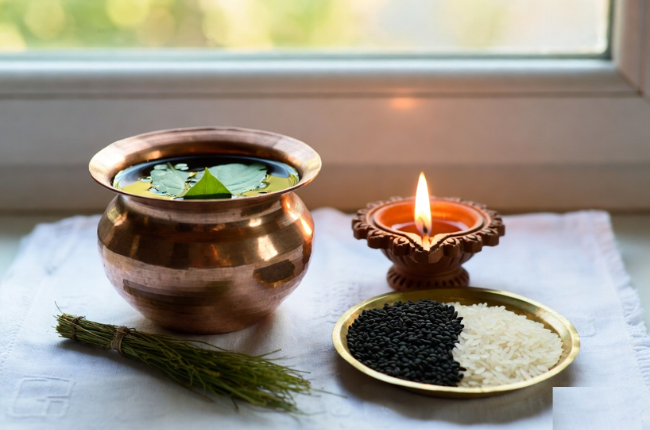
Every Indian family carries some version of these rules — passed down from grandmother to mother to daughter, repeated at each eclipse with varying degrees of completeness. Do not eat during Grahan. Do not go outside. Pregnant women must be especially careful. Put tulsi in the stored food. These instructions arrive in most homes as a list of prohibitions without the reasoning behind them — which is precisely why they are followed imperfectly, argued about by the educated younger generation, and sometimes abandoned altogether in urban households where the eclipse passes unacknowledged.
Grahan — the Sanskrit word for eclipse, meaning seizure or grasping — refers to both the solar eclipse (Surya Grahan) and the lunar eclipse (Chandra Grahan). In the Vedic framework, both are understood as periods when the normal flow of cosmic energy is disrupted — when Rahu and Ketu, the shadow planets of the Vedic system, obscure the light of the Sun or Moon and create a specific quality of energetic disturbance that affects food, water, the human body, and — with particular intensity — the developing body of an unborn child. The Dharmashastra tradition, the Charaka Samhita, and the Sushruta Samhita all document eclipse protocols in detail — not as folk superstition but as precisely reasoned responses to a specific cosmic event.
What almost no popular account of Grahan safety rules explains is the distinction between the rules that apply to all Grahan events regardless of type and those that apply specifically to Surya Grahan, specifically to Chandra Grahan, and specifically to the Sutak period that precedes each. Understanding the classical reasoning behind each rule — not simply the rule itself — allows a family to apply the full protocol correctly, to understand which rules are negotiable and which are not, and to answer the intelligent questions that the younger generation legitimately asks. This article covers the complete framework: the nature of Grahan in the classical understanding, the Sutak period and its rules, the food and water protocols, the complete pregnancy protection guidelines, the post-Grahan purification practices, and the 2025 and 2026 Grahan dates that Indian families should mark in advance.
What Grahan Actually Is in the Classical Vedic Understanding
In modern astronomy, a solar eclipse occurs when the Moon passes between the Earth and the Sun, blocking the Sun's light. A lunar eclipse occurs when the Earth passes between the Sun and the Moon, casting its shadow on the Moon. Both are geometric events — predictable, calculable, and occurring on a fixed astronomical schedule.
The Vedic tradition does not contradict this geometric understanding — Indian astronomers of the classical period calculated eclipse timings with remarkable precision using the Surya Siddhanta and related astronomical texts. What the Vedic tradition adds to the geometric description is an energetic and cosmological layer that the geometric description alone does not address: the understanding that an eclipse is not merely a celestial shadow event but a specific disruption of the solar or lunar energy field that has measurable effects on living systems on Earth.
Rahu, Ketu, and the Swallowing of Light
In the Vedic cosmological narrative — present in the Bhagavata Purana, the Vishnu Purana, and the Skanda Purana — the shadow planets Rahu and Ketu were formed when the demon Svarbhanu was beheaded by Vishnu's Sudarshana Chakra during the churning of the cosmic ocean (Samudra Manthan). The head became Rahu; the tail became Ketu. Both, being immortal having consumed the nectar of immortality (Amrita) before being discovered, were placed in the sky as shadow planets — the lunar nodes — whose primary cosmic function became the periodic swallowing of the Sun and Moon during eclipses.
This narrative is not merely mythological decoration. In the Vedic framework, Rahu and Ketu — the mathematical points where the Moon's orbital path intersects the ecliptic — represent the shadow dimension of existence: the forces of obscuration, karmic concealment, and the periodic dimming of the two primary luminaries that govern human life. When Rahu or Ketu swallows the Sun or Moon, the classical tradition holds that the energy these luminaries normally radiate is temporarily distorted — the clean, nourishing light of the Sun and the reflective, emotional-regulatory light of the Moon are replaced, during the eclipse period, with the shadow energy of the nodes.
The Energetic Effect on Living Systems
The classical Ayurvedic texts — particularly the Charaka Samhita and the Ashtanga Hridayam — document specific physiological effects of eclipse periods on living systems. The Ashtanga Hridayam by Vagbhata describes the eclipse period as one in which the normal energising and purifying properties of sunlight and moonlight are suspended and, in their place, a quality of energetic disturbance enters the environment. Food and water that are exposed to this disturbance absorb it — the same way food absorbs the energy of fire when cooked. The body that is physically active, eating, or in a state of energetic openness during the eclipse period is more exposed to this disturbance than one that is resting, fasting, and protected.
This is the classical rationale for the eclipse protocols — they are not arbitrary prohibitions but specific responses to a documented energetic disruption, calibrated to protect the most vulnerable aspects of human biological and spiritual life during the period of disruption.
The Sutak Period — What It Is and Why It Matters
The Sutak period — sometimes written Sutaka — is the ritual impurity period that precedes and includes the Grahan. It is the window during which the escalating approach of the eclipse's energetic disruption is already affecting the environment, before the visible astronomical event begins.
Sutak Duration for Surya Grahan
For a solar eclipse (Surya Grahan), the Sutak period begins 12 hours before the eclipse's first contact. During these 12 hours, the restrictions that apply during the eclipse itself apply in a progressively intensifying form. Food should not be cooked or consumed. The home should be maintained in a condition of cleanliness and spiritual readiness. Vulnerable individuals — the elderly, pregnant women, children, and the ill — should begin their specific protective practices from the beginning of the Sutak period.
Sutak Duration for Chandra Grahan
For a lunar eclipse (Chandra Grahan), the Sutak period begins 9 hours before the eclipse's first contact. The lunar eclipse's Sutak is shorter than the solar eclipse's Sutak — reflecting the classical tradition's position that Surya Grahan is the more powerful and more energetically disruptive of the two events, affecting the primary source of light and life-force rather than its reflected counterpart.
Who Is Exempt From Sutak Rules
The classical Dharmashastra tradition specifies that certain categories of people are partially or fully exempt from Sutak restrictions — not because the eclipse's energy does not affect them, but because their immediate physical needs take priority:
- Infants (shishu) under two years of age — the classical tradition recognises that forcing feeding restrictions on very young children creates a greater harm than the eclipse's energy disturbance
- The seriously ill (rogi) — those for whom food or medication is medically necessary during the eclipse period
- Those in distant travel who have no access to a protected space and no means of observing the restrictions
These exemptions do not cover healthy adults, pregnant women (who have their own specific protective protocol), or households generally. They are specifically for categories where the restriction itself would create a greater vulnerability than the eclipse.
Internal link: For how Rahu and Ketu's energy operates in the birth chart beyond eclipse periods, see the Rahu Ketu Negative Effects and Complete Balance Guide.
Complete Food and Water Safety Rules During Grahan
The food and water protocols during Grahan are the most widely known — and the most widely misunderstood — dimension of eclipse safety in Indian households. The rules exist at three levels: what to do with food prepared before the Sutak, what to do during the Grahan itself, and what to do with food and cooking after the Grahan ends.
Before the Sutak Begins — The Preparation Stage
- Complete all cooking before the Sutak period begins. Food cooked before the Sutak starts is not affected by the eclipse's energy and can be stored safely using the tulsi protection described below. Plan meals for the full Sutak and eclipse duration and complete cooking before the Sutak's starting time.
- Place tulsi leaves in all stored cooked food and in all water vessels. This is the single most universally practised Grahan food protection measure across India — from Kashmir to Kanyakumari, across all regional traditions, the placement of tulsi (Ocimum tenuiflorum, holy basil) in food and water during eclipse periods is the standard protective measure. The classical rationale: tulsi is among the most powerful purifying herbs in the Ayurvedic and Dharmashastra traditions — its antimicrobial, antioxidant, and energetically purifying properties are documented in the Charaka Samhita. Placing tulsi in stored food and water during the eclipse is understood to protect the stored items from absorbing the eclipse's disturbance energy.
- Cover all water storage vessels, food containers, and water tanks. Open vessels are more exposed to the eclipse's environmental energy than covered ones. All stored water — including overhead tanks in urban apartments — should be covered or sealed.
- Do not leave food uncovered during the entire Sutak and eclipse period. Any food or water left uncovered and exposed to the outside environment during this period should be discarded after the eclipse ends, not consumed.
During the Grahan — The Active Period
- Do not cook during the Grahan or the Sutak period. The classical prohibition on cooking during the Grahan extends through the entire Sutak. Cooking involves fire — the transformation of raw materials into food — during a period when the transformative energy of the environment is disturbed. Food prepared during the Grahan is understood to carry the disturbance energy into the body of the person who consumes it.
- Do not eat during the Grahan. This is the most universally observed Grahan rule — fasting through the eclipse period is the standard classical prescription for healthy adults. The Dharmashastra texts describe eating during Grahan as equivalent to eating during the period of a significant pollution — the food, even if physically the same, has been energetically compromised by the eclipse environment.
- Do not drink water during the Grahan. Water is even more receptive to energetic disturbance than solid food — it absorbs and holds the energy of its environment more completely. The classical tradition advises not drinking water during the eclipse itself, though some regional traditions allow drinking water in which tulsi has been placed. The strictest classical interpretation advises complete abstinence from food and water during the eclipse.
- If fasting is medically contraindicated — for individuals with diabetes, on medication that requires food, or with conditions where extended fasting creates health risk — the classical tradition's exemption for the seriously ill applies. Such individuals should eat the minimum necessary, from food prepared before the Sutak, and should not use this exemption more broadly than their medical need genuinely requires.
After the Grahan Ends — The Restoration Stage
- Discard all cooked food that was not protected by tulsi and was exposed during the eclipse. This includes restaurant food ordered during the Sutak period, any street food, and any food that was left uncovered without tulsi protection.
- Bathe immediately after the eclipse ends. The full bath (snan) — with clean water, if possible with a few drops of gangajal (Ganges water or clean spring water) added — is the standard purification practice for all family members after the eclipse concludes. The bath is not optional in the classical framework — it is the primary method of clearing the eclipse energy that has accumulated on the body's surface during the period.
- Cook fresh food after bathing and consume the fresh, post-eclipse meal as the first meal after the fast. The post-eclipse meal should, where possible, be simple and sattvic — rice, dal, vegetables — rather than heavy or tamasic.
- Clean and purify the kitchen and cooking vessels after the eclipse with clean water. Many families add a few drops of gangajal to the wash water for the kitchen surfaces and utensils as an additional purification measure.
Did You Know
The Indian Space Research Organisation (ISRO) and several Indian universities have conducted independent research into the effects of solar eclipses on the ionosphere, geomagnetic field, and atmospheric chemistry — finding significant and measurable disruptions in all three during the eclipse period. The ionosphere, which normally filters specific wavelengths of solar radiation, experiences dramatic perturbations during a solar eclipse that affect radio wave propagation, atmospheric electrical conductivity, and the behaviour of charged particles in the upper atmosphere. These disruptions are measurable, quantifiable, and consistent with the classical Vedic understanding that the eclipse period produces genuine changes in the energetic environment — not merely a shadow in the sky. The classical tradition documented the human-level effects of these disruptions centuries before the instrumentation to measure them in the upper atmosphere existed.
Grahan Safety Rules for Pregnant Women — The Complete Protocol
The pregnancy protocol for Grahan is the most detailed, the most consistently observed, and the most frequently misunderstood dimension of eclipse safety in Indian households. It is also the dimension that generates the most debate between the classical tradition and the contemporary medical establishment — a debate that, when examined carefully, is less about contradiction than about the two frameworks addressing different dimensions of the same phenomenon.
The Classical Rationale for Pregnancy Protection
The classical Vedic and Ayurvedic tradition holds that the developing foetus — particularly in the earlier stages of pregnancy — is in a state of extraordinary energetic openness and receptivity. The foetus has not yet developed the energetic boundaries and protective systems that a fully formed body maintains. It is, in the classical understanding, directly exposed to the energetic environment of the womb — which is itself directly exposed to the energetic environment of the mother's body and, through the mother, to the environment of the world.
During a Grahan, when the eclipse's disturbance energy enters the environment, the foetus is considered the most vulnerable member of the household — more than the elderly, more than the ill — because its developmental processes are proceeding at the fastest rate and its energetic defences are the least formed. The classical tradition's pregnancy protocols are calibrated to create maximum protection around this vulnerability.
Specific Rules for Pregnant Women During Grahan
- Do not go outdoors during the Grahan or the Sutak period. This is the most absolute of the pregnancy Grahan rules — the classical tradition advises remaining indoors throughout the entire Sutak and eclipse period. Outdoors exposure places the pregnant woman — and through her the foetus — in direct contact with the eclipse's environmental energy disturbance.
- Do not sleep during the Grahan. The classical Dharmashastra texts advise pregnant women specifically against sleeping during the eclipse period. Sleep involves a quality of energetic openness — the body's defences relax, the subtle body expands slightly beyond its waking boundaries — that increases the eclipse energy's access to both the mother and the foetus. Remaining awake, in prayer, mantra recitation, or quiet meditation, is the classical prescription.
- Do not use sharp instruments during the Grahan. Scissors, knives, needles, and other cutting implements are advised against during the Grahan period for pregnant women in particular. The classical rationale is that sharp implements introduce a cutting energy into the environment at a time when the subtle protective boundary around the pregnancy is already weakened by the eclipse. The specific concern — stated plainly in the folk tradition that extends from the classical texts — is for marks or malformations on the developing child's body. Whether one accepts this as a physical mechanism or understands it as a precautionary principle appropriate to a period of heightened vulnerability, the practical instruction is the same.
- Recite specific protective mantras throughout the eclipse period. The Vishnu Sahasranama and the Mahamrityunjaya Mantra — Om Tryambakam Yajamahe Sugandhim Pushtivardhanam, Urvarukamiva Bandhanan Mrityor Mukshiya Maamritat — are the two most widely recommended mantra practices for pregnant women during Grahan across the classical Pandit tradition. Recitation throughout the eclipse period is advised — either continuous or at regular intervals of every 15 minutes.
- Wear or hold a small piece of iron or a Kusha grass ring. The classical protective tradition for Grahan — applicable to all family members but emphasised for pregnant women — includes the wearing of a Kusha (Desmostachya bipinnata, sacred grass) ring on the ring finger of the right hand during the eclipse. Kusha is described in the Atharvaveda and multiple Puranic texts as a powerful purifying and protective material that creates an energetic boundary between the wearer and environmental disturbance.
- Do not look at the eclipse directly. This instruction has both classical and contemporary medical validation. The Sushruta Samhita — the classical Ayurvedic surgical text — warns against direct observation of the eclipsed Sun, describing specific damage to the Drishti (vision). Contemporary ophthalmology confirms that looking directly at the Sun during a solar eclipse — including the partial phases — causes retinal burns (solar retinopathy) that can produce permanent vision damage.
- Eat nothing during the eclipse period. The pregnancy fasting rule is more strictly observed than the general adult fasting rule in the classical tradition. If medical conditions require that the pregnant woman eat during the eclipse period, she should eat minimally, from food prepared before the Sutak began, with tulsi present in the food.
What to Do After the Grahan Ends — Post-Eclipse Pregnancy Practice
After the eclipse concludes, the pregnant woman should bathe completely with clean water to which a few drops of gangajal and a tulsi leaf have been added. She should then visit a temple — or perform a brief home puja — and offer prayers for the continued protection of the pregnancy and the health of the developing child. Many families arrange for a Santana Gopala Puja or a brief Navagraha Shanti in the days immediately following a Grahan that fell during pregnancy — a formal ritual acknowledgement that the eclipse period has passed and a request for the restoration of full protective blessings around the pregnancy.
Community Voice
A question that appears in parenting forums and Reddit threads consistently: "My doctor says the Grahan rules for pregnancy are superstition and there is no scientific basis for not going outside during an eclipse. But my mother-in-law is insisting. Who is right?"
This is the question that benefits from the most honest answer available. The contemporary medical position is that the physical mechanism by which remaining indoors during an eclipse protects the foetus has not been established in clinical research. The classical Vedic and Ayurvedic position is that the energetic disturbance during a Grahan operates at a subtle level that the current instrumentation of clinical medicine does not measure — the same way the ionospheric disruptions that ISRO measures were undetectable before the relevant instruments existed. Both positions are internally consistent within their own frameworks. The practical guidance for any family navigating this question: the classical protocols — remaining indoors, fasting, reciting protective mantras, avoiding sharp objects — carry no medical risk and have centuries of consistent community practice behind them. Following them costs nothing. The family that observes the Grahan protocols during pregnancy does so from a position of genuine classical precedent, not mere superstition.
Surya Grahan vs. Chandra Grahan — The Key Differences in Safety Rules
The safety rules for solar and lunar eclipses share the same foundational framework — Sutak period, food protection, bathing after, mantra recitation — but differ in several important specifics that the classical tradition addresses distinctly.
Intensity of Disruption
The Surya Grahan is considered the more powerful and more energetically disruptive event in the classical tradition — the Sun is the primary source of Prana (life force) for all living systems, and its obscuration during a solar eclipse represents a more fundamental disruption than the obscuration of the Moon during a lunar eclipse. Accordingly, the Sutak period for Surya Grahan is 12 hours rather than 9, and the restrictions during the eclipse itself are observed more strictly.
Visibility and Applicability
A critical distinction that most Grahan safety articles do not clearly address: the classical tradition holds that Grahan rules apply to a location only if the eclipse is visible from that location. A solar eclipse visible in North America but not visible anywhere in India does not carry the Sutak and ritual restrictions for Indian families — the energetic disruption, in the classical understanding, is most concentrated and most directly affecting in the regions where the eclipse is visible. Partial visibility carries partial applicability — a partial solar eclipse visible in India carries the full Grahan protocols even if the totality is occurring over a different part of the world.
The Night-Time Lunar Eclipse — Specific Rules
A Chandra Grahan occurs at night — when the Moon is above the horizon and the Earth casts its shadow on it. The lunar eclipse rules around sleep are therefore more practically significant: the classical tradition advises against sleeping during the eclipse period, as noted in the pregnancy section above. For all family members — not just pregnant women — sleeping during a Chandra Grahan is considered an exposure to the eclipse's disturbance energy during the body's most energetically open state. Remaining awake for the lunar eclipse period and reciting protective mantras is the classical prescription.
The post-Chandra Grahan bath presents a practical consideration: a lunar eclipse ending at 2 AM or 3 AM requires a bath at an unusual hour. The classical tradition does not grant an exception for the timing inconvenience — the bath should be taken immediately when the eclipse concludes, regardless of the hour.
Mantra Recitation Differences
For Surya Grahan, the primary mantra is the Aditya Hridayam — the hymn to the Sun from the Valmiki Ramayana — and the Gayatri Mantra. For Chandra Grahan, the primary mantra is the Chandra Kavacham and the Mahamrityunjaya Mantra. The Vishnu Sahasranama is recommended for both and is the single most broadly applicable mantra practice for any Grahan event.
The Post-Grahan Purification Protocol — Complete Steps
The post-Grahan purification practice is as important as the during-Grahan protective practice — it is the active restoration of the normal energy environment after the eclipse's disruption has passed.
- Full bath immediately after the eclipse ends — all family members, without exception. Clean water with gangajal and tulsi added. The bath water should be at a comfortable temperature — neither very hot nor very cold. Traditional practice includes reciting a brief prayer during the bath: Om Apavitrah Pavitro Va Sarvavastham Gato Api Va, Yah Smaret Pundarikaksham Sa Bahyabhyantarah Shuchih — a Vishnu purification mantra asking for both outer and inner cleanliness.
- Change into clean, freshly washed clothing after the bath. Clothing worn during the Grahan period is considered to have absorbed the eclipse energy and should be washed before wearing again.
- Clean and sprinkle gangajal on the home — particularly on the kitchen, the puja space, and the sleeping areas. This can be done by dipping a tulsi sprig in gangajal and sprinkling it in each room.
- Light a diya and perform a brief puja at the home puja space — a simple offering of fresh flowers, incense, and a diya to the primary household deity and to the Navagraha, with a brief prayer asking for the restoration of full blessings and protection to the household after the eclipse period.
- Donate on the day of the Grahan — the classical tradition holds that donations (dana) made on Grahan days carry multiple times the merit of the same donation made on ordinary days. Black sesame (kala til), jaggery (gur), raw rice, black lentils (urad dal), copper coins, and clothing are among the most auspicious Grahan donations. The donation is made to a temple, a Pandit, or directly to those in genuine need.
- Cook fresh food and eat after the purification is complete — the first post-eclipse meal should be simple, fresh, and sattvic. Many families include a small prasad from the post-eclipse puja as part of the first meal.
Internal link: For the complete framework of how specific puja practices address planetary and cosmic disturbances in the Vedic tradition, see the Vedic Pooja Services Complete Guide to Solve Life Problems.
One Question No Article Answers: What Happens If You Accidentally Ate During Grahan
This is the question that appears most frequently in Indian family forums — asked with genuine anxiety, particularly by pregnant women who did not know the eclipse was occurring, or by family members who forgot, or who were travelling and had no access to protected food during the Sutak. The question deserves an honest, complete, and non-alarmist answer.
The classical Prayashchitta (atonement) tradition within the Dharmashastra provides specific guidance for exactly this situation — the tradition is not designed to create permanent guilt or harm from a single unintentional violation. Its position is both compassionate and precise.
For inadvertent eating during a Grahan — where the person did not know the eclipse was occurring or genuinely had no means to avoid eating for medical reasons — the classical remediation is straightforward:
Perform the post-Grahan bath and purification as completely as possible as soon as the eclipse's conclusion is known. Visit a temple on the day of or day after the eclipse and offer a specific prayer acknowledging the inadvertent violation and requesting purification. Donate black sesame and raw rice on the same day. Recite the Mahamrityunjaya Mantra 108 times as a personal purification practice.
For pregnant women who inadvertently ate during the Grahan: the same remediation applies, with the addition that a qualified Pandit should be consulted for a brief Santana Gopala Puja — a ceremony specifically for the protection and wellbeing of the developing child — in the days following the eclipse. This is not a procedure for addressing guaranteed harm — it is a precautionary and protective measure that the classical tradition endorses for restoring the energetic protection around the pregnancy after a period of inadvertent exposure.
The classical tradition's position on this question reflects its foundational principle: intention matters. An inadvertent violation of a Grahan rule carries a different quality of karmic consequence than a deliberate one. The Manusmriti distinguishes consistently between ajna (unknowing) violations and jnana (knowing) violations — and the remediation prescribed for the former is always less demanding than for the latter. A family that did not know about the eclipse, that was travelling, or that faced a genuine medical necessity is in a category that the classical tradition addresses with compassion rather than severity.
2025 and 2026 Grahan Dates for Indian Families
These are the Grahan events relevant to families in India — including only those either visible from India or occurring close enough to the Indian region to carry the Sutak and ritual significance in the classical framework. Exact Sutak start times vary by location within India and should be confirmed from the regional Panchang or a qualified Pandit in advance of each event.
2025 Grahan Events:
- Chandra Grahan — March 14, 2025: Partial lunar eclipse. Visible from parts of India. Sutak begins 9 hours before first contact. Confirm regional visibility and exact timing from Panchang.
- Surya Grahan — March 29, 2025: Partial solar eclipse. Visible from limited parts of India. Sutak begins 12 hours before first contact for regions where visible.
- Chandra Grahan — September 7, 2025: Total lunar eclipse. Visible from India. Full Grahan protocols apply. Sutak begins 9 hours before first contact.
- Surya Grahan — September 21, 2025: Partial solar eclipse. Partial visibility from southern India. Regional Panchang confirms applicability for specific locations.
2026 Grahan Events:
- Surya Grahan — February 17, 2026: Annular solar eclipse. Visibility from India to be confirmed from regional Panchang — path of annularity does not cross India but partial visibility may apply in southern regions.
- Chandra Grahan — March 3, 2026: Total lunar eclipse. Confirm India visibility from regional Panchang. Full protocols apply where visible.
- Surya Grahan — August 12, 2026: Total solar eclipse. Path of totality does not cross India — partial visibility from western India may apply. Confirm from regional Panchang.
- Chandra Grahan — August 28, 2026: Partial lunar eclipse. India visibility to be confirmed from regional Panchang.
Note: These dates are drawn from astronomical calculations current as of this article's publication. All families should confirm exact Sutak timings and regional visibility from a current regional Panchang or a qualified Pandit before each event, as these details vary by location and are subject to astronomical refinement.
Internal link: For how to read and use the Panchang for Grahan timing and all auspicious and inauspicious period calculations, see the Panchang Complete Guide to Use Tithi and Nakshatra for Daily Luck.
FAQ
Q1: What are the main safety rules to follow during Grahan in India? The primary Grahan safety rules are: observe the Sutak period — 12 hours before Surya Grahan and 9 hours before Chandra Grahan — by avoiding cooking and eating. Place tulsi in all stored food and water. Do not go outdoors during the eclipse. Bathe immediately after the eclipse ends. Recite protective mantras — Vishnu Sahasranama, Mahamrityunjaya Mantra — throughout the eclipse period. Donate black sesame, raw rice, and other prescribed items on the day of the eclipse. These rules apply only when the eclipse is visible from the family's location.
Q2: Why should pregnant women not go outside during Grahan? The classical Vedic and Ayurvedic tradition holds that the developing foetus is in a state of exceptional energetic openness — its protective subtle body is not fully formed, making it the most vulnerable member of the household to the eclipse's energy disturbance. The outdoor environment during the eclipse carries the eclipse's disturbance energy in its most concentrated form. Remaining indoors, avoiding sleep, avoiding sharp instruments, reciting protective mantras, and fasting — together — create the most complete protective environment the classical tradition provides for the pregnancy during the Grahan period.
Q3: Can we eat food during Grahan — why is food prohibited? The classical Ayurvedic texts document that food and water absorb the energy of their environment — just as they absorb the energy of fire during cooking. During Grahan, the environment carries the eclipse's disturbance energy rather than the normal, nourishing energy of sunlight or moonlight. Food exposed to this environment without tulsi protection absorbs the disturbance. Eating such food introduces the disturbance energy directly into the body. Food prepared before the Sutak and protected by tulsi is not subject to this concern — it can be eaten after the eclipse ends.
Q4: What is the Sutak period and how long does it last? The Sutak is the ritual impurity period that precedes the Grahan — the window during which the approaching eclipse's energy disturbance is already affecting the environment before the visible event begins. For Surya Grahan, the Sutak begins 12 hours before the eclipse's first contact. For Chandra Grahan, it begins 9 hours before. During the Sutak, the same food, cooking, and outdoor restrictions that apply during the eclipse itself apply in a progressively intensifying form. The Sutak ends when the eclipse ends — at which point the post-Grahan purification practices begin.
Q5: What should be done immediately after Grahan ends? Immediately after the eclipse ends: all family members should bathe completely with clean water to which gangajal and tulsi have been added. Change into freshly washed clothing. Clean the home — particularly the kitchen and puja space — with gangajal-sprinkled water. Perform a brief puja with a diya and fresh flowers. Cook fresh food for the first post-eclipse meal. Donate black sesame, raw rice, or other prescribed items on the same day. These purification steps restore the household's normal energy environment after the eclipse's disruption.
Q6: Do Grahan rules apply if the eclipse is not visible from India? The classical tradition holds that Grahan protocols apply to a location only when the eclipse is visible from that location. An eclipse occurring entirely over a different part of the world — with no partial visibility from India — does not carry the Sutak and ritual restrictions for Indian families. When an eclipse is partially visible from India, the full protocols apply for the regions where partial visibility occurs. Families should confirm each eclipse's visibility from their specific location using a current regional Panchang or a qualified Pandit before determining applicability.
Q7: Is it okay to sleep during Chandra Grahan or Surya Grahan? The classical tradition advises against sleeping during both Surya Grahan and Chandra Grahan — for all family members, not only pregnant women. Sleep involves a quality of energetic openness that increases the body's exposure to the eclipse's disturbance energy. The prescribed practice during the eclipse period is wakeful mantra recitation, prayer, or quiet meditation. For the Chandra Grahan — which occurs at night — this means remaining awake during the lunar eclipse period and bathing after it ends, regardless of the late hour. Individuals for whom sleep deprivation creates a medical risk are in the classical tradition's category of exempted individuals.
Conclusion
The Grahan safety rules that Indian families have carried across generations are not superstition dressed in religious language — they are a precisely reasoned response, documented across the Dharmashastra, Ayurvedic, and Puranic traditions, to a specific cosmic event that the classical tradition understood to produce genuine energetic disturbance in the environment and in living systems. The rules exist because the eclipse's effects are real — the question of whether those effects are best described in the language of the Charaka Samhita or the language of ionospheric physics is less important than the practical reality that a body, a developing foetus, and a household's food and water deserve specific protection during the eclipse period.
The most practical step any family can take is to mark the Grahan dates in advance — using the dates in this article as a starting reference and confirming regional visibility and exact Sutak timings from the current regional Panchang — and to prepare for each eclipse with the same level of deliberate attention that the tradition has always applied to it.
As classical tradition holds, the protection the Grahan protocols provide depends on the sincerity and completeness with which they are observed — partial observation provides partial protection. A family that observes the full Sutak, the full fast, the mantra recitation, and the post-eclipse purification has done everything the classical tradition asks of it.
If you want guidance on the correct Grahan protocols for your family — including Sutak timing, pregnancy-specific practices, and post-Grahan puja recommendations — connect with an experienced Pandit at AtoZPandit.com. Our Pandits provide complete Grahan guidance specific to your location, your family's tradition, and any special circumstances — including pregnancy, health conditions, and regional Panchang confirmation.
Disclaimer: This article is written for educational and cultural awareness purposes only. The information provided does not substitute professional medical advice — pregnant women and individuals with health conditions should consult their doctor regarding any eclipse-period practices. For personalised Vedic guidance on your specific situation, connect with a qualified Pandit at AtoZPandit.com