
Bedroom Vastu for Couples Direction Colour and Layout for Peace and Harmony
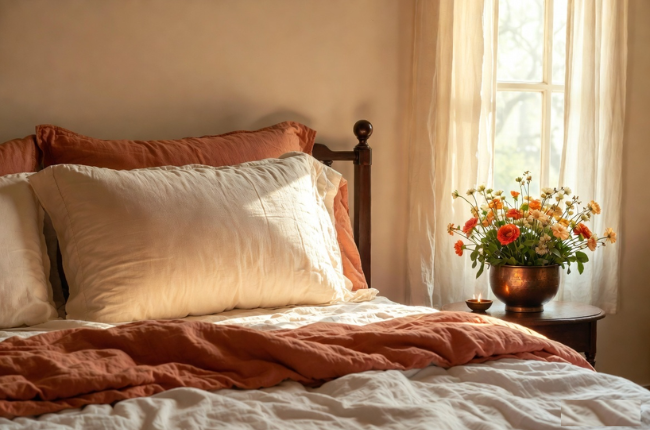
A couple moves into a new home. Everything is in order — the location is good, the flat is well-built, the neighbourhood is quiet. But within a few months, sleep becomes consistently shallow. Small disagreements that would have resolved themselves in the old home seem to linger longer here. One partner wakes at 3 AM regularly for no identifiable reason. The other feels a persistent, low-grade anxiety that they cannot trace to any event. The doctor finds nothing wrong. The relationship is not in crisis — but the ease that used to be there has quietly left the bedroom.
The bedroom is the most energetically sensitive room in any home. A person spends approximately one-third of their entire life in this room — and the quality of rest, intimacy, and psychological safety that the bedroom provides depends not only on the decor and the mattress quality but on the directional and elemental alignment of the space. Vastu Shastra — the classical Indian science of spatial energy — identifies the bedroom as the room where Vastu errors produce the most consistent and the most personal disruption: to sleep, to health, to the marital relationship, and to the quality of the mental and emotional recovery that night-time rest is meant to provide.
What almost no Vastu guide for bedrooms explains fully is that the directional rules governing the bedroom are not a single set of universal prescriptions — they vary by the room's position within the home, by which floor the bedroom is on, by whether it is the master bedroom or a child's room, and by the specific Vastu defects already present in the home's structure. A bed position that is excellent in a southwest bedroom creates a completely different energy profile in a northeast bedroom. Understanding these distinctions — rather than applying a generic "sleep with your head to the south" rule to every bedroom in every home — is what separates a genuinely useful Vastu assessment from a simplified checklist. This article covers the complete directional framework, the specific rules for bed placement and head direction, colour and material guidelines, the most common bedroom Vastu errors and their effects, and the correction methods that work without any demolition or structural change.
What Vastu Shastra Says About the Bedroom's Energy Role
In the classical Vastu Shastra framework — rooted in the Manasara, the Mayamata, and the Brihat Samhita of Varahamihira — every room in a home carries the energetic signature of its directional zone. The bedroom is not simply where the family sleeps; it is the space that holds the most intimate and most vulnerable energy of the household — the energy of rest, of the marital bond, of conception, and of the nightly restoration that makes functional daily life possible.
The Vaastu Purush Mandala — the geometric energy map that underlies all classical Vastu analysis — places specific deities and elemental forces in specific directional zones of the home. The southwest zone is governed by Nirrti, the deity associated with stability, weight, and the capacity to hold. The northeast zone is governed by Ishaan — Lord Shiva in his most auspicious form — and carries the lightest, most spiritually elevated energy in the home. The southeast is governed by Agni, the fire deity. The northwest by Vayu, the wind deity.
Each of these directional energies has a specific relationship with the human body and the human activities associated with the bedroom. The southwest's heaviness and stability make it the ideal zone for the master bedroom — the heaviest, most grounded, and most authoritative room in the home belongs in the zone of maximum stability. The northeast's lightness and spiritual elevation make it the least suitable zone for a bedroom — sleeping in the northeast exposes the sleeper to energy that is too elevated and too spiritually active for rest.
Why the Bedroom Direction Matters More Than the Bedroom Decor
The directional alignment of the bedroom — where it sits within the home's compass layout — determines the elemental environment the sleeper inhabits for eight hours every night. No amount of correct decor, calming colours, or quality bedding compensates for a bedroom positioned in a Vastu-defective zone. The energy the direction carries enters the body during sleep — the period when the body's own energy defences are most relaxed and most receptive — and shapes the quality of rest, the emotional state on waking, the health of the relationship, and the physical wellbeing of both partners over time.
This is the foundational principle that most popular Vastu-for-bedrooms content inverts: it focuses on movable elements — bed position, colour choices, mirror placement — while treating the bedroom's directional position as fixed and unchangeable. In practice, the directional position is the most important factor, and the movable elements are the corrections that reduce the impact of a non-ideal position.
Internal link: For the complete framework of directional Vastu analysis applied to the whole home, see the Vastu Guide for New Home to Bring Wealth and Good Health.
The Correct Bedroom Direction — Where the Master Bedroom Should Be
The classical Vastu texts are consistent on this point: the master bedroom belongs in the southwest zone of the home. This is the single most important bedroom Vastu rule, and it is the one that produces the most significant consequences when violated.
Why Southwest Is the Master Bedroom Zone
The southwest zone in the Vastu Purush Mandala is the zone of maximum earth element (Prithvi) concentration — the heaviest, most stable, and most grounding zone in the home. The Manasara and Mayamata both specify that the head of the household — the person who bears the primary responsibility for the family's stability and security — should sleep in the southwest, because sleeping in this zone transfers the stabilising, grounding energy of the earth element into the sleeper's system through the night. A family where the head of the household sleeps in the southwest consistently makes more grounded decisions, holds authority more naturally, and experiences greater financial stability than a family where the head sleeps in a lighter directional zone.
When the southwest bedroom is occupied by a child or a guest while the parents sleep in a northeast, northwest, or southeast bedroom, the Vastu framework describes this as a reversal of the home's natural authority structure — the lightest or most active energy of the home is being occupied by its most senior members, while the most stabilising energy is going unused by those who most need it.
The Southeast Bedroom — The Most Problematic Position
A bedroom in the southeast zone — the zone of the fire element (Agni) — is the most consistently problematic bedroom position in Vastu analysis. The fire energy of the southeast is active, aggressive, and unsuited to rest. Families who sleep in southeast bedrooms consistently report: increased irritability and conflict between partners, difficulty falling asleep or maintaining deep sleep, a persistent sense of restlessness even after a full night's rest, and — over time — elevated health issues associated with excess heat in the system, including digestive problems, skin conditions, and inflammation-related concerns.
The Agni energy of the southeast also affects the marital relationship directly: fire in the bedroom space increases conflict frequency, reduces patience and tolerance between partners, and creates a quality of heat in disagreements that goes beyond the content of the disagreement itself.
The Northwest Bedroom — Variable Effects
A bedroom in the northwest zone — the zone of the air element (Vayu) — produces variable effects. The air element governs movement, change, and instability. A northwest bedroom can be suitable for unmarried children, guests, or young adults — populations for whom mobility and change are appropriate life energies. For the master bedroom, the northwest introduces a quality of restlessness and impermanence that works against the stability a marital relationship requires. Couples in northwest master bedrooms frequently report: a feeling that the relationship lacks rootedness, a tendency for one partner to be frequently away from home, and difficulty making joint decisions that stick.
The Northeast Bedroom — Spiritually Elevated but Practically Unsuitable
The northeast zone carries the most spiritually elevated energy in the home — it is the zone of the Ishaan corner, where prayers and puja spaces are traditionally placed. A bedroom in the northeast creates a specific kind of disruption: the sleep is light and frequently interrupted by vivid dreams, spiritual experiences, or a quality of alertness that prevents deep rest. Some practitioners describe this as the northeast's energy being "too alive" for sleep — the zone is designed for wakefulness and spiritual receptivity, not for the deep, restorative unconsciousness that physical rest requires.
Which Direction Should Your Head Face While Sleeping
This is the most practically actionable bedroom Vastu question — and the one where there is the most commonly circulated misinformation. The head direction during sleep determines which elemental energy enters the body through the crown of the head — the body's most energetically receptive point — throughout the night.
The classical Vastu and Ayurvedic texts are consistent on the priority ranking:
South — The First Choice for Head Direction
Sleeping with the head pointing south is the most consistently recommended head direction across classical Vastu texts. The south is associated with Yama — the deity of dharma and the orderly conclusion of cycles. Sleeping toward the south places the body in alignment with the earth's magnetic field — the head in the south corresponds to the magnetic north pole of the body aligning with the earth's magnetic south, creating a natural magnetic harmony that supports deep, uninterrupted sleep, stable blood circulation, and a calm mental state on waking.
The Brihat Samhita of Varahamihira — while primarily an astrological and architectural text — contains specific references to the health benefits of south-direction sleeping. Modern research on the earth's geomagnetic field and human sleep quality has produced findings that are consistent with the classical Vastu position: sleeping with the head toward magnetic south (which corresponds to geographic south in India) produces measurably better sleep continuity than other orientations in multiple independent studies.
East — The Second Choice
Sleeping with the head pointing east is the second choice in classical Vastu — particularly recommended for students, spiritual practitioners, and those seeking clarity of mind and improved memory. The east is the direction of the rising Sun — of new beginning, illumination, and the energy of learning. Sleeping toward the east brings the solar energy of the east into the crown of the head through the night, supporting intellectual clarity and spiritual alertness on waking. It is less deeply restful than south-direction sleeping for most people but more mentally energising.
West — Acceptable With Modifications
Sleeping with the head pointing west is acceptable in Vastu — neither strongly recommended nor strongly contraindicated. The west carries the energy of the setting Sun — of completion, reflection, and the winding down of activity. West-direction sleeping tends to produce adequate rest but without the deep magnetic alignment of south-direction sleeping. It is a workable position when south and east are not structurally available.
North — The Direction to Avoid
Sleeping with the head pointing north is the most clearly contraindicated head direction in classical Vastu — and the one that generates the most consistent negative reports from families who have changed from north to south and noticed an immediate improvement in sleep quality. The north is the direction of the earth's magnetic north pole. Sleeping toward the north places the body's magnetic field in opposition to the earth's — both poles repelling each other rather than aligning. The classical Vastu tradition describes this as a disturbance to the body's subtle energy channels (Nadis), producing disrupted sleep, elevated blood pressure over time, anxiety, and — in cases of prolonged north-direction sleeping — more serious health consequences.
The Charaka Samhita — the classical Ayurvedic text — independently advises against north-direction sleeping on grounds consistent with the Vastu framework: it describes north-direction sleeping as producing an imbalance in the Vata dosha (the air and space element governing the nervous system) that creates restlessness, irregular sleep patterns, and over time a weakening of the nervous system's resilience.
Myth vs. Fact
MYTH: Sleeping with the head toward the north is fine as long as the bedroom is otherwise Vastu-compliant.
FACT: The Brihat Samhita and the Charaka Samhita independently and explicitly advise against north-direction sleeping — the Vastu text on architectural grounds and the Ayurvedic text on health grounds. No other element of bedroom Vastu — correct southwest position, correct colours, correct bed placement — compensates for sustained north-direction sleeping. It is the single bedroom Vastu correction that produces the most immediate and most consistently reported improvement when changed: families who shift from north-direction to south-direction sleeping report improved sleep depth within the first week in the majority of cases observed in community practice.
Bed Placement Rules — Position, Height, and Material
The position of the bed within the bedroom — not just the head direction but the specific corner and wall placement — is the second most significant bedroom Vastu factor after the bedroom's directional zone.
The Southwest Corner of the Bedroom — Correct Bed Position
The bed should be placed in the southwest corner of the bedroom — against the south and west walls, with the open space of the room to the northeast of the bed. This placement mirrors at the room level the same principle that governs the bedroom's position within the home: the heaviest, most grounded element of the room (the bed and the sleeping bodies) belongs in the most stable, earthiest corner of the room.
When the bed is placed in the northeast corner of the bedroom — with the head toward the northeast — the Vastu consequence is the same as sleeping in a northeast bedroom: the sleeper is exposed to the most spiritually active and least physically restful energy in the room throughout the night.
The Bed Must Not Touch the North or East Wall
A common Vastu error — particularly in smaller urban bedrooms where space is constrained — is placing the bed flush against the north or east wall of the room. The classical Vastu texts specify that the bed should have at least six inches of clear space between it and any wall it is adjacent to, to allow energy to circulate freely around the sleeping body. More specifically, the bed should not touch the north wall (as this pushes the sleeper's head toward the north during sleep) or the east wall (as this positions the feet toward the west — a direction Vastu associates with the deceased in the funeral rite context, and which the tradition considers energetically inauspicious for the sleeping body).
Bed Height and Material
The classical tradition recommends beds of moderate height — not floor-level sleeping (which brings the body too close to the floor's energy and prevents the free circulation of air beneath the body) and not excessively elevated beds (which create a feeling of instability during sleep). A height of 12 to 24 inches from the floor is the classical range.
Wood is the preferred material for beds in Vastu Shastra — the Manasara specifies wood as the appropriate material for sleeping furniture because wood belongs to the earth and plant kingdoms, carrying a natural, organic energy that is compatible with the human body's own energy field. Metal beds — particularly iron or steel — carry the fire and industrial energy of their material and are considered Vastu-inauspicious for the master bedroom. If a metal bed is already in place and replacement is not immediately feasible, placing a wooden board beneath the mattress reduces the metal's energy contact with the sleeping body.
The Beam Prohibition
Sleeping directly under an exposed beam is one of the most consistently noted bedroom Vastu prohibitions across both the classical texts and contemporary practitioner observation. A structural beam running directly above the bed — particularly above the head or the chest — creates what Vastu describes as a Vedha (cutting or piercing) of the energy field, producing a persistent quality of pressure and heaviness during sleep. Couples who sleep under a central beam frequently report relationship tension and a feeling of being divided — the beam's energy literally cuts the sleeping space in two. If the beam cannot be removed, a false ceiling that conceals it — or a canopy over the bed that creates an alternative energetic boundary below the beam level — is the standard correction.
Bedroom Vastu for Husband-Wife Relationship — The Specific Rules
The bedroom's energy has a more direct and more specific effect on the marital relationship than on any other life area — because the marital relationship is the one that is most continuously and most intimately exposed to the bedroom's energy field. The specific Vastu rules governing the relationship dimension of the bedroom are distinct from the general sleep and health rules and deserve their own treatment.
The Couple Must Sleep on the Same Bed
This seems obvious — but Vastu Shastra is specific about it for energetic reasons. Two separate beds in the master bedroom — even placed side by side — create a Vastu division of the marital energy field. The Mayamata treats the shared sleeping space as a single energetic unit; dividing it into two physically separate units introduces a subtle but persistent division into the marital energy that the tradition associates with emotional distance and a weakening of the bond over time.
The Husband Sleeps on the Left Side — Classical Guideline
The classical Vastu and Ayurvedic traditions specify that the husband sleeps on the left side of the bed (from the perspective of lying in the bed looking up at the ceiling) and the wife on the right. This corresponds to the left-solar and right-lunar energy channels in the body's Nadi system — the husband's solar energy is associated with the left channel, the wife's lunar energy with the right. Sleeping on the aligned side supports each partner's natural energy expression and reduces the subconscious energy friction that misaligned positioning can create.
Many contemporary families find the reverse — or have settled into positions based on habit or convenience — and report no obvious problem. The classical guideline is not a prescription of absolute consequence if violated, but a directional recommendation for optimising the relational energy of the shared sleeping space.
No Mirror Facing the Bed
The prohibition on mirrors directly facing the bed is among the most universally agreed-upon bedroom Vastu rules — and one that receives consistent independent validation from the Feng Shui tradition as well, suggesting a cross-cultural recognition of the same energetic principle. A mirror facing the bed reflects the sleeping couple's energy back at them throughout the night, creating a doubling of whatever energy is present in the bedroom. If the energy is harmonious, this is not catastrophic — but it prevents the deep energy release that sleep requires. If the energy is already tense, the mirror amplifies the tension continuously through the night.
Dressing table mirrors in the bedroom — one of the most common Vastu concerns Indian families bring to a consultant — should be positioned so that neither partner's sleeping form is reflected in the mirror from any angle. A simple fix where full relocation is not possible: keep the mirror covered with a cloth at night and uncover it during the day.
No Television in the Master Bedroom
The screen of a television is, in the Vastu framework, a mirror during non-use — it reflects the bedroom back at the couple when switched off. During use, it introduces a quality of external stimulation and electronic energy into the most intimate and most energetically vulnerable space in the home. Classical Vastu Shastra does not specifically address television — it postdates the classical texts — but the principle of minimising energy disturbance and external stimulation in the bedroom is consistent across the full classical framework. Contemporary Vastu practitioners universally recommend removing the television from the master bedroom as one of the highest-impact, lowest-cost bedroom Vastu corrections available.
Internal link: For how Vastu principles apply across all rooms of the home in a coordinated framework, see the Vastu Guide Without Demolition for Home Energy and Money.
Pandit's Tip — Focus: Karma
A Pandit familiar with residential Vastu will tell you something that most families do not expect: the bedroom correction that produces the fastest and most noticeable improvement is almost never the one that requires the most effort or expense. In the experience consistently observed across family consultations, three changes produce the majority of the improvement: turning the bed so the head points south, removing or covering the mirror that faces the bed, and clearing the clutter from beneath the bed. These three corrections — none of which require any structural work, any significant expense, or any specialist assistance — address the three most common and most impactful bedroom Vastu errors simultaneously. The families who make these three changes on the same day and observe their sleep and relationship over the following two weeks report the most immediate and most clearly attributable shift of any bedroom Vastu intervention.
Bedroom Vastu Colours — What the Classical Framework Actually Says
Colour in Vastu Shastra is not primarily an aesthetic choice — it is an elemental choice. Each colour carries the energy of a specific element, and the elements present in the bedroom environment through its colour scheme either support or contradict the directional energy of the room.
Colours That Support Rest and Relationship Harmony
Warm whites and cream — the lightest expression of the earth element — are the most universally recommended bedroom colours in the classical Vastu framework. They carry no strong elemental charge of their own and therefore do not introduce any additional elemental energy that might contradict the directional energy of the room. They create a quality of spaciousness and calm that the bedroom's rest function requires.
Soft terracotta and muted earth tones — ochre, warm beige, soft sandstone — reinforce the earth element appropriate to the southwest bedroom position. In a southwest master bedroom, these colours deepen the room's natural stability and grounding quality. They are particularly beneficial for couples experiencing relationship instability or financial anxiety — the earth tones strengthen the very elemental quality that Vastu assigns to the zone of stability.
Pastel pink and soft rose — these are the colours most associated with Venus (Shukra) in the Vedic colour system, and Venus governs love, beauty, and relational harmony. Used in the southwest or south bedroom, these colours support the relational dimension of the space without introducing the excess fire energy that strong reds bring.
Light green — associated with Mercury and with the wood element — is acceptable in bedrooms that do not face east (where green's wood-element energy amplifies the east's already-dominant wood quality). In a southwest or south bedroom, light green introduces a quality of natural growth and freshness that supports emotional wellbeing.
Colours to Avoid in the Bedroom
Strong red and deep orange — the colours of the fire element — are the most consistently contraindicated bedroom colours in Vastu Shastra. The southeast bedroom's excess fire energy is the most problematic bedroom Vastu position; adding red or orange to any bedroom amplifies the fire element and introduces the same quality of excess heat that the southeast position produces structurally. Red in the master bedroom increases conflict frequency between partners, disrupts sleep continuity, and creates a stimulating rather than restful energy environment.
Dark blue and deep black — the colours of the water element in their heaviest expression — are contraindicated for the bedroom because they introduce the water element's quality of depth, heaviness, and emotional intensity into the rest space. Light blue is acceptable; navy, charcoal, and black as primary bedroom colours are consistently associated with heaviness of mood, emotional withdrawal, and in some cases depressive tendencies in the room's occupants.
Bright yellow — while auspicious in many other areas of Vastu practice — carries the solar energy of the east and is too stimulating for the bedroom environment. A muted, warm golden-yellow is acceptable; bright or neon yellow is not.
The Most Common Bedroom Vastu Errors and Their Effects
This section addresses the specific Vastu defects most commonly found in Indian urban homes — apartments and flats built without Vastu consideration — and the effects that each defect most consistently produces, based on cross-referenced classical text guidance and community practitioner observation.
Error 1 — Bedroom in the Northeast Zone
Effect: Consistently light and interrupted sleep, vivid and sometimes disturbing dreams, a quality of spiritual restlessness that prevents the deep physical recuperation sleep should provide. For couples, the northeast bedroom introduces a quality of ethereal disconnection — partners feel psychically close but physically and practically distant, as though the relationship exists at a level that does not fully ground into the material reality of shared domestic life.
Correction without demolition: Place the heaviest furniture — the bed, the wardrobe — in the southwest corner of the northeast bedroom to introduce earth element weight into the lightest zone. Use terracotta and earth-tone colours exclusively. Place a large, heavy rug in the south half of the room. Keep the northeast corner of the room absolutely clear of furniture, clutter, and heavy objects — allow the northeast's spiritual energy its natural expression while containing the sleeping energy in the room's southwest quarter.
Error 2 — Bedroom in the Southeast Zone
Effect: Sleep disruption, elevated conflict between partners, a persistent quality of agitation in the room that neither partner can fully explain or address, and over time, health issues associated with excess fire — digestive problems, skin conditions, hypertension, and inflammatory conditions.
Correction without demolition: The southeast bedroom correction is the most demanding in bedroom Vastu — because the fire energy of the zone is structural and cannot be fully neutralised without addressing it at multiple levels simultaneously. Use exclusively cool, water-element colours — whites, light blues, soft greens. Place a small water feature (a sealed glass vessel with clean water, changed weekly) in the northeast corner of the room to introduce water-element energy that tempers fire. Remove all red, orange, and bright warm tones from the room completely. Ensure the head points south — the most grounding direction available — without exception.
Error 3 — Clutter Under the Bed
Effect: This is the most consistently reported bedroom Vastu issue in urban Indian apartments — storage under the bed is a practical necessity when space is limited, but it is one of the most energetically disruptive bedroom configurations in the classical framework. Stored objects under the bed — particularly shoes, old papers, broken items, or anything associated with the past — create a layer of stagnant, unresolved energy directly beneath the sleeping body throughout the night. The tradition consistently associates under-bed clutter with financial stagnation, relationship stuckness, and sleep that is physically adequate but never genuinely restorative.
Correction: Clear everything from under the bed — no exceptions. If storage is genuinely unavoidable, store only clean, folded linens in sealed containers under the bed. Nothing that has been worn, used, or that belongs to the category of the past should occupy the under-bed space.
Error 4 — Puja Space or Religious Images in the Bedroom
Effect: The bedroom and the puja space are, in Vastu Shastra, two rooms with fundamentally incompatible energy requirements. The puja space requires alertness, purity, and spiritual elevation. The bedroom requires rest, physical intimacy, and the energy release of sleep. Classical Vastu texts — including the Manasara — are explicit: the bedroom should contain no deities, no religious images, and no puja materials. Having a puja alcove in the master bedroom creates an energy conflict between the divine's purity requirement and the bedroom's intimacy — both energies are compromised.
Correction: Move the puja materials to the northeast of the living space or a dedicated room. Where this is structurally not possible, place a clean curtain or cloth screen that completely separates the puja area from the sleeping space. The deity and the sleeping couple should not be in each other's direct line of sight.
One Question No Article Answers: Does Bedroom Vastu Affect Fertility and Conception
This is the question that appears consistently in Vastu community forums — particularly from young couples who have been trying to conceive — and that almost no published Vastu content addresses directly. It is asked quietly, often accompanied by the admission that the couple feels embarrassed to connect a deeply personal medical matter to room direction, but that they have read enough to wonder.
The classical Vastu tradition addresses this question directly — and the answer is more nuanced and more practically useful than most families expect.
The Mayamata and the Manasara both specify that the master bedroom's Vastu alignment affects the reproductive health of the couple occupying it. The southwest bedroom in particular — the correct position for the master bedroom — is described as supporting the qualities most conducive to conception: deep physical rest that restores hormonal balance, marital intimacy that flows from relational harmony, and the grounding earth energy that the classical tradition associates with the body's capacity for creation and sustenance.
A bedroom in the southeast — the fire zone — is the most consistently associated with conception difficulties in the Vastu tradition. Excess fire energy in the sleeping environment is described as creating excess heat in the body's reproductive system — an observation that is consistent with Ayurvedic understanding of how excess Pitta (the fire humor) affects reproductive function in both partners.
The specific bedroom Vastu corrections most associated with supporting conception in the classical framework are:
The head must point south — the south direction's magnetic grounding supports the body's deepest physical restoration, including hormonal restoration. The southwest corner of the bedroom should be the heaviest and most stable area — reinforcing the earth element associated with creation and sustenance. The colour of the bedroom should include soft pink or rose — the Venus colours most associated with fertility and relational warmth in the Vedic colour system. All mirrors facing the bed must be covered or removed — the doubling of energy that a facing mirror creates is described in the classical tradition as dissipating rather than concentrating the reproductive energy the couple is trying to build.
These corrections address the energetic dimension of the fertility question. They are complementary to medical assessment and treatment — not a substitute for it. Any couple experiencing conception difficulty should consult a qualified medical specialist alongside any Vastu assessment.
Bedroom Vastu Corrections Without Demolition — A Complete Summary
Many families who discover bedroom Vastu errors live in apartments or rented homes where structural change is not an option. The full correction protocol for the most common bedroom Vastu defects — achievable without any demolition, any structural work, or any significant expense — is as follows:
Bed position: Move the bed to the southwest corner of the bedroom. Ensure at least six inches of clearance from the south and west walls. Head must point south. If south is structurally impossible, east is the second choice.
Mirror correction: Cover all mirrors that reflect the sleeping couple, every night before sleep. A simple cloth is sufficient. Uncover during waking hours.
Under-bed clearing: Remove all stored objects from under the bed. This single correction is the most immediately reported improvement measure in community Vastu practice.
Colour correction: If the walls are in a problematic colour — red, dark blue, or black — introduce cream, white, or terracotta through bedlinen, curtains, and soft furnishings. Full repainting is the complete solution; soft furnishing changes in the correct colours reduce the energetic impact of incorrect wall colours significantly.
Electronics: Remove the television from the bedroom. If this is not immediately possible, ensure the screen faces away from the bed and is covered at night.
Puja space: Remove religious images from the bedroom or screen them completely from the sleeping area.
Southeast bedroom fire correction: Add a sealed glass vessel with clean water in the northeast corner of the room. Replace warm, fire-element colours with cool whites and soft blues throughout the room.
Beam correction: If a structural beam runs above the bed, install a canopy that creates an alternative visual and energetic boundary below the beam, or use a false ceiling panel directly below the beam above the sleeping position.
Internal link: For the complete set of Vastu correction methods that work without structural change across the entire home, see the Vastu Guide Without Demolition for Home Energy and Money.
FAQ
Q1: Which direction should the bed face according to Vastu for better sleep? The head should point south during sleep — this is the most consistently recommended direction across classical Vastu texts and the one with the most immediate and most consistently reported improvement in sleep quality when changed from north. South-direction sleeping aligns the body's magnetic field with the earth's geomagnetic field, supporting deep, uninterrupted rest. East is the second choice, suitable for students and spiritual practitioners. North is the direction to avoid — classical Vastu and Ayurvedic texts both advise against it for health reasons.
Q2: Which is the best bedroom position in the home according to Vastu? The southwest zone of the home is the correct position for the master bedroom in classical Vastu Shastra. The southwest carries the maximum earth element energy — the heaviest, most stable, and most grounding zone in the home — which transfers its stabilising quality to the couple sleeping there through the night. The northeast is the least suitable bedroom position — too spiritually active for restful sleep. The southeast is the most problematic — its fire element energy increases conflict and disrupts rest.
Q3: Can bedroom Vastu really affect the husband-wife relationship? The classical Vastu texts — including the Mayamata and the Manasara — are explicit that the bedroom's directional alignment, colour environment, and spatial organisation directly affect the quality of the marital relationship. The southeast bedroom's fire energy is most consistently associated with relationship conflict. North-direction sleeping is associated with increased emotional distance over time. Mirrors facing the bed amplify whatever relational energy is present. The three corrections with the most consistently reported relationship improvement are: head pointing south, mirrors covered at night, and clutter cleared from beneath the bed.
Q4: What colours are good for the master bedroom according to Vastu? Warm whites, cream, soft terracotta, muted earth tones, pastel pink, and light green are the colours most suitable for the master bedroom in Vastu Shastra. These support rest, relational harmony, and the earth element appropriate to the southwest bedroom zone. Strong red, deep orange, bright yellow, dark blue, and black are consistently contraindicated — they introduce excess fire or water element energy that disrupts sleep and amplifies emotional intensity in the bedroom environment.
Q5: Is it okay to have a mirror in the bedroom according to Vastu? Mirrors in the bedroom are acceptable when positioned so that neither sleeping partner's form is reflected in the mirror. A dressing table mirror placed to the side — not directly facing the bed — satisfies this condition. The prohibition is specifically on mirrors that face the sleeping couple, because they reflect the sleepers' energy back at them throughout the night, preventing the energy release that deep sleep requires. The simplest correction: cover all mirrors at night and uncover them during waking hours.
Q6: What should not be kept in the bedroom according to Vastu? The following items are consistently contraindicated in the master bedroom by classical Vastu: religious images and puja materials (energy conflict between divine purity and bedroom intimacy), television and large electronics (stimulation and mirror-effect from the dark screen), clutter under or around the bed (stagnant energy beneath the sleeping body), plants (particularly in the bedroom at night — plants release carbon dioxide after dark, and their growth energy contradicts the rest energy the bedroom requires), and broken objects or items associated with past relationships.
Q7: Can bedroom Vastu be corrected without breaking walls or major renovation? Yes — the most impactful bedroom Vastu corrections require no structural work. Moving the bed to the southwest corner of the bedroom, positioning the head toward the south, covering mirrors at night, clearing under-bed clutter, removing or screening the television, and introducing earth-tone colours through bedlinen and soft furnishings address the majority of common bedroom Vastu defects without any demolition. For structural issues — a bedroom in the southeast zone, a beam above the bed — canopies, false ceiling panels, colour corrections, and water element additions reduce the energetic impact significantly without structural change.
Conclusion
The bedroom is not merely the room where the family sleeps — it is the energetic foundation of the family's health, intimacy, and daily renewal. The quality of rest the bedroom provides, the quality of the relationship it holds, and the quality of the body's nightly restoration are all shaped by the directional alignment, the spatial organisation, and the elemental environment of this most intimate space. Vastu Shastra's guidelines for the bedroom are not arbitrary prescriptions — they are a precise classical map of how directional energy, elemental force, and spatial geometry interact with the human body during its most vulnerable and most receptive hours.
The most practical step any family can take today is to check three things: where the head is pointing during sleep, whether any mirror faces the bed, and what is stored under the bed. Correcting these three elements — none of which requires any structural work — addresses the most common and most impactful bedroom Vastu errors simultaneously and produces measurable improvement in sleep quality and relational ease within the first two to three weeks of the correction.
As classical tradition holds, outcomes depend on the sincerity and consistency with which the corrections are applied, the karma of the family members, and the overall Vastu alignment of the home. A perfectly corrected bedroom within a home that has significant structural Vastu defects elsewhere will improve but will not fully override the home's broader energy. A complete Vastu assessment addresses both levels together.
If you want a complete bedroom Vastu assessment — including directional analysis, bed placement guidance, colour recommendations, and correction protocol for your specific home layout — connect with an experienced Vastu consultant at AtoZPandit.com. Our specialists provide a full classical Vastu reading of your bedroom and home, with practical corrections that work within your existing structure — no demolition required.
Disclaimer:This article is written for educational and cultural awareness purposes only. The information provided does not substitute professional medical, psychological, or legal advice. For personalised Vedic guidance on your specific situation, connect with a qualified Pandit at AtoZPandit.com.