
Office Vastu Guide Direction and Layout Secrets for Business Growth
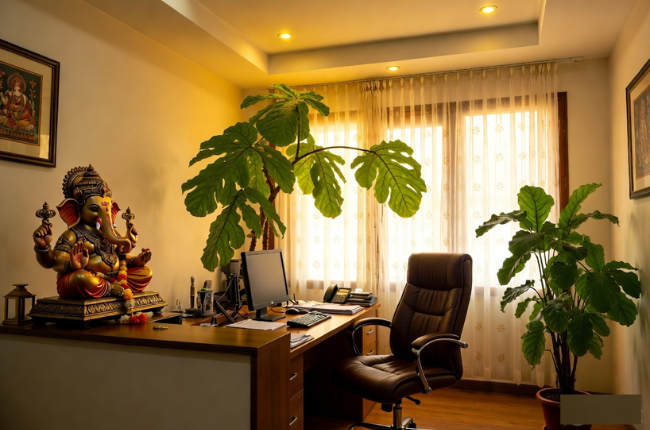
There are offices where business moves. Decisions get made, clients say yes, money comes in steadily, and the team works with a kind of natural ease. Then there are offices where everything feels heavier than it should. Good people leave without clear reason. Deals that look certain fall apart at the last stage. The owner works twice as hard as their competitors and somehow earns half as much. The effort is real. The results simply do not match.
In the classical Vedic science of Vastu Shastra, that mismatch has a structural explanation. Every commercial space sits within a grid of directional energies — the Vastu Purusha Mandala — that governs the flow of wealth, authority, opportunity, and health through the space. When the office entrance, the owner's seating, the cash counter, and the team's workstations are aligned with the correct directional zones, the space supports what the business is trying to do. When they are misaligned, the space actively works against it — not through superstition but through the disruption of the five elemental forces (Pancha Mahabhuta) that classical Vastu identifies as the invisible architecture of every built environment.
What almost no office Vastu article covers is the layered correction logic — the fact that the owner's seat, the entrance, and the cash counter must all be corrected in the right sequence, and that correcting one without the others produces only partial results. This guide covers every critical zone of the office in the classical Vastu framework — entrance direction, owner seating, staff placement, cash counter, meeting room, reception, colours, and remedies — with the practical correction logic that makes each change effective. For offices that cannot undergo structural changes, the Vastu remedies without demolition guide covers the complete non-structural correction toolkit.
The Vastu Purusha Mandala — The Invisible Grid Every Office Sits On
Before any specific office zone can be corrected, the foundational principle must be understood: every building — and every room within it — sits on a grid called the Vastu Purusha Mandala. This is not a metaphor. It is a precise directional and elemental map that the Manasara — one of the foundational classical texts of Vastu Shastra — describes as the living blueprint of any built space.
The Vastu Purusha Mandala divides every space into a grid of directional zones, each governed by a specific deity, planet, and elemental quality. When functions are placed in their corresponding zones — wealth in the north, fire in the south-east, knowledge in the north-east — the space becomes structurally aligned with the natural energy flows that support those functions. When functions are misplaced — a toilet in the north-east, a cash counter in the south, the owner's desk facing south — the space generates resistance to the very outcomes the business is pursuing.
The Eight Directional Zones and Their Business Functions
- North (Uttar) — governed by Kubera, the deity of wealth in classical Vedic tradition. The north zone is the primary wealth-attraction direction in Vastu. The Kuber Mantra and Yantra guide covers the deity correspondence in full. Cash counters, account departments, and financial record storage belong in the north zone.
- North-East (Ishanya) — governed by Ishana (Shiva) and associated with the water element. The most sacred and intellectually potent direction in Vastu. Ideal for prayer corners, meditation spaces, and knowledge work. Never place toilets, heavy storage, or staircases here — these are among the most damaging Vastu violations in any commercial space.
- East (Purva) — governed by Indra and the Sun. The direction of new beginnings, visibility, and social recognition. Reception areas, main entrances, and client-facing zones placed in the east receive maximum solar energy and generate the best first impressions.
- South-East (Agneya) — governed by Agni, the fire deity. The correct zone for electrical equipment, server rooms, generators, pantry, and kitchen areas in the office. Misplacing fire-element equipment in a water zone (north-east) or wealth zone (north) creates persistent electrical problems and financial drain simultaneously.
- South (Dakshina) — governed by Yama, the deity of discipline and records. The south zone governs fame, recognition, and the preservation of what has been built. Heavy storage, filing cabinets, and permanent record archives belong here. The south wall is the most structurally stable wall in the Vastu grid — it should never be left bare or light.
- South-West (Nairutya) — governed by Nirrti and the earth element. The most stable and grounding direction in the entire Vastu grid. The owner's cabin, the primary decision-making seat, and all heavy permanent furniture belong in the south-west. This direction governs authority, stability, and the long-term consolidation of what the business builds.
- West (Paschima) — governed by Varuna, the deity of water and order. The west zone governs gains, profits received, and the discipline of systems. Accounts finalisation, profit-booking, and administrative work align naturally with the west zone.
- North-West (Vayavya) — governed by Vayu, the wind deity. The direction of movement, communication, and external relationships. Sales teams, marketing departments, and client communication functions belong in the north-west — they need the movement energy that this zone generates to sustain their outward-facing work.
As is commonly observed among business owners who have applied Vastu corrections systematically — moving one element into its correct zone produces a noticeable but temporary shift. Moving all elements into their correct zones simultaneously produces a sustained, structural change in how the business operates. The grid works as a whole.
The Office Entrance — The First and Most Critical Vastu Decision
The office entrance is the point through which all external energy — clients, opportunities, money, information, and goodwill — enters the business space. Classical Vastu Shastra treats the main entrance (Dwara) as the most consequential single element of any commercial space. Get this one right, and the remaining corrections become significantly easier. Get it wrong, and every other correction carries a built-in limitation.
The Manasara and the Mayamata — the two most authoritative classical texts on Vastu for built spaces — both dedicate extensive sections to entrance placement, orientation, and the specific effects of each directional placement on the prosperity and longevity of the enterprise operating from that space.
Step-by-Step Entrance Assessment and Correction
- Stand at the centre of your office and use a compass to identify true north. All directional assessments in Vastu use magnetic north as the reference point. A compass reading taken from the centre of the space — away from metal furniture and electrical equipment — gives the most accurate directional baseline.
- Identify which wall your main entrance is on and which exact direction it faces. The wall on which the entrance sits and the direction the door faces when opened are both relevant. An entrance on the north wall facing north is a full north entrance. An entrance on the north wall that faces east when opened is a north-east opening — which carries different energy.
- Assess against the classical auspicious entrance directions:
- North-facing entrance: The most auspicious direction for offices focused on financial services, banking, trading, lending, and wealth management. North is Kubera's direction — money flows toward a north-facing entrance naturally in the Vastu framework.
- East-facing entrance: Highly auspicious for all business types — particularly for client-facing businesses, healthcare, education, media, and any enterprise that depends on public visibility and social recognition. The rising Sun's energy enters through an east door first thing every morning.
- North-east-facing entrance: The most spiritually auspicious placement — ideal for consultants, advisors, spiritual service providers, legal practices, and knowledge-based businesses. Wealth and wisdom enter together through the north-east.
- West-facing entrance: Acceptable for businesses in technology, manufacturing, and process-driven industries. Less naturally aligned with wealth attraction but does not create active obstruction.
- Identify and address inauspicious entrance directions:
- South-facing entrance: The most consistently flagged entrance direction in classical Vastu for business spaces. A south-facing main entrance directly opposes the north-Kubera wealth axis. Businesses operating from south-facing entrances commonly report persistent cash flow difficulty, high staff turnover, and a pattern of effort that does not convert to proportionate financial reward.
- South-west-facing entrance: Creates authority confusion — multiple people feel they are in charge, decisions are slow, and the business loses momentum at critical growth phases.
- If the entrance direction cannot be changed structurally: Place a Swastika symbol and Om inscription in copper or brass above the entrance door. Install a Vastu Yantra on the inner face of the entrance wall. These are classical non-structural corrections documented in regional Vastu traditions for spaces where physical relocation of the entrance is not possible.
- Ensure the entrance area is always clean, well-lit, and unobstructed. Classical Vastu holds that a cluttered or dark entrance physically blocks the energy flow that the correctly positioned door is meant to invite. No shoes, no storage boxes, no broken fittings near the main door — ever.
- Place a brass Ganesha or Lakshmi idol to the right of the entrance door — the classical auspicious placement for welcoming divine energy into a commercial space at the threshold.
📿 MICRO-REMEDY BOX 1 — Pandit's Tip
Focus: Karma
A business owner came for a Vastu consultation after three years of flat revenue despite strong products and a capable team. The office entrance faced south-west — directly into the Nairutya zone, which classical Vastu associates with stability and consolidation, not outward flow and new client attraction. No structural change was possible as the office was rented. The correction applied was a copper Vastu Yantra on the inner entrance wall, a Swastika above the outer door frame, and the placement of a north-zone cash box aligned with Kubera's direction. Within two quarters, three long-stalled client conversions closed. As Vastu tradition holds, the space was not changed — the resistance within it was removed. The effort that was always there finally had a clear channel to flow through.
Owner Seating Direction — Where the Business Leader Sits Determines How the Business Moves
Of all the Vastu corrections available in a commercial space, the owner's seating direction produces the most immediate and most consistently documented results. The reason is structural: the owner is the primary decision-making energy of the business. Where that energy is directed — physically, spatially — determines whether decisions carry natural authority or face constant resistance.
The Vishwakarma Vastu Shastra, the classical text attributed to the divine architect Vishwakarma and preserved in multiple regional Shastra traditions, is explicit on this point: the business head must sit facing north or east, with their back to a solid wall in the south or west. This single placement aligns the owner's personal energy with Kubera's wealth axis (north) or the Sun's authority axis (east) while placing the stabilising earth energy of the south-west at their back.
The Four Primary Owner Seating Directions — Classical Analysis
Facing North — The Wealth Direction The owner faces Kubera's direction directly. Financial decisions made facing north carry maximum Vastu support for wealth attraction. This is the classical prescription for owners of financial services firms, trading houses, investment businesses, and any enterprise where cash flow is the primary metric of health. The north-facing owner draws money toward the desk.
Facing East — The Authority and Visibility Direction The owner faces the rising Sun — the classical symbol of authority, recognition, and new beginnings. Decisions made facing east carry maximum Vastu support for business expansion, client acquisition, and public-facing growth. The east-facing owner draws opportunity and recognition toward the desk. Ideal for founders of client-facing businesses, service firms, healthcare practices, and educational institutions.
Facing North-East — The Wisdom Direction A north-east-facing seat combines Kubera's wealth axis with Ishana's wisdom and divine guidance energy. Ideal for consultants, advisors, legal professionals, and knowledge-based business owners where the quality of judgment is the primary product. Decisions made from this position carry classical Vastu support for clarity, integrity, and long-term trust-building.
Facing South or West — What Classical Vastu Warns Against An owner facing south sits with their back to Kubera — wealth flows away from the decision-making seat rather than toward it. Classical texts associate the south-facing seat with authority conflicts, team instability, and a pattern where the owner's decisions are frequently challenged or reversed. An owner facing west sits with their back to the east — new opportunities and external recognition have a structurally harder time reaching the desk.
Additional Owner Cabin Vastu Rules
- The owner's cabin should be in the south-west zone of the office — the earth element zone that governs authority and consolidation. Sitting in the south-west while facing north or east combines the correct zone placement with the correct directional facing.
- No beam directly above the owner's chair. A structural beam overhead in classical Vastu creates sustained pressure on the person sitting beneath it — decision fatigue, persistent headaches, and an inexplicable sense of oppression that affects judgment over time.
- A solid wall behind the chair — never a window, a glass partition, or an open corridor. The back requires structural support in Vastu precisely as a seated person requires back support physically. A window behind the owner's chair is among the most commonly cited Vastu violations in corporate office consultations.
- Place a pyramid or Vastu crystal on the owner's desk — north-east corner of the desk — as the classical non-structural energising placement.
Staff Seating, Team Zones, and Department Placement
Getting the owner's seating correct is the first layer. The second layer — where the staff sits, which teams occupy which zones, and how the overall seating map is organised — determines whether the business's internal energy flows productively or creates friction, confusion, and high attrition.
Department Placement by Vastu Zone
- Accounts and Finance team — North zone. The north's Kubera energy directly supports financial accuracy, wealth tracking, and disciplined money management. An accounts team placed in the south or south-west consistently reports errors, delays, and a sense of chronic overwhelm that has no clear operational cause.
- Sales and Marketing team — North-west zone. The Vayu (wind) energy of the north-west governs movement, outreach, and external communication. A sales team placed in the north-west zone has natural Vastu support for the outward-facing, relationship-building, constantly-in-motion nature of their work. Sales teams placed in the south-west — the consolidation zone — often report that their energy feels stuck and their conversion rates are inexplicably low.
- Operations and Administration — West zone. The west's Varuna energy governs systems, process discipline, and the steady management of what has already been built. Operations teams placed in the west work with greater structural efficiency.
- Human Resources — North-west or west zone. HR governs both outward recruitment (north-west's movement energy) and internal systems management (west's process energy) — either zone supports HR functions well.
- IT and Technology — South-east zone. The fire element of the south-east governs all electrical and technology systems. Server rooms, data centres, and technical infrastructure placed in the south-east zone run with fewer unexplained disruptions and better long-term reliability.
- Reception and Client-Facing Areas — North-east or east zone. The first impression a client receives must be supported by the welcoming, auspicious energy of the east or north-east. A reception placed in the south or south-west creates an unconscious heaviness in the first client interaction — subtle but consistently noted in Vastu consultations.
Individual Staff Seating Direction
Each staff member, regardless of their team zone, should ideally face north or east at their workstation. Classical Vastu holds that all productive work — analysis, communication, creation, and decision-making — is supported by these two directions. Staff facing south consistently report fatigue, low motivation, and a sense of being drained by the end of the workday — a pattern documented in Vastu consultations across commercial spaces of every scale.
For a complete framework on applying these principles to a home office setup, the Vastu guide for new home covers the residential Vastu principles that underpin the commercial applications described here.
📿 MICRO-REMEDY BOX 2 — Myth vs. Fact
MYTH: Vastu Shastra for offices is about decoration and aesthetics — placing plants, paintings, and lucky symbols to create a positive atmosphere.
FACT: Classical Vastu Shastra is a directional and elemental science grounded in the Manasara, Mayamata, and Vishwakarma Prakarana — texts that prescribe precise zone placements based on the five elements (Pancha Mahabhuta) and eight directional energies. Decorative elements like plants and symbols are the last layer of Vastu correction — applied after the structural and directional fundamentals are in place. Placing a bamboo plant in a south-east corner does nothing if the cash counter is in the south and the owner sits facing south-west. The fundamental corrections are directional, not decorative. Classical Vastu practitioners assess the grid first, correct the zones second, and add supportive elements third.
Cash Counter, Locker, and Financial Zone Vastu
The cash counter and financial storage placement is the Vastu element most directly linked to daily revenue flow, cash retention, and the business's overall relationship with money. In the classical system, money is an energy — and like all energy in Vastu, it flows toward correct placement and away from incorrect placement with structural consistency.
Cash Counter Placement — The Classical Rules
The cash counter must face north — toward Kubera, the classical deity of wealth — or open from the north or east side. The Manasara establishes this principle with clarity: the direction from which the cashier faces and the direction the cash drawer opens both determine the directional pull on money within the space.
- North-facing cash counter: The most auspicious placement. The cashier faces north, the drawer opens toward the north or east, and the flow of money aligns with Kubera's energy axis. This placement is prescribed for retail shops, banking counters, ticket windows, and any physical point of cash transaction.
- East-facing cash counter: The second most auspicious placement. The Sun's energy of new beginnings supports fresh cash inflow throughout the business day.
- South-facing cash counter: The most damaging cash counter placement in classical Vastu. Money faces Yama's direction — the direction of endings and closure. Businesses with south-facing cash counters consistently report that money comes in but does not stay, that daily closing balances are lower than the volume of transactions suggests they should be, and that unexplained financial leakage occurs without identifiable operational cause.
Locker and Safe Placement
- The financial safe or locker must be placed against the south or south-west wall — the earth element zone of stability and consolidation. It must open toward the north or east — so that when it is opened, the view from inside the safe faces the wealth direction.
- Never place the locker in the north-east — the water and wisdom zone is not the element for storing physical wealth. A locker in the north-east creates a persistent sense that money is spiritually present but materially elusive.
- Never place the locker against the north wall facing south — this mirrors the cash counter error. The opening direction is as important as the placement wall.
Additional Financial Zone Corrections
- Place a Kubera Yantra on the north wall of the accounts room or near the cash counter — the classical energising placement for wealth attraction documented in the Kuber Mantra and Yantra guide
- Keep the north zone of the office completely clutter-free — blocked north energy is one of the most common causes of cash flow stagnation in Vastu consultations
- A small indoor plant — money plant (Pothos) or lucky bamboo — placed in the north or north-east zone of the accounts area is the classical supportive placement for sustained financial health
- Never store garbage bins, broken equipment, or unused inventory in the north zone — this is the single most damaging financial Vastu violation that costs businesses money without any visible operational explanation
Meeting Rooms, Reception, and Common Areas
The spaces where business relationships are formed — meeting rooms, reception areas, and common areas — have their own Vastu framework that governs the quality of decisions made, the impressions formed, and the agreements reached within them.
Meeting Room Vastu
The meeting room is where the business's most consequential conversations happen: client pitches, team decisions, negotiations, and conflict resolution. Classical Vastu treats the meeting room as a secondary authority zone — its placement and internal arrangement directly affect the quality of outcomes from meetings conducted within it.
Ideal meeting room placement: North-west zone of the office. The Vayu (wind) energy of the north-west governs communication, movement, and the transmission of ideas — precisely the energies a productive meeting requires. A meeting room in the north-west generates naturally dynamic, forward-moving conversations.
Meeting room seating direction: The host — the business owner or senior decision-maker — faces north or east in the meeting. Guests face south or west. This classical arrangement places the authority of the north and east with the host while the guests face the directions of receptivity and consolidation — creating a natural energy alignment that supports the host's position without being confrontational.
What to avoid in the meeting room:
- A meeting room in the south-east (fire zone) creates heated, conflict-prone discussions — arguments escalate faster and agreements are harder to reach
- A meeting room in the south-west (consolidation zone) creates slow, heavy meetings where decisions are difficult to reach and participants feel drained afterward
- Broken chairs, flickering lights, or a cracked table in the meeting room are classical Vastu indicators of interrupted agreements — fix these before any important negotiation
Reception Area Vastu
The reception is the face of the business — the first physical experience a client has of the space. Classical Vastu holds that the reception must project clarity, warmth, and authority simultaneously.
- East or north-east placement for the reception counter — welcoming energy aligned with new beginnings and divine guidance
- Receptionist facing east or north — looking toward the wealth and opportunity directions while greeting incoming clients
- A brass Ganesha or Lakshmi idol to the right of the reception counter — the classical auspicious placement for removing obstacles and welcoming prosperity at the threshold of the business
- Fresh flowers or a live plant in the north-east corner of the reception — never artificial flowers, which classical Vastu associates with stagnant energy in the welcoming zone
- Adequate natural light in the reception — a dark reception is a classical indicator of blocked incoming opportunity regardless of directional placement
Pantry and Common Areas
The pantry — governed by Agni (fire) — must always be in the south-east zone. A pantry or kitchen placed in the north-east contaminates the most sacred zone of the office with fire energy. A pantry in the north interferes directly with the wealth zone. The south-east placement is non-negotiable in classical Vastu for all fire-related functions.
What No Office Vastu Article Explains — The Vastu Reading of Rented and Shared Spaces
One question that appears in dozens of Reddit business threads and Quora discussions with no satisfying published answer: does Vastu apply to a rented office where structural changes are not possible, and if so, how do the corrections actually work?
This question matters because the overwhelming majority of Indian businesses — startups, SMEs, professional practices, and growing enterprises — operate from rented spaces. The assumption that Vastu requires demolition or structural modification has kept thousands of business owners from applying corrections that are entirely possible within a rented space.
What Classical Vastu Says About Non-Owned Spaces
The Mayamata — one of the primary classical Vastu texts — addresses the distinction between owned and occupied spaces directly. Its teaching is this: the Vastu Purusha Mandala governs every space that is consistently occupied and used, regardless of legal ownership. The energy grid does not check the lease agreement. What matters is consistent occupancy and intentional use.
This means Vastu corrections in a rented space are not only possible — they are necessary if the space is to support the business operating within it. The corrections in a rented space are simply applied through non-structural means rather than through construction changes.
Practical Non-Structural Corrections for Rented Offices
- Reorient furniture to correct directional placement. The owner's desk, the cash counter, and the team's workstations can almost always be repositioned without structural change. This single action — moving furniture to correct directional alignment — is the most impactful Vastu correction available in a rented space.
- Use Vastu Yantras for directional correction. A copper Vastu Yantra placed on the relevant wall corrects the energy of a misaligned zone without physical modification. The Yantra benefits and selection guide covers the specific Yantras used for each directional correction.
- Correct the north zone immediately. Clear all clutter, broken items, and storage from the north zone of the office. Place a Kubera Yantra on the north wall. This single correction addresses the most common cause of cash flow stagnation in rented commercial spaces and requires no permission from the landlord.
- Address south-east with a salt lamp or fire element symbol. If the south-east zone houses non-fire elements — a storage room, a quiet corner used for meditation — place a salt lamp or a red-toned element in the south-east to restore the fire energy that zone requires.
- Use colour corrections on walls. Paint within a rented space is typically within tenant rights. The correct colours for each directional zone (covered in H2-8) are among the most accessible and most effective non-structural Vastu corrections available.
The complete toolkit for this type of correction is documented in the Vastu remedies without demolition guide — the single most practically useful companion resource to this article for any business operating from a rented space.
Honestly, this surprises most business owners who discover it: the most impactful Vastu correction in their rented office costs nothing and takes one afternoon — clearing the north zone and reorienting the owner's desk. The results from these two changes alone, applied consistently and with a clear Sankalpa for business growth, are among the most frequently reported improvements in commercial Vastu consultations.
Office Vastu Colours, Lighting, and Plants — The Third Layer of Correction
After directional placement and zone allocation are correct, the third layer of office Vastu addresses the elemental quality of the space through colour, light, and living energy. These are not decorative choices — they are elemental calibrations that reinforce or weaken the directional corrections already in place.
Vastu Colours by Directional Zone
Each directional zone has a corresponding element and a corresponding colour range that amplifies that element's energy. Painting a zone in its correct colour reinforces the directional correction. Painting it in a conflicting colour partially undermines corrections made at the structural and furniture level.
- North zone (Kubera — water element): Blue, green, and white tones. These water-element colours reinforce the wealth-attraction energy of the north. Never use red or orange in the north zone — fire colours in a water zone create financial volatility.
- North-east zone (Ishana — water and ether): White, light yellow, or pale green. Keep this zone as light and uncluttered as possible — heavy colours compress the expansive, wisdom-oriented energy of the north-east.
- East zone (Indra — air element): White, light green, or pale blue. The Sun's direction responds to clarity and openness — light, airy colours support the east zone's energy of new beginnings and public visibility.
- South-east zone (Agni — fire element): Orange, red, or coral. Fire colours reinforce the south-east's elemental identity. A grey or blue south-east — water suppressing fire — creates persistent electrical problems and team energy depletion.
- South zone (Yama — fire and earth): Red, orange, or deep earth tones. The south wall is the fame and recognition wall — warm, strong colours here reinforce the business's public authority and professional reputation.
- South-west zone (Nirrti — earth element): Yellow, beige, brown, or earthy tones. The earth element zone requires grounding, stabilising colours. The owner's cabin walls in these tones reinforce the authority and stability that the south-west zone is structurally meant to provide.
- West zone (Varuna — water element): Blue, white, or silver tones. The west zone governs systematic gains — cool, precise colours support the methodical nature of west-zone work.
- North-west zone (Vayu — air element): White, light grey, or pale blue. The movement and communication energy of the north-west is reinforced by open, airy colours that do not weigh the space down.
Lighting Vastu for the Office
- Natural light from the north and east is the most auspicious lighting in classical Vastu. Office layouts that allow morning sunlight to enter from the east energise the space for the workday in a way that artificial lighting cannot replicate.
- The north-east corner must never be dark. Darkness in the north-east — the zone of wisdom and divine guidance — is a consistent indicator of poor decision-making quality and persistent strategic confusion in the business. A lamp or skylight in the north-east is the classical correction.
- The south zone must be adequately lit but not excessively bright — the fame and consolidation zone responds to steady, warm light rather than harsh or fluctuating illumination.
Plants in the Office — Classical Placement
- Money plant (Pothos): North or north-east zone. One of the most consistently recommended indoor plants for wealth energy in commercial spaces across both North and South Indian Vastu traditions.
- Lucky bamboo: North zone or east zone. Three or nine stalks — both numbers carry classical auspicious significance in the Vedic numerical system. The number 108 and Vedic numerical significance guide covers the classical framework for number-based Vastu choices.
- Tulsi (Holy Basil): North-east zone if outdoor access allows, or near an east-facing window. Classical Vastu associates Tulsi with purification of the space's energy field — particularly relevant in offices that have experienced significant conflict, financial loss, or staff disruption.
- Cactus and thorny plants: Never inside a commercial space in classical Vastu. Thorns create cutting energy (Vastu Dosha) that disrupts relationships — with clients, within the team, and with vendors.
- Artificial plants: Classical Vastu consistently recommends against artificial plants in any zone. A dead or plastic plant in the wealth zone is structurally equivalent to placing an image of stagnation where the business needs living, growing energy.
As astrological and Vastu tradition holds, individual results vary with the sincerity of implementation, the completeness of corrections made, and the karmic context of the business and its owner. A Vastu correction is a channel — not a guarantee. It removes structural resistance. What flows through the cleared channel depends on effort, karma, and intent.
FAQ
Q1. Which direction should the office entrance face for business growth? North and east-facing entrances are the most auspicious for business growth in classical Vastu. A north-facing entrance aligns with Kubera's wealth direction, supporting consistent cash flow. An east-facing entrance draws the Sun's authority and new-opportunity energy. A south-facing entrance is the most challenging placement — it directly opposes the wealth axis and is associated with persistent financial obstruction.
Q2. Where should the business owner sit in the office as per Vastu? The owner should sit in the south-west zone of the office, facing north or east. Facing north aligns the decision-making seat with Kubera's wealth direction. Facing east aligns it with the Sun's authority and visibility axis. The owner must have a solid wall behind them — never a window or glass partition — and must not sit directly under a structural beam.
Q3. Where should the cash counter be placed in an office as per Vastu? The cash counter must face north or east, with the cash drawer opening toward the north. This aligns daily cash transactions with Kubera's wealth direction. A south-facing cash counter is the most damaging financial Vastu placement — money enters but does not stay, and unexplained financial leakage occurs regardless of revenue volume.
Q4. Can Vastu corrections be made in a rented office without demolition? Vastu corrections in rented spaces are entirely possible through non-structural means. Repositioning furniture to correct directional alignment, placing Vastu Yantras on relevant walls, clearing the north zone of all clutter, using correct zone colours, and adding living plants in the wealth zone are all effective corrections that require no structural modification and typically no landlord permission.
Q5. Which colours are best for office walls as per Vastu Shastra? Colour selection follows the elemental identity of each directional zone. The north and east walls respond to white, light green, and blue. The south and south-east walls respond to warm reds and oranges. The south-west walls respond to yellow, beige, and earth tones. Using fire colours in water zones or water colours in fire zones creates elemental conflict that undermines other Vastu corrections already in place.
Q6. How do I use Vastu to fix financial stagnation in my office? The three most impactful corrections for financial stagnation are: clear the north zone completely of all clutter, storage, and broken items; place a Kubera Yantra on the north wall; and ensure the cash counter or accounts desk faces north. These three corrections address the primary Vastu causes of cash flow obstruction and can typically be implemented in a single afternoon without structural change.
Q7. What is the best Vastu placement for a home office to increase income? In a home office, the owner should sit in the south-west corner of the room facing north or east. The desk must have a solid wall behind it. The north zone of the room must be clear and energised — a Kubera Yantra or a money plant in this zone supports income flow. Natural light from the east is the most supportive lighting for a home office in classical Vastu. As tradition holds, outcomes depend on consistent implementation, genuine effort, and karmic context.
Conclusion
Vastu Shastra holds that a business space is not a neutral container — it is an active participant in the business's outcomes. Every wall, every zone, every direction carries an elemental quality that either aligns with the business's goals or resists them. The Vastu Purusha Mandala does not change because of market conditions, team changes, or product quality. It operates as a structural constant — always either supporting or opposing, always responding to how the space is organised.
The most concrete step any business owner can take today is this: stand at the centre of your office with a compass, identify north, and check whether your owner's seat faces north or east and whether your north zone is clear. These two checks take five minutes and reveal the two most impactful Vastu factors in any commercial space.
Outcomes in business — growth, money, team stability, and client relationships — depend on effort, karma, the quality of the product or service, and the structural support of the space in which all that work happens. Vastu addresses the last factor. The rest remains the business owner's to build.
Running a business from a space that feels like it is working against you despite genuine effort? AtoZPandit.com connects you with experienced Vastu consultants who assess your office's directional grid, identify the specific zone violations creating resistance, and prescribe precise corrections — structural or non-structural — matched to your specific space and business type.
DISCLAIMERThis article is published for educational and cultural awareness purposes only. The Vastu Shastra principles and directional prescriptions described here are part of India's classical Vedic tradition and do not substitute for qualified architectural, legal, or financial advice. For personalised guidance, connect with AtoZPandit.com.