
Mahadasha Reading Guide Find Your Peak Success Window Before It Closes
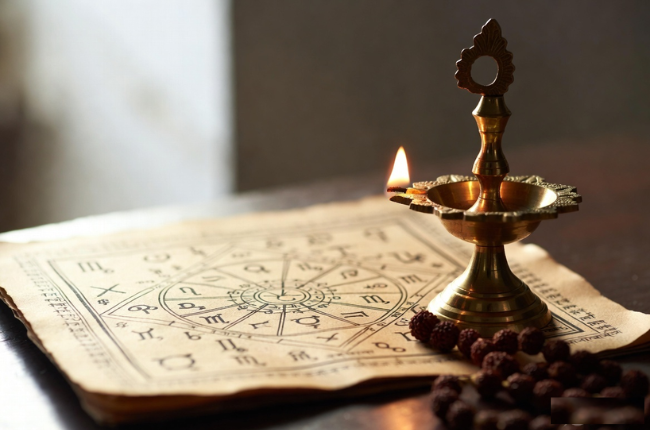
There are years in a person's life when everything moves — a job offer arrives, a relationship deepens into marriage, money accumulates without unusual effort, and the general feeling is that life is cooperating. Then there are years when the opposite is true: effort doubles, results halve, and the person begins to wonder whether something fundamental is wrong with their choices or their luck. Most people experience both without ever understanding why the shift happened when it did. Vedic astrology has a precise answer. It is called Mahadasha — the major planetary period — and it is the single most powerful timing mechanism in the entire classical Jyotish system. The Brihat Parashara Hora Shastra, the foundational text of Vedic predictive astrology composed by the sage Parashara, dedicates more chapters to the Vimshottari Dasha system than to any other predictive tool, because no other tool maps the timing of life events with the same accuracy. Your birth chart shows what your life contains — your Mahadasha sequence shows when each of those contents becomes active.
What most articles on this subject miss is the layer that sits between the Mahadasha and the actual life event — the Antardasha, the sub-period, which is the true triggering mechanism. A Jupiter Mahadasha does not deliver marriage on its first day. The marriage arrives in a specific Antardasha within that Mahadasha, when the sub-period lord activates the relevant house. Understanding this two-tier structure is what separates a useful Dasha reading from a vague prediction. This article covers the complete Mahadasha reading framework — how to find your current period, what each of the nine planetary Mahadashas delivers in its best and most difficult expressions, how Antardasha works as the trigger, and the practical remedies that help a family move through a difficult Dasha with greater stability and less damage.
What Mahadasha Is and How the Vimshottari System Works
Mahadasha is a Sanskrit compound: Maha means great or major, and Dasha means period or state. In the Vimshottari Dasha system — Vimshottari meaning 120 — the human lifespan is mapped across a 120-year cycle divided among nine planets. Each planet governs a fixed number of years, and the sequence a person experiences is determined entirely by the Nakshatra (lunar mansion) in which the Moon was placed at the moment of birth.
The Nine Planets and Their Dasha Durations
The complete Vimshottari cycle, in its classical sequence, assigns the following periods:
- Sun (Surya) — 6 years
- Moon (Chandra) — 10 years
- Mars (Mangal) — 7 years
- Rahu — 18 years
- Jupiter (Guru) — 16 years
- Saturn (Shani) — 19 years
- Mercury (Budha) — 17 years
- Ketu — 7 years
- Venus (Shukra) — 20 years
The total is 120 years — the classical maximum lifespan recognised in Vedic tradition. No person experiences all nine Mahadashas in a single lifetime. Most people live through four to six, depending on their age at birth and lifespan.
How to Find Your Current Mahadasha
The starting Mahadasha is determined by the Moon's Nakshatra at birth. Each of the 27 Nakshatras is assigned a ruling planet, and that planet becomes the lord of the first Mahadasha. The remaining years of that Mahadasha — based on how far the Moon had travelled through the Nakshatra at birth — form the balance of Dasha at the time of birth, visible in every printed Kundali.
Most printed birth charts and Kundali software show the Dasha balance at birth and the sequence that follows. If your chart does not show this, a qualified Jyotishi can compute it from your birth date, time, and place within minutes. The Complete Kundli Reading Guide explains how to locate and read the Dasha table within your own birth chart.
The Three-Tier Structure
Every Mahadasha contains nine Antardashas (sub-periods), and every Antardasha contains nine Pratyantardashas (sub-sub-periods). The Mahadasha sets the overall theme of the years. The Antardasha determines which specific events within that theme become active and when. The Pratyantardasha determines the exact timing — the month or week — when the event crystallises. A skilled Jyotishi reads all three tiers together before making any specific prediction about timing.
How to Read Your Mahadasha for Career, Marriage and Wealth
The Mahadasha lord does not operate in isolation. Its effect on a person's life depends on three factors working together: where the Mahadasha lord is placed in the birth chart, which houses it owns, and which houses it aspects or influences. The same Jupiter Mahadasha produces completely different results for a person with Jupiter in the first house versus a person with Jupiter in the eighth house.
The House Ownership Rule
Every planet owns two houses in the birth chart (except the Sun and Moon, which own one each). When a planet's Mahadasha runs, it activates the themes of the houses it owns. A planet that owns the tenth house (career) and the seventh house (marriage) will activate both career and relationship themes during its Mahadasha. A planet that owns the sixth and eleventh houses will bring themes of competition, service, and gains.
The Placement Rule
Where the Mahadasha lord sits in the chart determines the quality of what it delivers:
- A planet in a Kendra (houses 1, 4, 7, 10) delivers results with strength and visibility
- A planet in a Trikona (houses 1, 5, 9) delivers results with grace and dharmic alignment
- A planet in a Dusthana (houses 6, 8, 12) delivers results with difficulty, delay, or through challenge
- A planet in Moolatrikona or exaltation delivers its finest expression during its Mahadasha
The Antardasha Trigger
Within any Mahadasha, life events do not arrive uniformly across all years. They cluster around specific Antardashas — particularly those of planets that own the relevant house. If marriage is shown in the seventh house, the marriage will most likely arrive during an Antardasha of the seventh house lord, or of Venus (the natural significator of marriage), within a Mahadasha that is generally supportive. Understanding which Antardasha is currently running is therefore as important as knowing the Mahadasha itself.
For a complete breakdown of how the Antardasha sub-periods work within each Mahadasha and their effect on career and life events, the Vimshottari Dasha Complete Guide provides the full calculation and interpretation framework.
The Nine Mahadashas — What Each Period Delivers
This is the section that most articles treat as a simple list of good and bad periods. Classical Jyotish does not work that way. Every Mahadasha has a best expression and a most difficult expression, and which one a person experiences depends entirely on their chart. What follows is the classical framework for each period — not a fixed prediction, but the range of what each planet's Mahadasha governs.
Sun Mahadasha — 6 Years
Best expression: Government recognition, leadership opportunities, clarity of purpose, health improvement, father's wellbeing, authority in career. Most productive for those in government service, administration, politics, or any field requiring public visibility.
Most difficult expression: Ego conflicts with authority figures, separation from father, eye or heart health issues, career arrogance that creates powerful enemies.
Who thrives: Those with Sun in the first, fifth, ninth, or tenth house, or Sun exalted in Aries.
Antardasha to watch: Sun-Jupiter and Sun-Moon Antardashas are typically the most productive sub-periods within the Sun Mahadasha.
Moon Mahadasha — 10 Years
Best expression: Emotional stability, growth in business involving the public, real estate gains, mother's wellbeing, creative work, travel. A strong Moon Mahadasha is among the most comfortable periods in a person's life — things flow without force.
Most difficult expression: Mental anxiety, emotional volatility, relationship instability, water-related health issues, mother's ill health.
Who thrives: Those with Moon exalted in Taurus, or Moon in a Kendra or Trikona, and particularly those in Cancer Lagna where Moon is the chart lord.
Mars Mahadasha — 7 Years
Best expression: Physical energy, real estate acquisition, career advancement in technical fields, surgery recovery, siblings' progress, courage in action.
Most difficult expression: Accidents, blood-related health issues, legal disputes, aggressive decisions that damage relationships, sibling conflict.
Who thrives: Those with Mars in Aries, Scorpio, or Capricorn (exaltation), or Mars placed in the third, sixth, or tenth house.
Rahu Mahadasha — 18 Years
Best expression: Sudden career rise, foreign connections, unconventional wealth, technology and media success, social network expansion. Rahu's 18-year period is the longest stretch of any single planet and contains the most dramatic swings of any Mahadasha.
Most difficult expression: Confusion about identity and purpose, unexpected reversals after rapid rise, foreign land difficulties, deception in partnerships, health issues that are difficult to diagnose.
Who thrives: Those with Rahu in the third, sixth, tenth, or eleventh house, and particularly those in careers involving media, technology, foreign trade, or innovation.
As many families discover when they sit with their Pandit during a Rahu Mahadasha, the period rarely delivers steady, predictable growth — it moves in sudden bursts and unexpected reversals, and the family that is prepared for this rhythm navigates it far more successfully than the family waiting for smooth progress.
Jupiter Mahadasha — 16 Years
Best expression: The most universally auspicious Mahadasha in the classical Jyotish framework. Marriage, children, higher education, wealth accumulation, spiritual growth, professional recognition, and family expansion are all strongly supported. Jupiter's 16 years are considered the primary window for building lasting foundations.
Most difficult expression: Over-optimism, weight gain, financial overextension through generosity, liver or pancreatic health concerns, complacency that misses the period's full opportunity.
Who thrives: Those with Jupiter in Sagittarius, Pisces, or Cancer (exaltation), or Jupiter in the first, fifth, or ninth house. For Cancer, Scorpio, and Pisces Lagnas in particular, Jupiter Mahadasha is considered among the finest life periods.
Antardasha to watch: Jupiter-Jupiter (the opening sub-period) and Jupiter-Moon are typically the strongest windows for marriage and wealth within this Mahadasha.
Saturn Mahadasha — 19 Years
Best expression: The longest and most karmic Mahadasha. Saturn rewards discipline, consistency, and service. The second half of Saturn Mahadasha typically delivers significant and durable results — property, career stability, authority earned through long effort, and a deepening of spiritual practice.
Most difficult expression: The first two to three years of Saturn Mahadasha are frequently the most difficult period in a person's life — delays, losses, health challenges of chronic nature, and a pervasive sense of restriction. Families going through the opening years of Saturn Mahadasha need the most support and the clearest remedial guidance.
Who thrives: Those with Saturn exalted in Libra, or Saturn in the third, sixth, tenth, or eleventh house. Capricorn and Aquarius Lagna individuals typically navigate Saturn Mahadasha with greater natural resilience.
Mercury Mahadasha — 17 years
Best expression: Communication, writing, business, education, mathematics, accounting, and all intellectual professions thrive in Mercury Mahadasha. Financial planning made during Mercury Mahadasha tends to be precise and durable. Siblings and younger relatives often prosper during this period.
Most difficult expression: Nervous system strain, skin conditions, indecisiveness that delays important commitments, scattered energy across too many projects.
Who thrives: Those with Mercury in Gemini or Virgo (own sign or exaltation), or Mercury in the first, fourth, or tenth house.
Ketu Mahadasha — 7 Years
Best expression: Spiritual awakening, detachment from materialism that leads to inner peace, sudden intuitive insights, healing abilities, liberation from toxic relationships or situations that were holding the person back.
Most difficult expression: A deeply disorienting period for materially oriented individuals — Ketu dissolves what it touches, so career, relationship, or financial structures that are not genuinely aligned with the person's dharma tend to fall away during this period. Unexplained health issues, particularly involving the nervous system or immune function, are common.
Who thrives: Those already oriented toward spiritual practice, research, healing, or solitary creative work. Ketu in the ninth, twelfth, or first house produces its finest Mahadasha expression.
Venus Mahadasha — 20 Years
Best expression: The longest Mahadasha and among the most materially abundant. Venus governs beauty, luxury, relationships, creative arts, music, vehicles, property, and marital happiness. The Venus Mahadasha is the primary window for marriage for many charts, and for business success in creative, hospitality, fashion, and relationship-oriented fields.
Most difficult expression: Overindulgence in pleasures, reproductive health issues, relationship co-dependency, financial excess without planning, kidney or hormonal health concerns.
Who thrives: Those with Venus in Taurus, Libra, or Pisces (exaltation), or Venus in the first, fourth, seventh, or tenth house. Taurus and Libra Lagna individuals experience Venus Mahadasha as one of the finest periods of their lives.
📖 Did You Know The Brihat Parashara Hora Shastra does not treat all nine Mahadashas as equal in their capacity to deliver life events. The text identifies Yoga Karaka planets — planets that simultaneously own a Kendra and a Trikona house for a specific Lagna — as delivering their Mahadasha results with exceptional force and reliability. For a Taurus Lagna, Saturn owns the ninth and tenth houses, making it a Yoga Karaka — its Mahadasha, despite Saturn's general association with difficulty, delivers career authority and dharmic recognition for Taurus Lagna individuals with unusual consistency.
The Antardasha Within Mahadasha — Where Life Events Actually Live
Knowing your Mahadasha tells you the chapter of your life. Knowing your Antardasha tells you the paragraph where the specific event occurs. This is the most practically useful layer of Dasha reading, and it is consistently underexplained in every competing article and YouTube video on this subject.
How Antardasha Duration Is Calculated
Within any Mahadasha, the nine Antardashas are proportional to the planet's own Mahadasha duration relative to the 120-year total. The Mahadasha lord's own Antardasha always runs first and is the most self-contained sub-period. The Antardasha of planets that are strong in the chart and own relevant houses are the sub-periods most likely to trigger the major events that the Mahadasha promises.
The Marriage Trigger
Marriage in Vedic astrology requires the activation of the seventh house, its lord, Venus (natural significator of marriage), and ideally Jupiter (natural significator of auspicious events). Marriage is most likely to occur when:
- The running Antardasha lord owns or aspects the seventh house
- OR the Antardasha lord is Venus or Jupiter in a supportive position
- AND the overall Mahadasha is not running through a Dusthana lord
For families tracking marriage timing for a son or daughter, the Kundali Matching Guide explains how the Dasha alignment of both partners affects the timing and compatibility of their union. For those facing persistent marriage delays, the Marriage Delay Solutions Guide addresses the specific Dasha configurations that most commonly create this pattern.
The Career Peak Trigger
Career peaks arrive most reliably during the Antardasha of the tenth house lord, or of planets placed in the tenth house, within a supportive Mahadasha. The Sun's Antardasha within a Jupiter Mahadasha, for example, frequently corresponds to a government recognition, a promotion, or a leadership appointment for those with a strong Sun.
The Financial Loss Trigger
Financial difficulties within an otherwise positive Mahadasha typically arrive during the Antardasha of the twelfth house lord (losses), the eighth house lord (sudden reversal), or a severely afflicted planet. Understanding which Antardasha carries this risk allows a family to plan conservatively during that specific sub-period rather than through the entire Mahadasha.
🪔 Pandit's Tip — Focus: Shraddha Honestly, this surprises most people: the Mahadasha of a planet that is debilitated in the birth chart does not always produce its worst results at the start of the period. Classical Jyotish tradition recognises Neecha Bhanga Raja Yoga — the cancellation of debilitation — where specific planetary combinations in the chart neutralise a planet's weakness and actually convert its Mahadasha into an unexpectedly productive period. A Pandit familiar with your full chart will assess Neecha Bhanga before concluding that a debilitated planet's Mahadasha will be difficult. Never assume the worst from a debilitated Mahadasha lord without checking for the cancellation conditions first.
What Happens When a Difficult Mahadasha Cannot Be Avoided
Every person will experience at least one genuinely difficult Mahadasha in their lifetime. The question most families carry — and almost no article answers plainly — is this: when a difficult Mahadasha cannot be shortened or skipped, what can actually be done to reduce its damage and preserve the family's stability through the full period?
The Failure Case — When Mahadasha Damage Is Worst
The most destructive Mahadasha outcomes occur when three conditions align simultaneously:
- The Mahadasha lord is in a Dusthana (sixth, eighth, or twelfth house) in the birth chart
- The current Antardasha lord is also debilitated or in a Dusthana
- The person takes major irreversible decisions — marriage, property purchase, business investment — during this double-weakness window without awareness
The classic example is a person in Saturn Mahadasha-Rahu Antardasha who takes a large business loan and signs a partnership agreement. Both period lords are karmic and separative in nature — Saturn delays and Rahu deceives. This combination, when both are poorly placed, is among the most consistently difficult financial windows in Vedic astrology. The damage is not inevitable — but it is significantly more likely, and it is avoidable with awareness.
The Contrast That Matters Most
The most important distinction families need to understand is the difference between a planet being difficult by nature and a planet being difficult for your chart. Saturn is considered a natural malefic. But for a Libra Lagna or an Aquarius Lagna, Saturn is also the chart lord — and its Mahadasha, though slow and demanding, ultimately builds the most durable structures in the person's life. The planet's chart-specific role always overrides its general nature. A Jyotishi who tells a Libra Lagna person that Saturn Mahadasha will be uniformly terrible has not read the chart — they have read a general rule and missed the specific picture.
What If the Remedies Do Not Work
Some karmic configurations within a difficult Mahadasha run deeper than a single remedy cycle. The Brihat Parashara Hora Shastra is honest about this: certain Dasha combinations represent karma that must be experienced, not bypassed. In these cases, the classical teaching shifts from remedy to dharmic navigation — making the right choices within the difficult period, avoiding compounding the karma through reactive decisions, maintaining spiritual practice, and using the period's inherent challenges to build the patience and resilience that the next Mahadasha will require. As astrological tradition holds, individual outcomes always vary with karma and sincerity — remedies reduce intensity, they do not rewrite the chart. The next productive Mahadasha is always coming.
One Question Every Family Asks But Cannot Find Answered: Can Two People in the Same Household Run Opposing Mahadashas Simultaneously
This question appears consistently in r/jyotish threads and Quora discussions on family astrology — and has received no satisfying classical answer in any published article or YouTube content. The concern is real and practical: what happens when a husband is running Jupiter Mahadasha (his career peak, most supportive period) at the same time his wife is running Saturn Mahadasha (her most challenging and restrictive period)? Does the household experience prosperity or difficulty — and whose Dasha dominates the family's shared experience?
Classical Jyotish tradition does not provide a single universal answer, but the Brihat Parashara Hora Shastra offers the framework through its treatment of the seventh house and the nature of Graha Maitri (planetary friendship) between charts. The classical position, as understood across the North Indian and Kerala Jyotish traditions, is that opposing Dashas in a household create what practitioners describe as an asymmetric period — the positive Dasha holder experiences their gains, but those gains are partially absorbed by the household's shared karmic field, which is simultaneously under the difficult Dasha's influence.
In practical terms, families in this situation commonly report that the prospering partner's career advances while the household atmosphere remains tense, or that financial gains arrive but are quickly consumed by the struggling partner's health expenses or career transition costs. The household does not experience the prospering Dasha's full benefit until both partners are in supportive periods simultaneously.
The classical remedy for this situation is joint worship — both partners performing their individual Mahadasha remedies together, at the same time and place, so that the household's energetic field receives both planetary pacifications simultaneously rather than separately. A Pandit familiar with both charts will design the combined remedy protocol, ensuring that the pacification offerings for the difficult Dasha do not inadvertently conflict with the activation offerings for the supportive Dasha.
Practical Remedies for Each Mahadasha Period
The following remedies are drawn from the classical Jyotish and Tantra Shastra traditions and are organised by planetary lord. They are home-accessible practices that a family can begin without a Pandit. For severe Mahadasha afflictions, an onsite Havan or a specialist remedy designed around the full birth chart is always more effective than a general home practice.
Remedies by Mahadasha Lord
Sun Mahadasha: Offer water to the rising Sun every morning with cupped hands. Recite the Aditya Hridayam on Sundays. Donate wheat, red cloth, or copper items on Sundays.
Moon Mahadasha: Offer milk to a Shiva Linga on Mondays. Recite the Chandra Kavacham. Donate white items — rice, white cloth, milk — on Mondays or Purnima. Avoid sleeping in the afternoon.
Mars Mahadasha: Recite the Mangal Stotra on Tuesdays. Donate red lentils (masoor dal), red cloth, or copper items on Tuesdays. Hanuman worship is the most widely recommended classical remedy for Mars affliction.
Rahu Mahadasha: Recite the Rahu Beej Mantra — Om Raam Rahave Namah — 108 times daily. Donate blue or black items on Saturdays. Worship Durga or Kali on Saturdays. Avoid major financial decisions during Rahu-Rahu and Rahu-Saturn Antardashas.
Jupiter Mahadasha: Recite the Guru Stotram on Thursdays. Donate yellow items — turmeric, yellow cloth, chana dal — on Thursdays. Serve a Brahmin or a teacher. Jupiter is strengthened by acts of genuine knowledge-sharing and dharmic charity.
Saturn Mahadasha: Recite the Shani Chalisa on Saturdays. Light a sesame oil lamp at the Shani temple or at the south wall of the home on Saturdays at dusk. Donate black sesame, iron, black cloth, or mustard oil on Saturdays. Serve the elderly and the poor — Saturn's remedy is always found in service, not in ritual alone. For deeper guidance on Saturn-related remedies, the Shani Sade Sati Remedies Guide provides the complete framework that applies equally to Saturn Mahadasha difficulties.
Mercury Mahadasha: Recite the Budh Stotra on Wednesdays. Donate green items — green cloth, moong dal, vegetables — on Wednesdays. Feed young girls (Kanya Puja). Keep the mind engaged in learning — Mercury weakens when the intellect is idle.
Ketu Mahadasha: Recite the Ketu Beej Mantra — Om Kem Ketave Namah — 108 times daily. Donate items associated with the spiritual life — blankets, sesame, multicoloured cloth — on Saturdays. Worship Ganesha and observe silence (Mauna) for a portion of each day. Ketu responds most strongly to practices of genuine inner detachment.
Venus Mahadasha: Recite the Shukra Stotra on Fridays. Donate white or pink items — white rice, white flowers, white cloth, silver — on Fridays. Worship Lakshmi on Fridays with a ghee lamp and lotus flowers. Maintain physical cleanliness and aesthetic discipline — Venus weakens in environments of disorder.
For families who also wish to complement their Mahadasha remedies with gemstone support, the Gemstone Complete Guide for Rashi and Lagna maps the correct gemstone for each planetary period and explains the wearing protocol in full detail.
FAQ: Mahadasha Reading and Success Periods
Q1. How do I find out which Mahadasha I am currently running? Your current Mahadasha is shown in your printed Kundali as a Dasha table, calculated from the Moon's Nakshatra at birth. Most Kundali software and printed charts show the full Dasha sequence with start and end dates. If your chart does not show this, a Jyotishi can compute it from your birth date, exact time, and place of birth within a few minutes.
Q2. Which Mahadasha is considered the best for career success and wealth? Jupiter Mahadasha is the most universally recognised period for wealth, career recognition, and family growth — but its results depend entirely on Jupiter's placement and house ownership in your chart. Venus Mahadasha delivers the strongest material abundance for charts where Venus is well-placed. As astrological tradition holds, individual outcomes always vary with the full chart and current karma.
Q3. How long does a Mahadasha last and can it be shortened? Each Mahadasha runs for a fixed number of years — from 6 years for the Sun to 20 years for Venus — and cannot be shortened. What can be modified through remedies is the intensity of a difficult period or the degree to which a supportive period's full potential is realised. The sequence and duration are fixed from birth based on the Moon's Nakshatra.
Q4. What is the difference between Mahadasha and Antardasha in a Kundali reading? Mahadasha is the major planetary period spanning multiple years and setting the overall life theme for that duration. Antardasha is the sub-period within the Mahadasha — lasting months to a few years — that triggers specific events. Marriage, career change, and financial shifts rarely arrive uniformly across the full Mahadasha. They cluster in specific Antardashas when the sub-period lord activates the relevant house.
Q5. Can a bad Mahadasha be overcome with remedies and good karma? Remedies genuinely reduce the intensity of a difficult Mahadasha — they are not placebo measures. Classical texts specify that mantra, dana, and service to the relevant planet's deity create conditions that soften the period's harshest expressions. What remedies cannot do is completely bypass karma that must be lived through. Personal results depend on individual karma, the quality of practice, and divine grace.
Q6. How do I use my Mahadasha to plan marriage or a business decision? Which Mahadasha period is ideal for starting a business or getting married? Map the current Mahadasha lord's relationship to the seventh house (marriage) and tenth house (career and business) in your chart. An Antardasha of the seventh lord within a supportive Mahadasha is the strongest marriage window. An Antardasha of the tenth lord within a Jupiter or Mercury Mahadasha is the strongest business launch window.
Q7. What should I avoid doing during a difficult Mahadasha period? Avoid three categories of irreversible decisions during a double-weakness Mahadasha-Antardasha window — large financial commitments, major partnership agreements, and property transactions. Avoid disconnecting from your spiritual practice during difficult Dashas — classical tradition consistently observes that families who maintain daily worship through a hard Mahadasha emerge from the period with significantly less structural damage than those who abandon practice in frustration.
Conclusion
Mahadasha reading holds a principle deeper than prediction — it is the understanding that time itself is not neutral. Each planetary period carries a specific quality of energy, a specific set of opportunities, and a specific category of tests, and knowing which period you are in transforms how you make decisions, plan your family's future, and respond to difficulty. Read your current Dasha table today: identify the Mahadasha lord, find the running Antardasha, and locate where that planet sits in your birth chart. That single exercise will tell you more about your next three years than any general forecast. Classical Vedic practice holds that the success periods in a person's life are real, predictable, and available — to those who approach the system with genuine study, honest self-assessment, and the willingness to act when the planetary window opens. Outcomes always rest with karma, individual sincerity, and the grace of the planets working through the life the soul chose.
Book a personalised Mahadasha reading or Antardasha analysis with a verified Jyotishi through AtoZPandit.com — conducted live, with full chart assessment and written remedy prescription. For Dasha-specific gemstone guidance, Havan recommendations, and career or marriage timing consultation, connect with AtoZPandit.com today.
Disclaimer: This article is intended for educational and cultural awareness purposes only. The Vedic Jyotish information provided is rooted in classical tradition and does not substitute for professional financial, medical, or legal advice. Astrological guidance supports informed decision-making — it does not replace it. For personalised Dasha consultation, connect with AtoZPandit.com.