
Nakshatra Birth Star Complete Meaning Personality Traits Life Purpose Career Marriage Guide
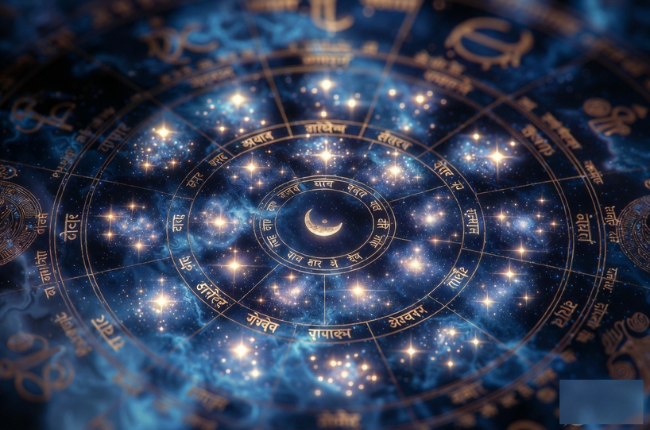
There are people who feel, from early in life, that they were built for something specific — a certain kind of work, a certain way of loving, a certain quality of restlessness that does not go away no matter how much they achieve. And then there are people who spend decades trying on different versions of themselves, never quite landing. Both experiences are real. Both have a Vedic explanation that goes far deeper than a Sun sign or a rising sign. It begins with the Nakshatra — your birth star — the lunar mansion the Moon occupied at the exact moment you arrived in this world.
Most Jyotish articles cover Nakshatras as a list: 27 names, 27 symbols, 27 deities. What almost none of them explain is how the Nakshatra operates as the root identity layer in your chart — the one that determines your instinctive responses, your Vimshottari Dasha starting planet, your deepest fears, and the life purpose your soul chose before birth. The Sun sign shows the world who you are performing. The Nakshatra shows who you actually are when no one is watching.
This guide covers the complete Nakshatra system — its classical foundation, how to find your Janma Nakshatra, what each of the 27 birth stars produces in personality and life direction, how Nakshatras determine marriage compatibility beyond the 36-guna system, and what practical remedies apply when your birth star carries a challenging karmic signature.
What Is a Nakshatra and Why the Moon Chose This System
The Nakshatra system divides the zodiac into 27 equal segments of 13 degrees and 20 minutes each, tracking the Moon's daily movement across the sky. Where the Sun takes roughly 30 days to move through one Rashi (zodiac sign), the Moon passes through one Nakshatra approximately every day. Because the Moon governs the mind, emotions, instincts, and the body's biological rhythms in Vedic astrology, the Nakshatra of the Moon at birth becomes the most intimate planetary signature a person carries.
The Classical Source: Taittiriya Brahmana and Atharva Veda
The Nakshatra system predates even the Rashi zodiac in Indian astronomical tradition. The 27 Nakshatras are documented in the Taittiriya Brahmana, one of the oldest surviving Vedic texts, where they are described as the lunar mansions through which the Moon travels on its monthly journey. The Atharva Veda references the Nakshatras in the context of ritual timing, naming them as the primary units of sacred time. The Brihat Parashara Hora Shastra later systematised their astrological meanings — assigning each Nakshatra a ruling deity, a ruling planet, a symbol, a Gana (temperament class), and a primary Kosha (life quality) — creating the complete interpretive framework Jyotishis use today.
Why 27 and Not 28
Classical texts acknowledge a 28th Nakshatra — Abhijit — associated with the star Vega and considered supremely auspicious. Abhijit is used in Muhurta (auspicious timing) calculations but is not included in the standard Vimshottari Dasha sequence. The 27-Nakshatra system maps precisely to the Vimshottari 120-year cycle, with each of the nine Dasha planets ruling exactly three Nakshatras — a mathematical elegance that confirms the system was designed as an integrated whole, not assembled piecemeal.
How to Find Your Janma Nakshatra Right Now
Your Janma Nakshatra — birth Nakshatra — is the Nakshatra occupied by the Moon at your exact moment of birth. Finding it requires three pieces of information: your date of birth, your time of birth, and your place of birth. Because the Moon moves quickly — changing Nakshatras roughly every 24 hours — an approximate birth time of even two to three hours off can place the Moon in the wrong Nakshatra entirely, particularly near the junction points between two Nakshatras.
Step-by-Step: How to Identify Your Birth Star
- Gather your birth details — date, time (as precise as possible), and city of birth. Hospital records are the most reliable source of birth time for this purpose.
- Generate your Kundli — any reliable Jyotish software or a verified Jyotishi will calculate the Moon's exact degree at your birth moment. The Moon's degree falls within one of the 27 Nakshatras automatically.
- Locate the Nakshatra in your chart — it is usually listed as Janma Nakshatra or Birth Star in the chart output, alongside the Moon's Rashi and the Pada (quarter) within the Nakshatra.
- Note your Pada — each Nakshatra is divided into four Padas of 3 degrees 20 minutes each. The Pada carries the influence of a Navamsha sign and further refines the Nakshatra's expression in your personality.
- Confirm the Dasha starting planet — the planet that rules your Janma Nakshatra is also the ruler of your first Vimshottari Dasha period. This connects your birth star directly to the timing system that governs your entire life. For the full explanation of how Dasha periods unfold from this point, the Vimshottari Dasha Complete Guide covers the sequence in depth.
What to Do If Your Birth Time Is Unknown
When birth time is genuinely unavailable, Jyotishis use a method called Prashna (horary astrology) or birth time rectification — working backward from significant life events to identify which Nakshatra and Lagna best fits the person's actual lived experience. This is a skilled procedure and should not be attempted without a qualified practitioner. An approximated Nakshatra based on guesswork carries the risk of generating incorrect Dasha timelines and incompatible compatibility readings.
For a complete chart-reading foundation, the Complete Kundli Reading Guide explains how all the chart layers — including the Nakshatra — work together as an integrated system.
The Three Ganas — Understanding Your Nakshatra's Temperament Class
Before examining individual Nakshatras, it is essential to understand the Gana system — the three temperament classes that the Brihat Parashara Hora Shastra assigns to the 27 Nakshatras. The Gana is the single most commonly misunderstood factor in Nakshatra compatibility assessments, and its misapplication is responsible for a significant number of flawed marriage compatibility readings.
Deva Gana — The Divine Temperament
Nine Nakshatras belong to Deva Gana: Ashwini, Mrigashira, Punarvasu, Pushya, Hasta, Swati, Anuradha, Shravana, and Revati. People born in Deva Gana Nakshatras tend toward idealism, generosity, ethical sensitivity, and a preference for harmony. They are capable of great compassion but can struggle with confrontation and may be exploited by those who mistake their gentleness for weakness.
Manushya Gana — The Human Temperament
Nine Nakshatras belong to Manushya Gana: Bharani, Rohini, Ardra, Purva Phalguni, Uttara Phalguni, Purva Ashadha, Uttara Ashadha, Purva Bhadrapada, and Uttara Bhadrapada. Manushya Gana people operate with a balanced blend of idealism and practicality. They pursue worldly goals without losing sight of ethical limits. Most are capable of sustained long-term effort in ways that Deva Gana people sometimes find exhausting and Rakshasa Gana people sometimes find insufficiently bold.
Rakshasa Gana — The Fierce Temperament
Nine Nakshatras belong to Rakshasa Gana: Krittika, Ashlesha, Magha, Chitra, Vishakha, Jyeshtha, Mula, Dhanishtha, and Shatabhisha. Rakshasa Gana does not mean demonic — it means fierce, independent, direct, and willing to challenge convention. These people are often the reformers, the disruptors, and the ones who say what everyone else in the room is avoiding. Their challenge is managing intensity in relationships and avoiding the destructive use of their considerable will.
As many families discover when they sit with their Pandit, Gana mismatch in marriage is assessed against the full chart — not as a standalone veto. A Deva-Rakshasa pairing with strong Rashi compatibility, good Nadi score, and a benefic seventh-house Jupiter often works better in practice than a same-Gana pairing with deeper chart incompatibilities.
All 27 Nakshatras — Personality, Life Purpose, and Career Direction
Each of the 27 Nakshatras produces a distinct archetypal personality. What follows covers each birth star's core traits, life purpose orientation, and career inclinations — drawn from the Brihat Parashara Hora Shastra, the Taittiriya Brahmana, and verified Jyotish commentarial traditions.
Ashwini — Nakshatra 1 (Ketu ruled)
Symbol: Horse's head. Deity: Ashwini Kumaras, the divine physicians. Those born in Ashwini are quick, pioneering, and drawn to healing. They start things effortlessly but sometimes leave them unfinished. Life purpose centres on initiating — bringing new energy into situations that have stagnated. Career alignment: medicine, emergency services, athletics, veterinary science.
Bharani — Nakshatra 2 (Venus ruled)
Symbol: Yoni (womb). Deity: Yama, the lord of death and dharma. Bharani carries intense creative and transformative energy. These individuals feel things deeply, love passionately, and can hold enormous responsibility. Life purpose involves processing extremes — birth and death, creation and endings. Career alignment: creative arts, psychology, law, obstetrics.
Krittika — Nakshatra 3 (Sun ruled)
Symbol: Razor or flame. Deity: Agni, the fire god. Krittika people cut through pretence with precision. They have natural authority and a sharp critical faculty that makes them excellent editors, surgeons, and reformers. Life purpose is purification — removing what is false to reveal what is genuine. Career alignment: surgery, military leadership, teaching, food production.
Rohini — Nakshatra 4 (Moon ruled)
Symbol: Chariot or ox cart. Deity: Brahma, the creator. Rohini is the Moon's favourite Nakshatra — its place of exaltation. Those born here are magnetic, creative, materially gifted, and often physically beautiful. Life purpose is cultivating and sustaining — bringing beauty and abundance into the world. Career alignment: arts, agriculture, fashion, luxury goods, music.
Mrigashira — Nakshatra 5 (Mars ruled)
Symbol: Deer's head. Deity: Soma, the Moon god. Mrigashira people are perpetual seekers — curious, gentle, and always searching for something just beyond what they have. They make brilliant researchers and explorers but can struggle with restlessness and indecision. Career alignment: research, travel, writing, linguistics, sales.
Ardra — Nakshatra 6 (Rahu ruled)
Symbol: Teardrop or diamond. Deity: Rudra, the storm god. Ardra carries the energy of a storm — destructive and renewing simultaneously. These individuals often experience significant early suffering that becomes the source of their deepest insight. Life purpose involves dismantling structures that have outlived their usefulness. Career alignment: science, technology, surgery, philosophy, social reform.
Punarvasu — Nakshatra 7 (Jupiter ruled)
Symbol: Bow and quiver. Deity: Aditi, the mother of the gods. Punarvasu means "the return of the light." These individuals have a remarkable ability to recover — from loss, from failure, from exile — and return renewed. Life purpose centres on restoration and renewal. Career alignment: counselling, teaching, healing, spiritual guidance, international work.
Pushya — Nakshatra 8 (Saturn ruled)
Symbol: Cow's udder or lotus. Deity: Brihaspati, the guru of the gods. Pushya is considered the most nourishing of all Nakshatras. Those born here are natural caregivers — patient, protective, and deeply invested in the welfare of others. Career alignment: nursing, social work, food services, religious ministry, banking.
Ashlesha — Nakshatra 9 (Mercury ruled)
Symbol: Coiled serpent. Deity: Nagas (serpent deities). Ashlesha people are penetrating, intuitive, and capable of seeing what others hide. They carry serpent wisdom — the ability to shed old skins and transform. Life purpose involves understanding the hidden workings of things. Career alignment: psychology, research, occult sciences, corporate strategy, espionage.
Magha — Nakshatra 10 (Ketu ruled)
Symbol: Royal throne room. Deity: Pitrs (ancestral spirits). Magha people carry natural authority and a deep connection to lineage, ancestors, and tradition. They are drawn to positions of power and often feel the weight of family legacy strongly. Life purpose is honouring and advancing the ancestral line. Career alignment: politics, administration, history, archaeology, ritual priesthood.
Purva Phalguni — Nakshatra 11 (Venus ruled)
Symbol: Hammock or front legs of a bed. Deity: Bhaga, the god of marital bliss. These individuals are pleasure-seeking, creative, generous, and deeply relationship-oriented. They bring celebration and beauty wherever they go. Career alignment: entertainment, hospitality, luxury retail, creative direction, relationship coaching.
Uttara Phalguni — Nakshatra 12 (Sun ruled)
Symbol: Back legs of a bed or fig tree. Deity: Aryaman, the god of contracts and friendship. Where Purva Phalguni celebrates, Uttara Phalguni sustains. These people form deep, lasting bonds and are gifted at building institutions and long-term relationships. Career alignment: law, HR, management, marriage counselling, public service.
Hasta — Nakshatra 13 (Moon ruled)
Symbol: Open hand. Deity: Savitar, the creative sun. Hasta people are skilled with their hands, quick-witted, and adaptable. They absorb new skills rapidly and often excel at crafts requiring manual precision. Career alignment: surgery, craft, writing, comedy, healing arts, sleight of hand performance.
Chitra — Nakshatra 14 (Mars ruled)
Symbol: Bright jewel or pearl. Deity: Vishwakarma, the celestial architect. Chitra people are artists, architects, and designers — drawn to beauty, symmetry, and the perfection of form. They have strong aesthetic intelligence and a powerful sense of personal style. Career alignment: architecture, interior design, fashion, jewellery, film direction.
Swati — Nakshatra 15 (Rahu ruled)
Symbol: Young sprout bending in the wind. Deity: Vayu, the wind god. Swati people are independent, flexible, and skilled at navigating social environments with diplomatic ease. They bend but do not break. Life purpose involves learning the power of movement and adaptability. Career alignment: business, diplomacy, trade, law, technology.
Vishakha — Nakshatra 16 (Jupiter ruled)
Symbol: Triumphal arch or potter's wheel. Deity: Indra and Agni together. Vishakha people are ambitious, goal-oriented, and willing to endure long periods of effort for a distant reward. They can become single-minded to the point of obsession. Career alignment: politics, sports, competitive business, religious leadership, academic achievement.
Anuradha — Nakshatra 17 (Saturn ruled)
Symbol: Lotus or staff. Deity: Mitra, the god of friendship and contracts. Anuradha people are loyal, disciplined, and gifted at maintaining deep friendships across distances and differences. They often succeed far from their birthplace. Career alignment: international business, diplomacy, spiritual communities, occult sciences, group leadership.
Jyeshtha — Nakshatra 18 (Mercury ruled)
Symbol: Circular amulet or earring. Deity: Indra, the king of gods. Jyeshtha means "the eldest" — and these individuals carry the weight of seniority, whether or not they are literally the oldest. They are fiercely protective of those in their care and deeply proud. Career alignment: politics, military command, investigative journalism, protective services.
Mula — Nakshatra 19 (Ketu ruled)
Symbol: Bunch of roots tied together. Deity: Nirriti, goddess of dissolution. Mula people are researchers into foundations — they must understand the root of everything they touch. Life purpose often involves dismantling inherited structures to build something more honest. Career alignment: philosophy, medicine, botany, research, spiritual practice, archaeology.
Purva Ashadha — Nakshatra 20 (Venus ruled)
Symbol: Elephant tusk or fan. Deity: Apas, the water goddesses. These individuals are persuasive, energetic, and persistently optimistic. They fight for their beliefs and rarely admit defeat. Career alignment: law, activism, water-related industries, philosophy, sales leadership.
Uttara Ashadha — Nakshatra 21 (Sun ruled)
Symbol: Elephant tusk or planks of a bed. Deity: Vishvedevas, the universal gods. Uttara Ashadha people are patient, ethical, and built for long-term success. They rarely take shortcuts and their achievements, when they arrive, tend to last. Career alignment: government service, judiciary, military strategy, academic leadership.
Shravana — Nakshatra 22 (Moon ruled)
Symbol: Ear or three footprints. Deity: Vishnu, the preserver. Shravana means "to listen." These individuals are natural learners and teachers who preserve and transmit knowledge. They are deeply connected to sound, music, and oral tradition. Career alignment: education, music, media, counselling, spiritual teaching.
Dhanishtha — Nakshatra 23 (Mars ruled)
Symbol: Musical drum (Damaru). Deity: Eight Vasus (elemental gods). Dhanishtha people are rhythmic, ambitious, and drawn to wealth and music simultaneously. They move through the world with energy and can accumulate material resources effectively. Career alignment: music, real estate, military, business, rhythm-based arts.
Shatabhisha — Nakshatra 24 (Rahu ruled)
Symbol: Empty circle or 100 physicians. Deity: Varuna, the god of cosmic law. Shatabhisha people are healers, researchers, and solitary seekers. They carry a deep need to understand hidden systems — whether medical, metaphysical, or technological. Career alignment: medicine, astrology, technology research, water management, occult sciences.
Purva Bhadrapada — Nakshatra 25 (Jupiter ruled)
Symbol: Swords or two front legs of a funeral cot. Deity: Aja Ekapada, the one-footed goat. These individuals carry fierce spiritual intensity. They are capable of radical transformation and often move between worldly engagement and deep spiritual renunciation across their lives. Career alignment: spiritual teaching, occult research, social activism, writing.
Uttara Bhadrapada — Nakshatra 26 (Saturn ruled)
Symbol: Back legs of a funeral cot or twins. Deity: Ahirbudhnya, the serpent of the deep. Uttara Bhadrapada people are wise, patient, and deeply compassionate. They often carry burdens for others without complaint. Career alignment: healing arts, spiritual counsel, social work, water management, agricultural research.
Revati — Nakshatra 27 (Mercury ruled)
Symbol: Fish or drum. Deity: Pushan, the nourisher and guide. Revati is the final Nakshatra — the completion of one full cosmic cycle. Those born here carry a quality of arrival, of having completed something. They are gentle, protective of the vulnerable, and drawn to travel and transition. Career alignment: travel, hospitality, animal care, spiritual guidance, music.
Nakshatra Compatibility Beyond the 36-Guna System
The most common complaint from families who have done Kundli matching is this: "We scored 28 out of 36 Gunas, so we were told the match is good — but two years into the marriage, everything feels wrong." The 36-Guna system is real and valuable, but it is the beginning of compatibility assessment, not the end. The Nakshatra layer of compatibility goes significantly deeper than Guna scoring alone.
The Nadi Factor — The Most Critical Compatibility Check
Nadi is one of the eight compatibility categories in the Guna system, carrying the highest individual weight of 8 points. Nadi represents physiological and karmic compatibility at a cellular level. The three Nadis are Adi (Vata), Madhya (Pitta), and Antya (Kapha). When two people share the same Nadi, the classical score is zero — a Nadi dosha. The Brihat Parashara Hora Shastra treats same-Nadi matching with serious caution, citing health complications and difficulty conceiving as the primary risks. However, what most articles do not mention is that Nadi dosha is specifically overridden in classical texts when both partners share the same Rashi or the same Nakshatra — a nuance that changes the reading entirely for a significant number of couples.
Nakshatra Tara Compatibility — The 9-Star Assessment
Beyond the Guna system, classical Jyotish uses a separate 9-star assessment called Tara compatibility. The Janma Nakshatra of the bride is counted from the Janma Nakshatra of the groom, and the resulting number (1 through 9) falls into one of nine Tara categories — some auspicious, some neutral, some cautionary. This assessment is performed separately in both directions. A match that scores poorly in Guna but well in Tara-from-both-directions is often considered more promising in practice than the reverse. For a complete view of how Nakshatra compatibility fits into the full marriage assessment framework, the Kundali Matching guide covers the 36-Guna system's known limitations in depth.
What No Compatibility Article Ever Addresses: Nakshatra Pada Matching
One question that appears across Jyotish community threads on Reddit and Quora — and has virtually no published answer in any article — is whether Pada matching matters within the same Nakshatra. Two people born in Ashwini Nakshatra but in different Padas carry different Navamsha energies entirely. The first Pada of Ashwini falls in Aries Navamsha (Mars energy), while the fourth Pada falls in Cancer Navamsha (Moon energy). A same-Nakshatra pairing where both partners are in the same Pada is considered exceptionally strong in regional Kerala Jyotish tradition — the Navamsha compatibility compounds the Nakshatra compatibility, creating what classical commentators describe as a near-mirror resonance. Most compatibility software ignores this distinction entirely, which means many couples who share a Nakshatra but not a Pada are told they have stronger compatibility than the full calculation actually supports.
Practical Remedies for Your Nakshatra Starting Today
Every Nakshatra carries a karmic signature — a set of tendencies, strengths, and challenges that the soul chose before birth. Remedies for the Janma Nakshatra are not about fighting the birth star. They are about working consciously with the planet that rules it, honouring the deity associated with it, and softening the edges of its more difficult patterns through consistent practice.
- Identify your Nakshatra's ruling planet — This is the same planet that governs your Vimshottari Dasha starting period. Begin the Beeja mantra of this planet, recited 108 times on its designated day of the week. Ketu-ruled Nakshatras (Ashwini, Magha, Mula): recite Om Ketave Namah on Saturdays. Venus-ruled (Bharani, Purva Phalguni, Purva Ashadha): Om Shukraya Namah on Fridays. Sun-ruled (Krittika, Uttara Phalguni, Uttara Ashadha): Om Suryaya Namah on Sundays.
- Worship the Nakshatra's presiding deity — Each Nakshatra has an assigned deity. This is separate from the ruling planet and carries its own remedy power. Rohini's deity is Brahma — worship at a Brahma temple or recite the Brahma Gayatri on Mondays. Pushya's deity is Brihaspati — recite the Guru Stotram on Thursdays. Match the deity practice to your specific Nakshatra.
- Wear your Nakshatra's associated gemstone only after a full chart review — The Nakshatra's ruling planet suggests a gemstone, but the planet's house placement and strength must be verified first. Wearing a gemstone for a debilitated or malefic ruling planet amplifies the problem. The Gemstone Guide for Rashi and Lagna explains the verification process house by house.
- Fast on your Nakshatra ruling planet's day — A weekly fast maintained for 11 or 21 consecutive weeks is among the most consistent home remedies across all Nakshatra traditions.
- Perform Nakshatra Shanti Puja on your birth star day — Every month, the Moon returns to your Janma Nakshatra for approximately one day. This is called your Janma Nakshatra day — considered both a vulnerable and a spiritually powerful window. Performing a simple Shanti Puja on this day, offering flowers and lighting a lamp to your Nakshatra deity, is a practice documented in the Grihyasutra tradition.
- Donate the item associated with your ruling planet — Ketu: grey or mixed-colour cloth and sesame seeds on Saturdays. Venus: white cloth, white sweets, or dairy on Fridays. Sun: wheat, jaggery, and copper items on Sundays. Moon: white rice, milk, and silver on Mondays. Mars: red cloth, red lentils, copper on Tuesdays. Rahu: blue or black cloth, urad dal on Saturdays. Jupiter: yellow cloth, turmeric, gold on Thursdays. Saturn: black sesame, iron, black cloth on Saturdays. Mercury: green cloth, green vegetables, bronze on Wednesdays.
- Recite your Nakshatra's associated hymn from the Taittiriya Brahmana — The Taittiriya Brahmana contains specific hymns addressed to each Nakshatra's deity. Recitation of the relevant hymn — even in translation, with genuine intention — is considered a direct address to the presiding force of your birth star. A qualified AtoZPandit.com Pandit can provide the specific text for your Nakshatra.
What the Nakshatra Reveals About Life Purpose That the Rashi Cannot
The Rashi (zodiac sign) shows the landscape a person moves through. The Nakshatra shows the direction they are wired to walk. This is the distinction that most Vedic astrology content fails to draw clearly, and it is the one that makes the Nakshatra system practically useful rather than merely descriptive.
The Three Motivational Roots — Dharma, Artha, Kama, Moksha
Each Nakshatra is assigned one of four primary motivational orientations — Dharma (righteous purpose), Artha (material security), Kama (desire and relationship), and Moksha (liberation). This is the Purushartha of the Nakshatra, and it reveals the soul's primary drive in this lifetime.
Dharma Nakshatras (Ashwini, Magha, Mula, Hasta, Shatabhisha, Purva Bhadrapada) — people born in these stars are driven by purpose and principle above personal gain. They often feel called to something specific and suffer most when forced to live without meaning.
Artha Nakshatras (Bharani, Purva Phalguni, Purva Ashadha, Rohini, Hasta, Uttara Bhadrapada) — these individuals are builders. Their life purpose involves creating lasting material and social structures. They suffer when resources feel perpetually insecure.
Kama Nakshatras (Mrigashira, Chitra, Dhanishtha, Ashlesha, Swati, Vishakha) — relationship, beauty, desire, and the arts are the primary arenas. These people are driven by connection and creative expression. They suffer most in loveless or colourless environments.
Moksha Nakshatras (Ardra, Jyeshtha, Revati, Punarvasu, Anuradha, Uttara Ashadha) — liberation from the cycle of suffering is the soul's deepest orientation. These individuals often feel a pull toward spirituality, philosophy, or renunciation even in the middle of an ordinary worldly life.
The Nakshatra's Shakti — The Power the Soul Carries
Each Nakshatra is assigned a Shakti — a specific power or capacity documented in classical Jyotish texts. This Shakti is the unique contribution the person is designed to make. Ashwini's Shakti is Shidhra Vyapani Shakti — the power of swift healing. Rohini's is Rohana Shakti — the power of growth and cultivation. Jyeshtha's is Arohana Shakti — the power of rising, of climbing beyond limitation. Understanding your Nakshatra's Shakti is, in practical terms, understanding what you were built to give — and where to direct effort for it to produce its maximum effect.
Conclusion
The Nakshatra is the most intimate piece of self-knowledge that Vedic astrology offers — not a general sun-sign tendency, but the precise lunar imprint of the sky at the moment of your birth. Find your Janma Nakshatra today, identify its ruling planet, and read its Shakti. That single act of recognition often answers years of the question: why do I feel most alive in this particular kind of work, relationship, or pursuit. Classical Vedic practice holds that a person who understands their Nakshatra is not freed from difficulty — they are freed from confusion about the direction in which their effort will bear fruit. Personal results, as always, depend on individual karma, the sincerity of one's practice, and the grace of the divine.
Your Nakshatra birth star holds a precise map of your personality, life purpose, and most auspicious path forward. Connect with a verified AtoZPandit.com Jyotishi for a complete Janma Nakshatra reading tailored to your specific birth chart.
Disclaimer: This article is published for educational and cultural awareness purposes only. The information presented does not substitute for professional medical, psychological, or legal advice. For personalised Vedic guidance rooted in your specific birth chart and Nakshatra, connect with a qualified Pandit at AtoZPandit.com.