Panchang Guide to Read Tithi Nakshatra Muhurat Yoga Karana for Daily Luck and Decisions
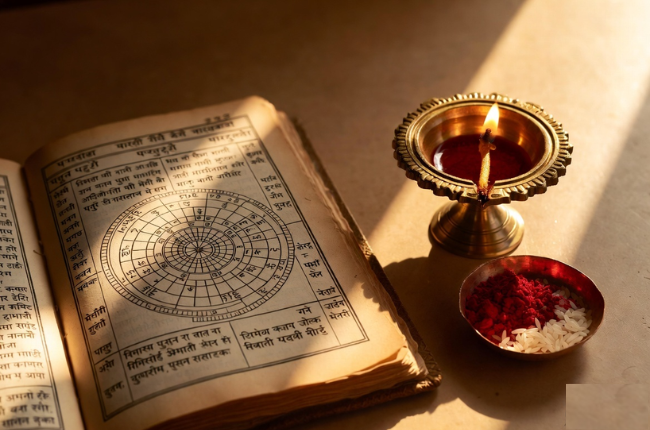
Most Indian families consult a Panchang at least once a year — for a wedding date, a Griha Pravesh, a child's Mundan, or a business launch. But the consultation usually goes one of two ways: either the family hands everything to a Pandit and trusts the result without understanding it, or someone opens a Panchang app, sees five lines of unfamiliar terms, and closes it immediately. Both responses leave the family dependent on luck or on someone else's knowledge for decisions that affect their entire household. Panchang is not a mystical document reserved for scholars. It is a precise daily almanac — a map of time — that every literate Indian family once read the way a farmer reads weather. The word itself says exactly what it contains: Pancha means five, and Anga means limb. The Panchang has five components, and together they describe the quality of any given moment with a precision that no modern calendar can match. The Surya Siddhanta, one of the oldest surviving texts of Indian astronomical tradition, establishes the mathematical framework for all five components — and the Muhurta Chintamani by Ramadaivagna, the definitive classical text on auspicious timing, builds the entire science of Muhurat on top of that foundation.
What almost no article on this subject explains is why the five components work together rather than separately — and what happens to the quality of a Muhurat when one component supports the event and another opposes it. A Tithi may be excellent, the Nakshatra may be strong, but if the Yoga for that day is inauspicious, the event carries a hidden fault that experienced Pandits recognise and inexperienced ones miss. This article covers every component of the Panchang in full — what each one means, how to read it from any printed or digital Panchang, which combinations are auspicious for which life events, and the practical daily habits that let any family use Panchang knowledge without becoming a Jyotish scholar.
What Panchang Is and Why It Was Created
The Panchang is the Vedic system for measuring and qualifying time. While a modern calendar tells you the date and the day, a Panchang tells you the quality of that date — whether it supports new beginnings or completions, whether it is aligned with solar energy or lunar energy, whether the planetary configuration of that moment amplifies or suppresses specific human activities.
Classical Indian tradition treats time not as a neutral container but as an active participant in human events. The Surya Siddhanta establishes that the Earth moves through space in a mathematically predictable pattern, and that the positions of the Sun, Moon, and the other planets at any given moment create a specific energetic field. The Panchang maps that field into five measurable, actionable components so that a family can choose to act when the field supports their intention rather than when it opposes it.
Why Five Components
The five Angas — Tithi, Vara, Nakshatra, Yoga, and Karana — are not arbitrary categories. Each one measures a different dimension of the moment's quality:
- Tithi measures the Moon's relationship to the Sun — the lunar energy quality of the day
- Vara measures the day of the week — which planetary lord governs the day's baseline energy
- Nakshatra measures the Moon's position in the sky — the lunar mansion the Moon occupies
- Yoga measures the combined angular relationship of the Sun and Moon — the overall harmonic quality of the day
- Karana measures a half-Tithi unit — the sub-quality of the day's two halves
Together, these five create what classical Muhurta tradition calls the Panchaanga Shuddhi — the purity or quality of the entire moment. An event planned when all five components are auspicious carries the strongest classical endorsement. An event planned when three or more components are inauspicious carries a structural weakness that no amount of effort or goodwill fully compensates for.
The Difference Between Panchang and Almanac
A Western almanac records historical and astronomical data. A Panchang prescribes. It does not merely tell you that today's Moon is in Rohini Nakshatra — it tells you what that means for a person starting a new business, sowing a field, beginning a medicine course, or signing a contract. The prescriptive function is what separates the Panchang from every other calendar tradition in the world, and it is precisely this function that most modern digital Panchang apps strip out in favour of a simple good-day or bad-day rating.
For families who also want to align their Panchang reading with their personal birth chart and current planetary period, the Vimshottari Dasha Complete Guide explains how the Dasha running at the time of an event interacts with the Panchang quality of that day.
The First Anga — Tithi: The Lunar Day That Governs Everything
Tithi is the most important and most frequently misunderstood component of the Panchang. It is not the same as a solar calendar date. A Tithi is the lunar day — the period of time it takes for the Moon to move exactly 12 degrees ahead of the Sun. Because the Moon moves at variable speed, a Tithi can last anywhere from 19 to 26 hours. This means a single solar calendar date can contain parts of two different Tithis, and a Tithi can sometimes span across midnight into the next calendar day.
The 30 Tithis and Their Classification
The lunar month has 30 Tithis — 15 in the waxing fortnight (Shukla Paksha) and 15 in the waning fortnight (Krishna Paksha). Each Tithi has a name, a governing deity, and a classical classification:
Shukla Paksha (Waxing Moon — 1st to 15th):
- Pratipada (1st) — New beginnings, starting journeys
- Dwitiya (2nd) — Auspicious for most activities
- Tritiya (3rd) — Good for practical work and trades
- Chaturthi (4th) — Rikta Tithi — inauspicious for new starts; Ganesh worship day
- Panchami (5th) — Favourable for education and medicine
- Shashthi (6th) — Good for war-related activities; mixed for others
- Saptami (7th) — Auspicious for travel and vehicles
- Ashtami (8th) — Mixed; Durga worship day
- Navami (9th) — Rikta Tithi — inauspicious for new starts
- Dashami (10th) — Good for legal matters and authority-related work
- Ekadashi (11th) — Fasting day; highly spiritual; avoid material transactions
- Dwadashi (12th) — Auspicious for Vishnu worship and charity
- Trayodashi (13th) — Good for auspicious ceremonies
- Chaturdashi (14th) — Rikta Tithi — inauspicious; Shiva worship day
- Purnima (15th) — Full Moon; maximum lunar energy; highly auspicious for most activities
Krishna Paksha (Waning Moon — 1st to 15th): The same Tithis repeat in the waning fortnight, but their energy is generally considered less auspicious for new beginnings. The waning fortnight is better suited for completions, discharging debts, medical treatments, and spiritual practices oriented toward release.
The Four Rikta Tithis
The Muhurta Chintamani specifically identifies the 4th, 9th, and 14th Tithis of both fortnights as Rikta — meaning empty or void. These three Tithis are consistently avoided for:
- Marriage and engagement ceremonies
- Griha Pravesh (housewarming)
- Starting a new business or signing contracts
- Mundan and Upanayana (sacred thread ceremony)
- Any ceremony where the outcome is intended to be long-lasting and prosperous
The Rikta classification does not make these days inauspicious for all activity — the 4th Tithi is Ganesh's day and excellent for his worship, and the 14th Tithi is sacred to Shiva. But for material and family-oriented new beginnings, the classical instruction is consistent: do not begin on a Rikta Tithi.
How Tithi Changes During the Day
Because a Tithi does not correspond to a fixed 24-hour period, it can change during the day. A Tithi that begins at 6 AM may end at 2 AM the following morning — or it may end at 11 PM the same evening. The Panchang lists the Tithi's end time (Tithi Kshaya or Tithi Vridhi when it extends) for each day. The Tithi that is running at the time of the ceremony's commencement is the operative Tithi for Muhurat purposes — not the Tithi of the calendar date.
As many families discover when they sit with their Pandit for the first time, the single most common Muhurat error in self-planned ceremonies is beginning an event after the auspicious Tithi has ended and the next Tithi — sometimes a Rikta — has already begun.
The Second Anga — Vara: The Day of the Week and Its Planetary Lord
Vara is the day of the week, and in Vedic tradition each day is governed by a specific planet whose energy sets the baseline quality of all activity on that day. This is not symbolic — the classical position is that the planet governing the day actively influences every event initiated under its watch.
The Seven Varas and Their Governing Planets
- Ravivara (Sunday) — Sun (Surya). Favourable for government work, authority, medical treatments, father-related matters. Avoid travel toward south.
- Somavara (Monday) — Moon (Chandra). Favourable for travel, public-facing work, starting a new medicine course, mother-related matters, emotional reconciliations.
- Mangalavara (Tuesday) — Mars (Mangal). Favourable for physical work, surgeries, land transactions, and courage-requiring actions. Inauspicious for marriage.
- Budhavara (Wednesday) — Mercury (Budha). The most universally favourable Vara for business, education, writing, and communication. Excellent for signing agreements.
- Guruvara (Thursday) — Jupiter (Guru). Highly auspicious for marriage, education, Upanayana, religious ceremonies, and all dharmic activities. The strongest Vara for most auspicious events.
- Shukravara (Friday) — Venus (Shukra). Favourable for marriage, creative work, purchase of vehicles and jewellery, and beauty-related activities.
- Shanivara (Saturday) — Saturn (Shani). Favourable for activities involving iron, agriculture, service to the poor, and long-term commitments. Inauspicious for new beginnings in most other categories.
Vara and Tithi Together — The First Combination Rule
Classical Muhurta tradition holds that Vara and Tithi must be assessed together before any other component is checked. Certain Vara-Tithi combinations are specifically inauspicious regardless of how well the other three components perform:
- Tuesday or Saturday combined with a Rikta Tithi — considered doubly inauspicious for ceremonies
- Sunday combined with Saptami Tithi — Bhadra combination; avoided for new ventures
- Wednesday combined with Tritiya Tithi in Shukla Paksha — specifically auspicious for business starts, noted in the Muhurta Chintamani
The Third Anga — Nakshatra: The Moon's Daily Address in the Sky
The Nakshatra is the lunar mansion — one of 27 divisions of the ecliptic, each spanning 13 degrees and 20 minutes of arc — in which the Moon is positioned on a given day. The Moon moves through one Nakshatra approximately every 24 hours, completing the full cycle of 27 in about 27.3 days. The Nakshatra of the day is the single most individually sensitive Panchang component — it interacts directly with a person's birth Nakshatra in ways that make a day excellent for one person and difficult for another.
The Five Nakshatra Classifications for Muhurat
The Muhurta Chintamani classifies all 27 Nakshatras into five categories based on their general quality for auspicious activities:
Dhruva (Fixed) Nakshatras — Rohini, Uttara Phalguni, Uttara Ashadha, Uttara Bhadrapada. Best for: permanent activities — building a home, planting trees, marriage, business establishment. Events started under fixed Nakshatras are classically associated with stability and longevity.
Chara (Movable) Nakshatras — Punarvasu, Swati, Shravana, Dhanishtha, Shatabhisha. Best for: travel, purchasing vehicles, changing residence, beginning a journey, activities that benefit from movement and flexibility.
Ugra (Fierce) Nakshatras — Bharani, Magha, Purva Phalguni, Purva Ashadha, Purva Bhadrapada. Best for: bold, competitive, and aggressive activities — litigation, confrontation, surgery, and destruction of enemies. Inauspicious for gentle and cooperative events like marriage and new ventures.
Mridu (Soft) Nakshatras — Mrigashira, Chitra, Anuradha, Revati. Best for: learning, art, music, friendship, romance, and all activities requiring grace and gentleness. Excellent for children's education ceremonies.
Tikshna (Sharp) Nakshatras — Ardra, Ashlesha, Jyeshtha, Moola. Best for: activities involving cutting, separation, and endings — haircuts, surgery, breaking partnerships, and removing obstacles. Consistently avoided for marriage and new beginnings.
The Birth Nakshatra Interaction
Every person's birth Nakshatra — the Nakshatra the Moon occupied at their moment of birth — interacts with the day's current Nakshatra in a specific relationship. Classical Muhurta tradition uses the Tara Chakra (lunar mansion wheel) to assess this interaction: counting from the birth Nakshatra to the day's Nakshatra reveals whether the day is a Janma Tara (birth star — mixed), Sampat Tara (prosperity star — excellent), Vipat Tara (danger star — avoided), Kshema Tara (comfort star — good), Pratyari Tara (obstacle star — avoided), Sadhaka Tara (achievement star — excellent), Vadha Tara (death star — strictly avoided), or Mitra Tara (friend star — good).
This is why two people planning the same event on the same day can receive different Muhurat verdicts from a Pandit — the day's Nakshatra may be a Sampat Tara for one person's birth star and a Vipat Tara for the other's. For families wanting to understand how their personal birth Nakshatra shapes all of this, the Nakshatra Birth Star Complete Meaning Guide covers the full significance and life implications of each of the 27 Nakshatras.
⚠️ Myth vs. Fact
MYTH: Amavasya (new moon day) is always inauspicious and should be avoided for all activities.
FACT: The Muhurta Chintamani distinguishes carefully between activities that are contraindicated on Amavasya and those that are specifically enhanced by it. Amavasya is the most powerful day in the lunar month for ancestral worship, Tarpan, and Pitra Dosha remedies. It is simultaneously inauspicious for new beginnings, marriage, and property purchase. The day is not generically bad — it is directionally specific. Treating Amavasya as universally inauspicious reflects a surface reading of the Panchang rather than its classical prescription.
The Fourth and Fifth Angas — Yoga and Karana
Yoga — The Combined Solar-Lunar Quality
Yoga in the Panchang context does not mean the physical practice. It is a specific astronomical calculation: the sum of the Sun's and Moon's longitudes divided into 27 equal segments of 13 degrees and 20 minutes each. Each segment is one Yoga, and there are 27 Yogas in the complete cycle — each with a name and a classical quality assessment.
The 27 Yogas are classified into three broad categories:
Auspicious Yogas (Shubha): Vishkambha, Siddhi, Variyan, Shiva, Siddha, Sadhya, Shubha, Shukla, Brahma, Indra, Vaidhriti — these Yogas support and amplify the positive qualities of the Tithi and Nakshatra. An event scheduled during a Shubha or Siddha Yoga carries a classical endorsement for success.
Inauspicious Yogas (Ashubha): Vyaghata, Parigha, Vajra, Vyatipata, Vishkambha (in certain combinations) — these Yogas create obstacles or conflict with the positive qualities of other components. The Muhurta Chintamani treats Vyatipata and Vaidhriti as the two most inauspicious Yogas and specifically prohibits them for marriage and Griha Pravesh Muhurta.
Mixed Yogas: The remaining Yogas are contextually assessed — some are excellent for specific activities and inauspicious for others.
Karana — The Half-Tithi Sub-Quality
Karana is a half-Tithi — the period covering 6 degrees of angular separation between the Sun and Moon. Each Tithi contains two Karanas, one for the first half of the Tithi and one for the second. There are 11 Karanas in total — 4 Sthira (fixed, occurring once per lunar month) and 7 Chara (movable, recurring eight times per month).
The most practically important Karana classification for daily Panchang use:
- Bava, Balava, Kaulava, Taitila, Gara, Vanija — generally auspicious Karanas suitable for most activities
- Vishti (Bhadra) — the most inauspicious Karana, consistently avoided for all auspicious activities. Classical texts treat Bhadra Karana with the same severity as a Rikta Tithi — no ceremony, contract, travel, or new beginning should commence during Bhadra
- Shakuni, Chatushpada, Naga, Kimstughna — the four fixed Karanas, each occurring once per month on specific Tithis, with mixed classical assessments
How to Use Yoga and Karana in Daily Planning
For everyday decisions — starting a meeting, signing a minor document, beginning a new routine — checking Yoga and Karana is the minimum daily Panchang practice that classical tradition recommends. Most printed and digital Panchangs list the day's Yoga and Karana alongside Tithi and Nakshatra. The practical rule is simple: avoid the Vishti Karana and the two most inauspicious Yogas for any activity you want to succeed. Everything else in the Yoga and Karana column is usable for ordinary daily decisions.
How to Read a Panchang Step by Step — A Practical Framework
Reading a Panchang for the first time feels overwhelming because most printed versions display all five components simultaneously in a compressed format designed for practitioners, not beginners. The following sequence makes it accessible for any family.
Step 1 — Identify Today's Tithi and Its Quality
Open the Panchang to today's date. Find the Tithi listed — it will show the Tithi name and the time it ends. Confirm: is it a Rikta Tithi (4th, 9th, or 14th)? Is it in Shukla Paksha (waxing) or Krishna Paksha (waning)? This single check eliminates the most common Muhurat error immediately.
Step 2 — Confirm the Vara
Note the day of the week and its planetary lord. For a ceremony or new beginning, Thursday and Wednesday are the strongest general choices. Tuesday and Saturday require specific compensating factors to be used for auspicious beginnings.
Step 3 — Check the Nakshatra and Its Classification
Find the Nakshatra listed for today. Classify it as Dhruva, Chara, Ugra, Mridu, or Tikshna. Match the classification to the activity you are planning — Dhruva for permanent decisions, Chara for travel, Mridu for education and relationships, Ugra for bold actions. Avoid Tikshna for gentle ceremonies.
Step 4 — Check Yoga and Karana for Hidden Faults
Find the Yoga listed and confirm it is not Vyatipata or Vaidhriti. Find the Karana and confirm it is not Vishti (Bhadra). If either of these is present during your planned ceremony time, find a time window within the same day where the Karana has shifted — Karanas change twice per Tithi, so a morning Bhadra often clears by midday.
Step 5 — Apply the Panchaanga Shuddhi Test
A fully clean Muhurat satisfies all five components simultaneously. In practice, a three-of-five clean reading is considered workable for ordinary ceremonies. For major life events — marriage, Griha Pravesh, Upanayana — the classical standard requires at minimum a clean Tithi, a clean Nakshatra, and a clean Vara, with compensating factors in place for any weak component.
For families whose ceremonies require a fully verified Muhurat — with all five components cross-checked against both the couple's or family's birth charts — the Shubh Vivah Muhurat Complete Dates Guide provides the annual verified Muhurat calendar. For Griha Pravesh timing, the Vastu Guide for New Home includes the Griha Pravesh Muhurat requirements within the Vastu framework.
🪔 Pandit's Tip — Focus: Shraddha A Pandit familiar with your Kula tradition will tell you something that most digital Panchang apps never show: the Abhijit Muhurat. Every day between approximately 11:48 AM and 12:36 PM local solar time contains a 48-minute window called Abhijit — considered an independently auspicious Muhurat regardless of the day's Tithi, Nakshatra, or Yoga. The Muhurta Chintamani identifies Abhijit as a self-contained auspicious window that can rescue a ceremony on an otherwise mixed day. It does not override a Rikta Tithi for major events, but for ordinary new beginnings — starting a business, signing an agreement, beginning a journey — Abhijit Muhurat is a reliable daily resource that requires no special calculation beyond knowing local solar noon.
Which Tithis and Nakshatras Work Best for Specific Life Events
This is the practical application most families actually need, and it is the section consistently absent or oversimplified in competing articles. The following is drawn from the Muhurta Chintamani and the classical Nibandha literature on auspicious timing.
For Marriage and Engagement
Best Tithis: 2nd, 3rd, 5th, 7th, 10th, 11th, 13th of Shukla Paksha. Purnima is acceptable with other strong components.
Best Nakshatras: Rohini, Mrigashira, Magha (for the main ceremony only), Uttara Phalguni, Hasta, Swati, Anuradha, Mula (first quarter only), Uttara Ashadha, Uttara Bhadrapada, Revati.
Nakshatras to avoid: Bharani, Krittika, Ardra, Ashlesha, Jyeshtha, Moola (except first quarter), Dhanishtha (second half).
Best Varas: Thursday and Friday are the strongest. Wednesday is acceptable. Monday is permissible. Tuesday, Saturday, and Sunday are avoided for marriage.
For Business Launch and Contract Signing
Best Tithis: 2nd, 3rd, 5th, 7th, 10th, 13th of Shukla Paksha. Krishna Paksha is generally avoided for launches.
Best Nakshatras: Ashwini, Rohini, Mrigashira, Pushya, Hasta, Chitra, Swati, Shravana, Dhanishtha, Shatabhisha, Revati.
Best Varas: Wednesday is the single strongest Vara for business and contracts. Thursday is excellent. Friday supports ventures in beauty, hospitality, and relationships.
For Travel and Relocation
Best Tithis: 2nd, 3rd, 5th, 7th, 10th, 12th, 13th. Avoid Chaturdashi, Amavasya, and Purnima for long journeys.
Best Nakshatras: All Chara (movable) Nakshatras — Punarvasu, Swati, Shravana, Dhanishtha, Shatabhisha. Ashwini and Mrigashira are also excellent for travel.
Direction consideration: The Panchang traditionally specifies an inauspicious direction for each day of the week (Dikshoola). Travel in that direction is avoided — south on Sundays, west on Mondays, north on Tuesdays, east on Saturdays. This is a daily check available in most printed Panchangs.
For Beginning Medical Treatment
Best Tithis: 2nd, 3rd, 5th, 7th, 10th, 12th, 13th. Avoid Ashtami, Navami, and Chaturdashi.
Best Nakshatras: Ashwini (the physician's Nakshatra — considered the most auspicious for beginning treatment), Pushya, Hasta, Hasta, Uttara Phalguni, Revati.
Best Varas: Sunday (Sun governs health and vitality), Monday (Moon governs mind and body fluids), Thursday.
One Question Families Cannot Find Answered: What Happens When the Panchang Disagrees With the Jyotishi's Muhurat
This question appears across r/jyotish, multiple Quora threads, and YouTube comment sections with notable frequency — and has received no satisfying classical answer in any published article. The situation is real: a family books a Muhurat with one Pandit, then checks a Panchang app or consults a second Jyotishi, and receives a different verdict for the same date and time. One says the Tithi is clean, the other says the Nakshatra is weak. The family is left uncertain and sometimes angry. Whose reading is correct?
The classical answer, drawing from the Muhurta Chintamani's treatment of Muhurat adjudication, is that regional Panchang traditions genuinely differ in their Nakshatra boundary calculations, their Karana classifications, and their ayanamsha (zodiac correction factor). The two primary systems — the Drik Panchang (observation-based) and the Vakya Panchang (formula-based, predominantly used in South India) — can differ by up to one Nakshatra on the same day. Neither is wrong — they are different astronomical traditions, each internally consistent.
The practical resolution the classical tradition offers is this: the Panchang that matches the family's own Kula tradition — the regional and lineage-specific almanac their family has used across generations — takes precedence for that family's ceremonies. A Tamil Brahmin family using the Vakya Panchang and a North Indian family using the Drik Panchang may legitimately arrive at different Muhurats for the same event. A Pandit who knows the family's Gotra and Kula Devata will know which Panchang tradition applies. This is why the instruction to consult "any Pandit" for a Muhurat is insufficient — the Pandit must know which Panchang tradition governs the family's lineage. Families who have lost this knowledge through migration or generation gaps can re-establish it by tracing their Gotra back to the regional Panchang tradition associated with that Gotra's geographic origin.
Using Panchang for Daily Life — Beyond Ceremonies
The Panchang's use is not limited to major ceremonies. Classical Indian household tradition incorporated daily Panchang awareness into ordinary decisions in ways that remain entirely practical.
Daily Panchang Checks for Ordinary Decisions
- Before starting a new project or sending an important email: Check that the day is not a Rikta Tithi and the Karana is not Vishti. These two checks take thirty seconds and eliminate the most commonly inauspicious windows.
- Before purchasing a vehicle or property: Check Vara and Nakshatra. Wednesday, Thursday, or Friday under a Dhruva or Chara Nakshatra with a clean Tithi is the minimum standard for a purchase intended to last.
- Before beginning a new medicine or health routine: Check that Ashwini or a Mridu Nakshatra is running. Starting a new health practice under Ashwini Nakshatra — even without any other Muhurat check — is one of the most consistently cited daily recommendations in classical Muhurta literature.
- Before a difficult conversation or negotiation: Avoid Tuesday and Saturn's Hora on any day. Wednesday under Mercury's Hora is the strongest window for communication that requires clarity and goodwill from both sides.
The Hora System — Panchang Within the Day
Every hour of every day is governed by a planetary Hora (hour-lord) in a rotating sequence beginning with the day's ruling planet. The Hora sequence follows the Chaldean order: Sun, Venus, Mercury, Moon, Saturn, Jupiter, Mars — repeating continuously through all 24 hours. Knowing the current Hora adds a third level of refinement below the Tithi and Vara — allowing a family to choose not just the right day but the right hour within the day for an important action.
The Sun's Hora on any day supports authority and government dealings. Venus's Hora supports creative and relationship decisions. Mercury's Hora supports communication, business, and writing. Jupiter's Hora — which occurs at specific hours on each day of the week — is the single most auspicious Hora for beginning any important activity. Most printed Panchangs and digital Panchang apps now show the Hora schedule alongside the five main components.
For families combining Panchang awareness with their numerological planning, the Panchang Complete Guide pairs naturally with the Mobile Number Numerology Guide and the Name Numerology Changes Guide for a complete approach to auspicious timing and personal energy alignment. For families also tracking annual planetary cycles alongside their daily Panchang reading, the Annual Rashifal Complete Predictions Guide provides the broader yearly framework within which daily Panchang decisions sit.
🗣️ Community Voice A question that appears repeatedly in r/hinduism and across Quora: "My family planned a wedding on what we thought was a good day — a Thursday in Shukla Paksha. But my aunt says the Nakshatra that day was Jyeshtha and the marriage will be troubled. Is she right, and what can we do now?"
Classical Muhurta tradition holds that a Nakshatra fault identified after a ceremony is complete is treated differently from one identified before. The Muhurta Chintamani acknowledges that when a ceremony has been performed with genuine intention and proper Sankalpa, the post-ceremony identification of a weak Nakshatra is addressed through a Shanti ritual — a short pacification ceremony performed within the first year of marriage — rather than treated as a permanent flaw. The fault creates a dosha that is manageable, not a prediction of inevitable failure. A qualified Pandit can prescribe the appropriate Shanti based on the specific Nakshatra involved and the couple's birth charts.
FAQ: Panchang, Tithi and Nakshatra
Q1. What is the most important component of Panchang for choosing a Muhurat? Tithi is the most foundational component — avoiding a Rikta Tithi (4th, 9th, or 14th) is the minimum requirement for any auspicious ceremony. Nakshatra follows in importance for major life events because it interacts directly with the individual's birth star. For daily ordinary decisions, checking Karana for Vishti (Bhadra) is the single most practical daily habit.
Q2. How does Tithi change during the day and how do I track it? A Tithi lasts between 19 and 26 hours — shorter or longer than a solar day depending on the Moon's speed. Any printed Panchang or reliable Panchang app lists the Tithi's end time for each calendar date. The Tithi running at the moment your ceremony begins is the operative one. Starting before an inauspicious Tithi ends — even by minutes — carries the fault of that Tithi forward.
Q3. Which Nakshatra is best for starting a new business in Panchang? Rohini, Pushya, Hasta, Swati, Shravana, and Revati are the strongest Nakshatras for business launches according to the Muhurta Chintamani. Pushya is considered the single most auspicious Nakshatra for commercial beginnings — a Thursday under Pushya Nakshatra in Shukla Paksha is among the finest business Muhurats available. As astrological tradition holds, individual outcomes also depend on the person's running Dasha and personal chart strength.
Q4. Can I use a Panchang app instead of consulting a Pandit for daily planning? A Panchang app is reliable for daily Tithi, Vara, Nakshatra, Yoga, and Karana checks — the data is astronomically accurate in most reputable apps. What an app cannot do is apply the Tara Chakra check against your personal birth Nakshatra, assess Panchaanga Shuddhi across all five components simultaneously, or prescribe compensating remedies for weak components. For daily planning, an app is sufficient. For major life ceremonies, a qualified Pandit remains necessary.
Q5. What is Bhadra Karana and why is it avoided so strictly in Panchang? Bhadra — also called Vishti Karana — is the most inauspicious of the eleven Karanas, occurring twice per lunar month during specific half-Tithi periods. The Muhurta Chintamani treats Bhadra with the same severity as a Rikta Tithi for new beginnings. Ceremonies started during Bhadra are classically associated with obstruction, incomplete results, and conflict. Most Panchang apps now highlight Bhadra periods in red — it is the single most useful daily alert for ordinary Panchang users.
Q6. Is Purnima always auspicious for ceremonies according to Panchang? Purnima — the full moon Tithi — carries the maximum lunar energy of the month and is generally auspicious for spiritual activities, worship, and community gatherings. For marriage and Griha Pravesh, Purnima is acceptable only when the Nakshatra is favourable and the Yoga is clean. Certain regional traditions avoid Purnima for marriage citing the Chandrashtama risk — when the full moon falls in the eighth Nakshatra from the bride's or groom's birth Nakshatra — which is considered inauspicious for the individual regardless of the Tithi's general strength.
Q7. How do I use Panchang to choose the best day for an important job interview? How should I use Panchang to pick the right day for my job interview? Choose a Wednesday or Thursday under a Mridu or Dhruva Nakshatra — Hasta, Rohini, or Swati are ideal. Confirm the Tithi is not Rikta and the Karana is not Bhadra at the interview time. If possible, schedule the interview during Jupiter's Hora or Mercury's Hora on that day for additional support. These combined checks take under two minutes with any standard Panchang app.
Conclusion
The Panchang holds a principle that Indian households understood before calendars became purely numerical — that time has texture, and the texture of the moment you choose for an action shapes the action's outcome. Every day contains windows of support and windows of resistance, and the five Angas of the Panchang are the tools for finding one and avoiding the other. Begin this week with a single daily check: before any important communication, decision, or beginning, confirm the day is not a Rikta Tithi and the Karana is not Bhadra. These two checks, practised consistently, bring more alignment than any single annual ceremony conducted on an unexamined day. Classical Vedic practice holds that the family which lives in rhythm with time — not fighting its texture but reading and following it — builds outcomes that hold. And the reminder always applies: the Panchang creates conditions, karma and sincerity determine what those conditions grow into.
Book a personalised Muhurat consultation or full Panchaanga Shuddhi assessment for your upcoming ceremony through AtoZPandit.com — conducted by verified Pandits with expertise in your regional Panchang tradition. For marriage Muhurat, Griha Pravesh timing, business launch dates, and daily Panchang guidance, connect with AtoZPandit.com today.
Disclaimer: This article is intended for educational and cultural awareness purposes only. The Panchang and Muhurta information provided is rooted in classical Vedic tradition and does not substitute for professional medical, legal, or financial advice. For personalised Muhurat consultation aligned with your family's Kula tradition, connect with AtoZPandit.com.