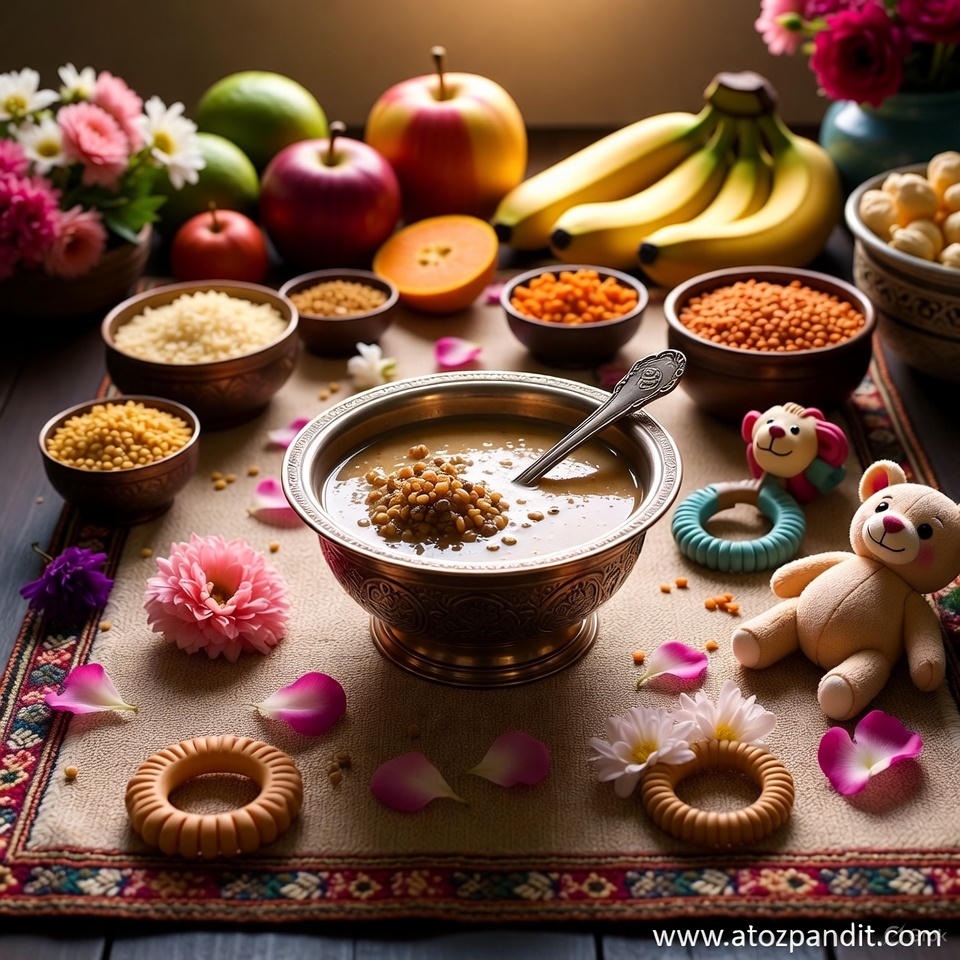
About Annaprashan Pooja
The First Conversation Between a Child and the Earth
The Annaprashan Sanskar is described in the Baudhayana and Paraskara Grihya Sutras as the sixth of the sixteen essential childhood Samskaras, traditionally performed in the sixth month of life for boys and the fifth or seventh month for girls. The name itself — Anna meaning food and Prashan meaning partaking — tells you exactly what it is: the first formal, sacred partaking of food. Goddess Annapurna, the deity of nourishment and abundance, is the primary deity invoked. Lord Vishnu as the cosmic sustainer is also worshipped. The first food offered is Kheer — rice cooked in milk and sweetened with jaggery or sugar — a combination that the Ayurvedic tradition and the Vedic ritual both recognise as the most sattvic and appropriate first food for a developing body and mind.
The Power of E-Pooja: Same Ritual, Same Results
When a family is spread across cities or continents and the baby is too young to travel, Annaprashan is one of the ceremonies that families most want to share. At AtoZPandit.com, grandparents in Hyderabad, aunts in Dubai, and cousins in London can all witness the first spoonful being given to the child, live and in real time. The Mantra — the specific Annaprashan verses addressed to Goddess Annapurna — create the sacred context in which the first feeding happens. The Sankalpa takes the child’s name, Gotra, exact age in months, and home coordinates, formally presenting this first meal to the divine as a witnessed act of sacred nourishment.
Our Pandit also guides you through any alternate Shastric solutions or regional variations relevant to your family tradition, ensuring the vidhi is fully personalised to your needs.
When & How This Pooja Helps Your Life
Annaprashan is performed in the sixth month for boys and the fifth or seventh month for girls, always in a Shukla Paksha (waxing moon) period. According to the Grihya Sutras, this ceremony establishes:
• Goddess Annapurna’s Lifelong Blessing for Nourishment: By invoking the deity of food at the moment of the child’s first meal, the tradition asks for her blessing to remain with the child throughout their life — ensuring they will never be without nourishment and will always have a healthy relationship with food.
• Digestive Strength for the Growing Body: The specific Kheer offered and the associated mantras are believed to prepare the child’s digestive system for the full range of foods they will encounter. Many families observe improved appetite and digestion in children following this ceremony.
• The Prediction Ritual — A Glimpse of the Child’s Nature: In many regional traditions, after the first Kheer is given, various objects are placed before the child — a book, a coin, a pen, soil — and the one the child reaches for first is taken as an auspicious indication of their natural inclinations. This is a joyful family tradition that the Acharya guides.
• Formal Welcome into the World’s Community of Nourishment: The Vedic tradition sees eating as an act of communion — with the earth, with the farmers, with the cooks, and with the divine who sustains all. The Annaprashan formally welcomes the child into this community for the very first time.
The Vidhi: Step-by-Step Process of the Ritual
1. Ganesh Puja: Lord Ganesha is invoked first, asking him to remove any obstacles from the child’s digestive health and from their entire relationship with food and nourishment going forward.
2. Annapurna and Vishnu Avahan: Goddess Annapurna and Lord Vishnu as the sustainer are formally welcomed and invited to bless the first meal being offered to this child.
3. Sankalpa: The child’s name, Gotra, exact age in months, and home coordinates are taken, formally presenting the first feeding as a witnessed sacred act.
4. Kheer Preparation Blessing: The Kheer already prepared at home is held before the device and the Acharya chants specific mantras over it, formally sanctifying it as the first sacred meal.
5. First Spoonful: At the Muhurat identified by the Acharya, the parent — guided by the Pandit — offers the first spoonful of Kheer to the child using a silver spoon if available, which the tradition associates with prosperity and sattvic energy.
6. Prediction Ritual: The Acharya guides the family in placing objects before the child and observing the first reach — a joyful and much-loved part of the ceremony across most Indian regional traditions.
7. Aarti and Ashirvad: The ceremony closes with an Aarti for the child and a formal blessing from the Acharya — asking Annapurna to walk with the child through every meal of their life with abundance and health.
Our Pandit also guides you through any alternate Shastric solutions or regional variations relevant to your family tradition, ensuring the vidhi is fully personalised to your needs.
The AtoZPandit.com Advantage & Commitment
AtoZPandit.com has conducted Annaprashan ceremonies for families across India and in over 20 countries. Your booking is confirmed within 15 minutes, and the Kheer recipe and full samagri list are shared within 24 to 48 hours so the family has time to prepare everything before the ceremony. Our Acharyas guide the Prediction Ritual with the same warmth and engagement that makes it meaningful for everyone present. We handle the expertise and the technology; you handle the prayers.