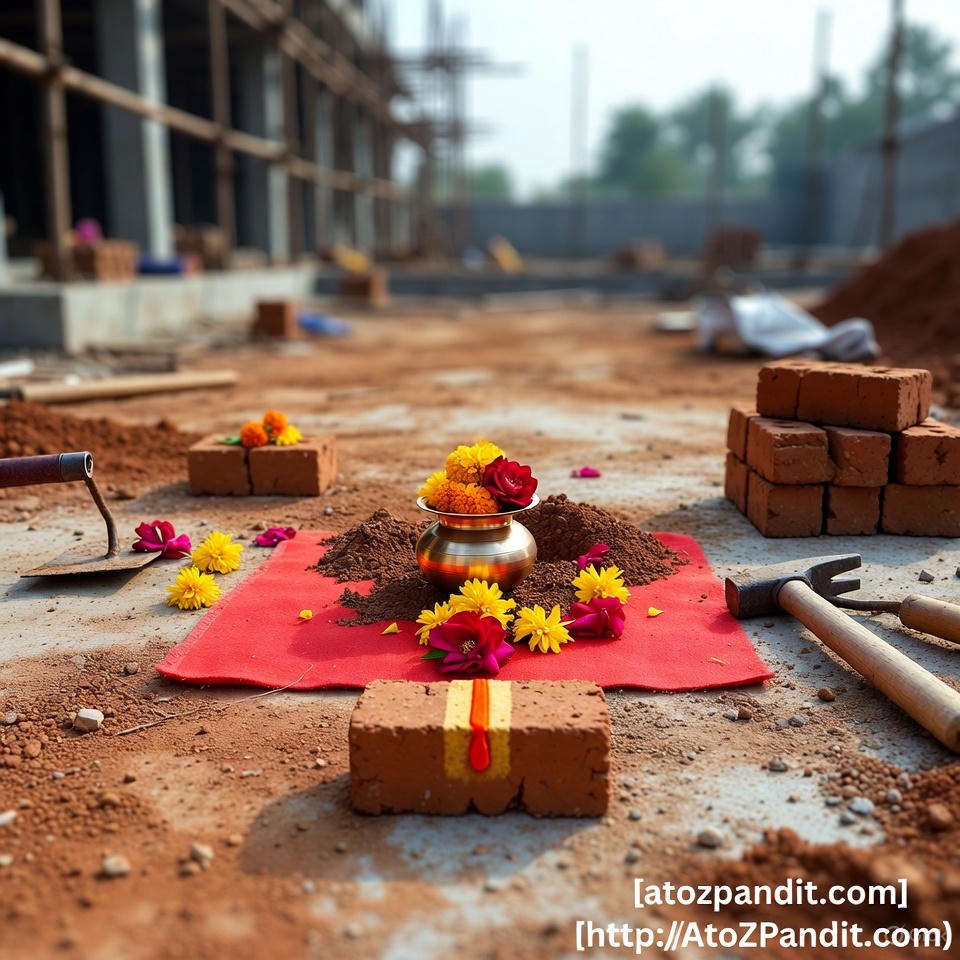
About Bhoomi Pooja
Before the First Shovel Touches the Ground
The Bhoomi Pooja, also known as Bhumi Pujan or Neev Pujan, is described in the Vastu Purana and the Manava Dharmashastra as an act of Ahimsa — non-violence toward the Earth. Construction disturbs the soil, displaces organisms, and interrupts the natural flow of what the tradition calls Prana within the ground. This pooja is the formal acknowledgment of that disturbance and the request for forgiveness and permission. The primary deities invoked are Bhoomi Devi, the Earth Goddess who sustains all structures; Vastu Purusha, the cosmic being whose body maps onto every plot of land; and Sheshnag, the great serpent who in Vedic cosmology bears the weight of the Earth. When these three forces are honoured and appeased, the tradition holds that the construction that follows will be stable, auspicious, and free from the unseen friction that causes delays, accidents, and structural problems.
Honouring the Earth Before the Foundation Is Laid
The Power of E-Pooja: Same Ritual, Same Results
A common question for NRI families building homes in India while living abroad is whether the Bhoomi Pooja can be performed online or must physically happen at the construction site. The answer depends on how one understands the ritual. The ritual's power rests on Mantra — the specific invocations of Bhoomi Devi and Vastu Purusha; Samagri — the offerings placed into the earth at the northeast corner; and Sankalpa — the personalised dedication where the Acharya takes the plot's GPS coordinates, the owner's name, and the Gotra. At AtoZPandit.com, the family member or contractor at the site performs the physical acts — placing the offerings into the earth and taking the first symbolic dig — guided live on video by the Acharya. You participate in the Sankalpa from your location.
Our Pandit also guides you through any alternate Shastric solutions or regional variations relevant to your family tradition, ensuring the vidhi is fully personalised to your needs.
When & How This Pooja Helps Your Life
Bhoomi Pooja is performed before any construction begins — for homes, offices, factories, farmhouses, or any structure. According to the Vastu Purana, this ritual is essential and should not be skipped regardless of the size of the project. It brings:
• Peace with the Land's Energy: The earth carries the memory of everything that has happened on it. By acknowledging this with specific mantras, the family clears any residual energies and establishes a fresh, clean energetic slate for the new structure.
• Protection from Construction Delays: The Vastu Purana specifically describes how unappeased energies in the land can manifest as unexplained delays, contractor problems, legal complications, and structural issues. The Bhoomi Pooja addresses the root energetic cause of these.
• Stability of the Structure: Sheshnag, the cosmic serpent who bears the Earth, is invoked to provide structural stability and longevity to the building — a blessing that the tradition connects to both the physical foundation and the energetic one.
• Auspicious Beginning for the Family: For many families, Bhoomi Pooja is as much about marking the beginning of a new chapter as it is about the construction itself. It is the family's formal announcement to the universe that a new home is coming.
The Vidhi: Step-by-Step Process of the Ritual
1. Ganesh Pujan: Lord Ganesha is invoked at the outset to remove all obstacles from the construction process that is about to begin.
2. Bhoomi Devi Avahan: The Earth Goddess is formally welcomed and requested to receive the construction with grace, forgiving any disturbance that the building process will cause to her surface.
3. Vastu Purusha Puja: The cosmic being whose body maps onto the plot is appeased through specific mantras from the Vastu Purana, seeking his blessing for a stable and harmonious structure.
4. Sankalpa: The Acharya takes the plot's GPS coordinates, the owner's name and Gotra, and the purpose of the construction — formally dedicating the ritual to this specific land and its future.
5. Navagraha Shanti: The nine planetary deities are invoked to ensure that no planetary influence creates obstacles or accidents during the construction period.
6. Offering into the Earth: Sacred items including navadhanya (nine grains), flowers, and in some regional traditions a silver coin and the Sheshnag symbol, are placed into a small pit dug at the northeast corner of the plot.
7. Symbolic First Dig: The owner or a representative performs the first ceremonial dig at the northeast corner as directed by the Pandit, formally marking the beginning of construction under divine sanction.
8. Aarti and Prasad: The ritual closes with the Aarti of Bhoomi Devi and the distribution of prasad, marking the land as formally blessed and construction-ready.
The AtoZPandit.com Advantage & Commitment
AtoZPandit.com has performed Bhoomi Poojas for residential plots, commercial complexes, and industrial constructions across India and for NRI families worldwide. Your booking is confirmed within 15 minutes — which is important given how construction timelines often have narrow windows. The full samagri list is shared within 24 to 48 hours. Our Technological Continuity guarantee means any disruption shifts the ceremony to the next Shubh Muhurat immediately at no extra cost. If you are unsure about the most auspicious date to begin construction, our Acharyas provide personalised Muhurat guidance as part of the service. For complex construction projects requiring a more elaborate Vastu Havan, our Free Second Opinion service helps you identify the right ritual. We handle the expertise and the technology; you handle the prayers.