About Durga Navratri Pooja
Nine Days, Nine Faces of the Warrior Mother
The Durga Pooja finds its supreme scriptural authority in the Devi Mahatmyam — the 700 verses of the Markandeya Purana that narrate the Goddess’s cosmic battles against the Asuras. The Devi Bhagavata Purana expands this into the Navadurga tradition, assigning a specific form of the Goddess to each of the nine days of Navratri: Shailputri on the first day, Brahmacharini on the second, Chandraghanta on the third, Kushmanda on the fourth, Skandamata on the fifth, Katyayani on the sixth, Kalaratri on the seventh, Mahagauri on the eighth, and Siddhidatri on the ninth. Each form addresses a different aspect of human life, and our Acharyas guide this selection as part of every booking.
The Power of E-Pooja: Same Ritual, Same Results
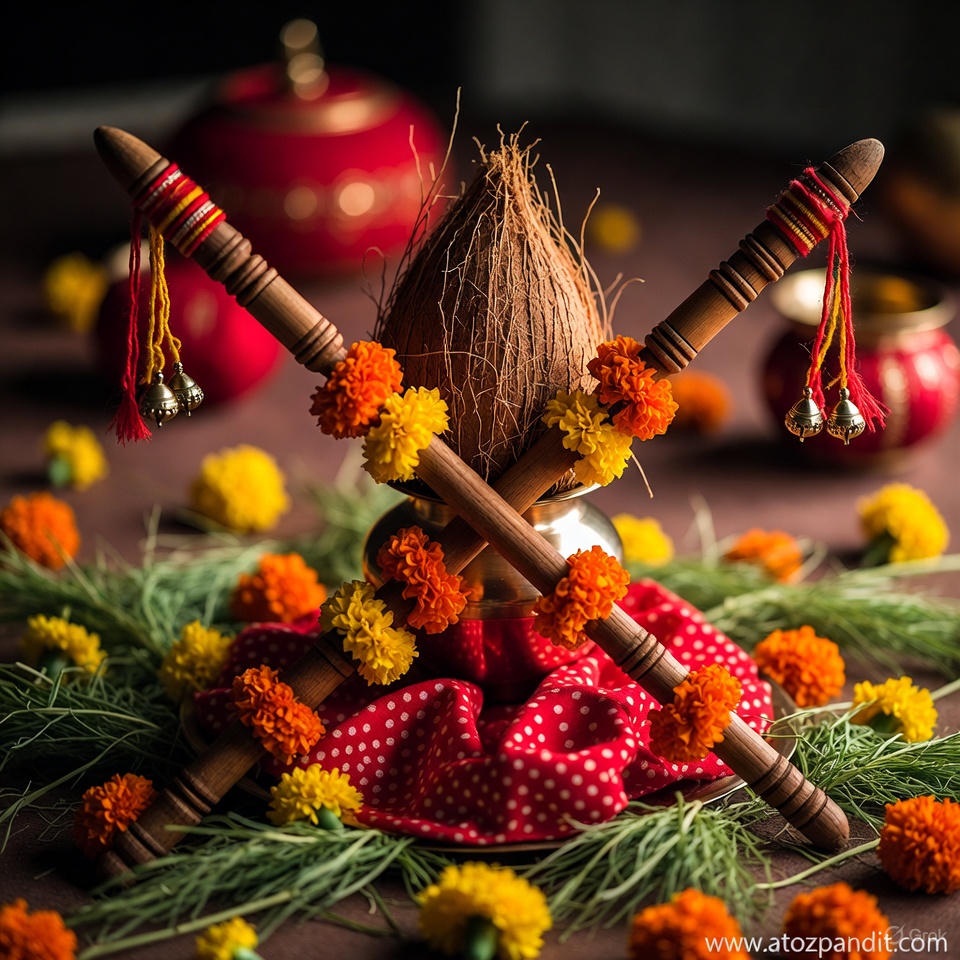
Whether you are in Kolkata where Durga Puja defines the city for five days, or in Toronto where you want to honour the Goddess from your apartment with the same sincerity as a temple in Varanasi, the essence of the Navratri Pooja is identical in both places. It rests on Mantra — the specific Devi Mahatmyam chapters, the Argala Stotram, and the Kavacham that create the Goddess’s protective presence; on Samagri — the specific flowers, sindoor, red cloth, and offering items associated with each form; and on Sankalpa — where your name, Gotra, and location are formally taken, invoking the Goddess’s attention to your household.
Our Pandit also guides you through any alternate Shastric solutions or regional variations relevant to your family tradition, ensuring the vidhi is fully personalised to your needs.
When & How This Pooja Helps Your Life
Durga and Navratri Pooja is performed during Sharad Navratri (Ashvina Shukla Pratipada to Navami, typically September to October) and Chaitra Navratri (March to April). According to the Devi Mahatmyam, sincere worship of the Goddess brings:
• Fearlessness and Courage in Difficult Times: Maa Kalaratri, the seventh form, is specifically invoked for the dissolution of fear — whether the fear is of illness, financial collapse, relationship breakdown, or the deeper existential fears that paralyse action. The Devi Mahatmyam promises that one who worships her in this form will not know fear.
• Protection of the Entire Family: Maa Skandamata, the fifth form, is the divine mother in her most protective aspect — the mother who carries her child even as she rides into battle. Her invocation extends the Goddess’s protective presence over every member of the household, including children.
• Removal of Long-Standing Obstacles: Maa Katyayani, the sixth form, is specifically prescribed in the Skanda Purana as the form invoked for the removal of obstacles in marriage, career, and the fulfilment of major life goals.
• Spiritual Accomplishment and Grace: Maa Siddhidatri, the ninth and final form, is the bestower of all eight Siddhis and the nine Nidhis. Worshipping her on Navami completes the nine-day cycle with the highest blessing — the grace of accomplishment in all worthy endeavours.
The Vidhi: Step-by-Step Process of the Ritual
1. Kalash Sthapana (Day 1 only): The sacred vessel is established on the first day of Navratri, invoking all divine energies to be present for the nine-day ceremony — the formal opening of the Navratri window.
2. Daily Devi Avahan: Each day, the specific Navdurga form for that day is formally invited through her individual Dhyana Mantra, welcomed with the specific flowers and offerings associated with her form.
3. Devi Mahatmyam Patha: The appropriate chapters of the Devi Mahatmyam — the first three chapters on Day 1, the middle chapters through Days 2 to 8, and the concluding chapters on Day 9 — are recited by the Acharya.
4. Sankalpa: Your name, Gotra, and home coordinates are formally taken each day, directing the specific day’s Goddess form’s energy to your household.
5. Kumkum Archana: 108 names of the specific day’s Goddess form are recited while offering Kumkum with each name — a deeply devotional act that the tradition describes as the most direct form of personal connection with the Devi.
6. Kanya Puja (Day 9 — Navami only): On the ninth day, the Acharya guides the family in the Kanya Puja — the ritual honouring of young girls as manifestations of the Goddess — the most emotionally and spiritually significant act of the entire Navratri cycle.
7. Havan and Visarjan (Day 9): The Navratri concludes with a Havan and the formal farewell to the Goddess, asking her to return next year while carrying her blessings forward into the family’s life for the months ahead.
Our Pandit also guides you through any alternate Shastric solutions or regional variations relevant to your family tradition, ensuring the vidhi is fully personalised to your needs.
The AtoZPandit.com Advantage & Commitment
AtoZPandit.com has conducted Navratri ceremonies for families across India and in over 30 countries, offering single-day bookings for any of the nine Navdurga forms and complete nine-day packages with the same Acharya throughout. Your booking is confirmed within 15 minutes for each day. For the Kanya Puja on Navami, our Acharya guides the ritual even when no young girls are physically present, offering an appropriate Vedic adaptation for NRI families. We handle the expertise and the technology; you handle the prayers.