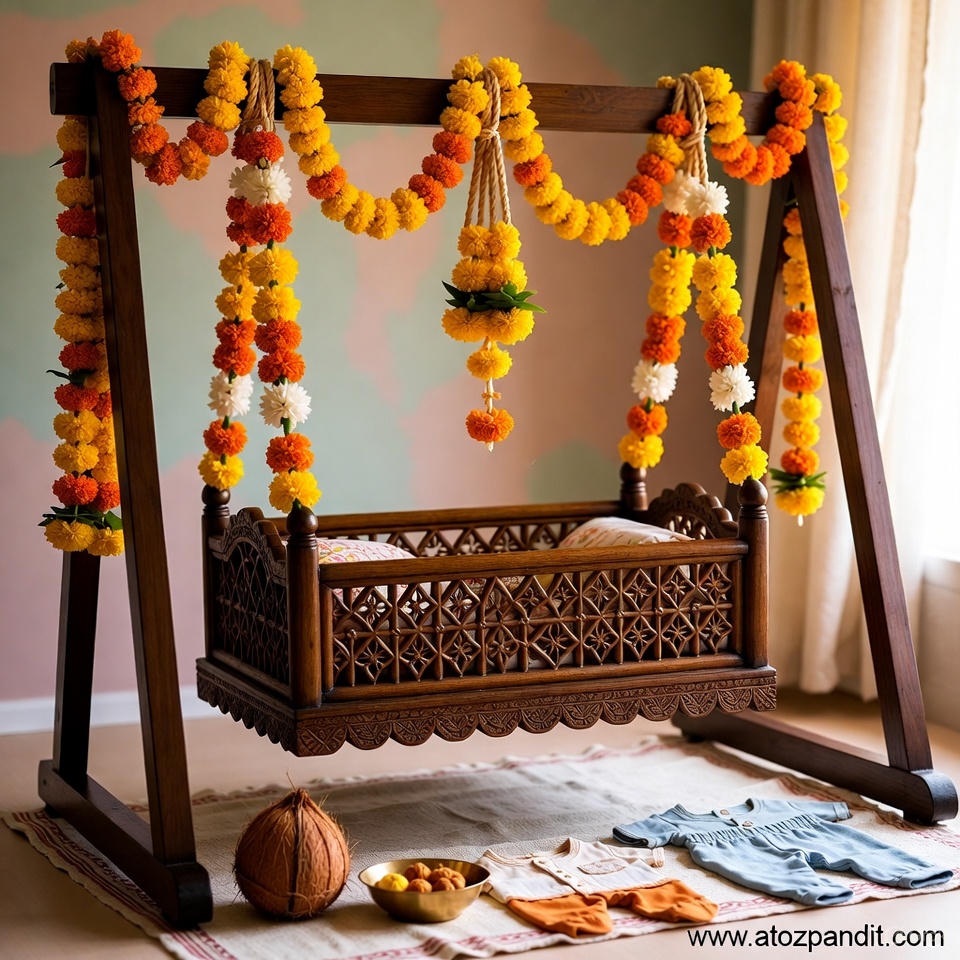
About Godh Bharai (Baby Shower)
The Soul Is Already Listening — Speak to It with Devotion
The Godh Bharai ceremony corresponds to the ancient Simantonnayana Sanskar described in the Grihya Sutras — one of the sixteen essential Vedic rites of passage. Traditionally performed in the seventh or eighth month of pregnancy, it is timed precisely when the child's sensory faculties are developing and the Vedic tradition holds that sound, emotion, and energy experienced by the mother pass directly to the soul being formed within her. The word Simantonnayana means 'the parting of the hair' and the primary deities invoked are Maha Lakshmi for the abundance of nourishment, Aditi — the mother of all gods — for divine maternal protection, and Goddess Shashti for the health and safety of the child. The ritual is as much for the mother as for the child: it places her in a state of joy, community, and divine support during the most physically and emotionally intense period of her life.
Welcoming the Soul Before It Arrives
The Power of E-Pooja: Same Ritual, Same Results
When an expectant mother is far from her family — as so many NRI mothers are — the desire to have a meaningful, traditional Godh Bharai is real and deep. At AtoZPandit.com, we have made this possible without compromise. The ritual's spiritual power rests on Mantra — the specific Grihya Sutra verses that envelope the mother and unborn child in sound and protection; on Samagri — the pure offerings including coconut, sweets, and the traditional Lap-Filling items placed with intention; and on Sankalpa — where the Acharya takes the mother's name, her Gotra, the month of pregnancy, and her home's coordinates, dedicating every mantra to her and the child specifically. Family members in India and across the world join the same live video session, ensuring the mother feels surrounded by love regardless of geography.
Our Pandit also guides you through any alternate Shastric solutions or regional variations relevant to your family tradition, ensuring the vidhi is fully personalised to your needs.
When & How This Pooja Helps Your Life
Godh Bharai is performed in the seventh or eighth month of pregnancy, ideally during a Shukla Paksha (waxing moon) day. According to the Grihya Sutras, this ritual brings:
• Sacred Protection for Mother and Child: Aditi, the mother of the gods, is specifically invoked to place her protective arms around the mother during the final vulnerable months of pregnancy, shielding her from physical and emotional strain.
• Sattvic Environment for the Growing Child: The ritual creates what the Vedic tradition calls a Sattvic atmosphere around the mother — filled with sacred sound, positive intentions, and collective blessing — which is believed to influence the temperament and well-being of the child being formed.
• Ancestral Blessings for the New Generation: The family's ancestors and Kuldevata are formally invited to welcome the incoming soul into the lineage — acknowledging the child as a continuation of something much larger than any individual family.
• Emotional Strength and Joy for the Mother: The ceremony places the mother at the centre of collective love and community support, which the Vedic tradition recognises as essential nourishment during the third trimester, when anxiety and physical difficulty are most acute.
The Vidhi: Step-by-Step Process of the Ritual
1. Ganesh Puja: Lord Ganesha is invoked first to remove all obstacles from the mother's remaining pregnancy and from the child's entry into the world.
2. Sankalpa: The Acharya takes the mother's name, her Gotra, the month of pregnancy, and home coordinates — formally dedicating the ritual to her and to the child.
3. Aditi and Shashti Avahan: The divine mother Aditi and Goddess Shashti — the protector of children — are specifically welcomed and asked to remain with the mother through the remainder of the pregnancy.
4. Raksha Mantra Chanting: Specific protective verses from the Grihya Sutras are chanted to form a spiritual shield around the mother and child, particularly against negative energies and the stresses of the environment.
5. Lap-Filling Ritual: Auspicious items — coconut, fruits, sweets, and flowers symbolising abundance and joy — are placed in the mother's lap as a traditional symbol of filling her life and her child's life with fullness.
6. Suhaag Items and Blessing: Sindoor, Bangles, and traditional Suhaag items are offered to the mother as blessings from the women of the family, symbolising the community's support for her through this passage.
7. Aarti and Prasad: The ceremony closes with an Aarti for the mother and child together, and the distribution of sweets as prasad among all participants, celebrating the joy of the new arrival to come.
The AtoZPandit.com Advantage & Commitment
AtoZPandit.com has performed Godh Bharai ceremonies for expectant mothers in India and abroad, understanding the particular importance of this milestone when family cannot be physically present. Your booking is confirmed within 15 minutes. The full samagri list, including the Lap-Filling items and any regionally specific requirements for your tradition, is shared within 24 to 48 hours. Extended family across any number of locations can join the same live session. For mothers who wish to combine this with an Ayushya Homam for the child's health and longevity, our Free Second Opinion service provides guidance at no charge. The 15-minute refund process protects your booking in all circumstances. We handle the expertise and the technology; you handle the prayers.