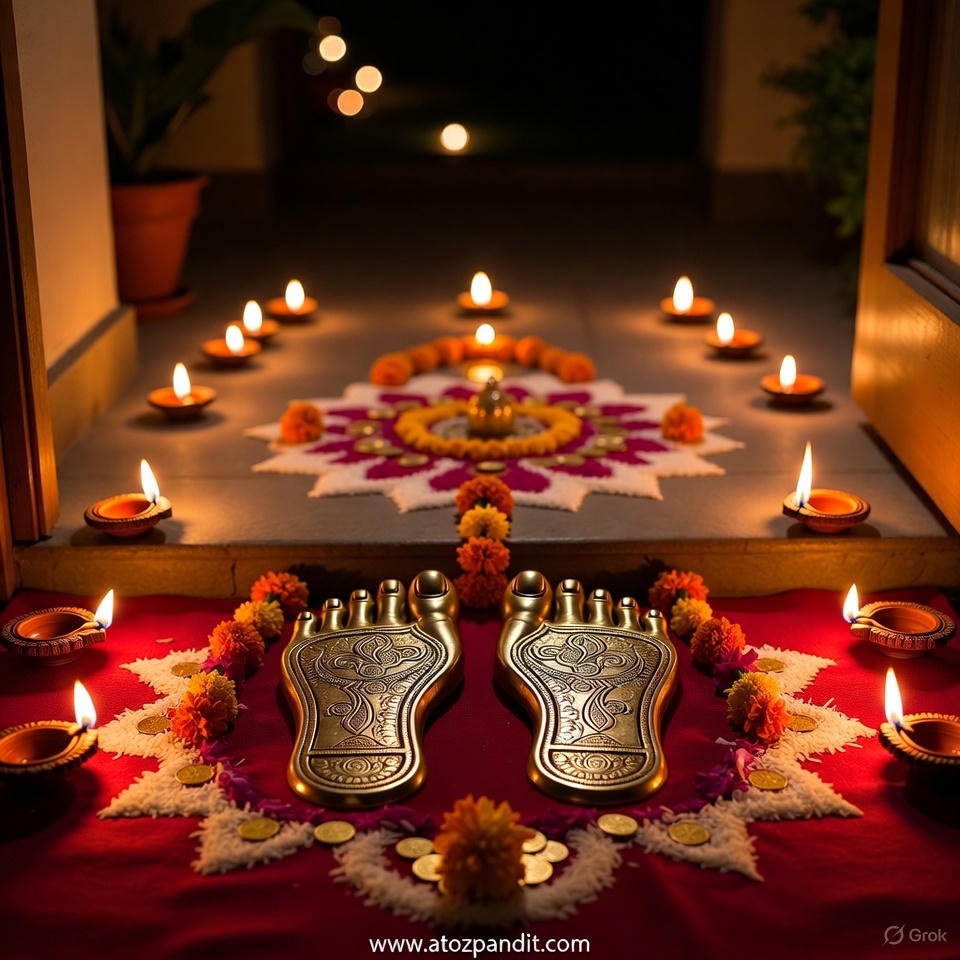
About Laxmi Diwali Pooja
Making Your Home Worthy of Lakshmi’s Permanent Presence
The standalone Laxmi Pooja draws exclusively from the Sri Suktam of the Rig Veda, the Lakshmi Tantra, and the Mahalakshmi Ashtakam. Where the Diwali Special Pooja is a broad household ceremony invoking three deities for abundance, protection, and the blessing of financial instruments, the Laxmi Pooja is an intimate, focused, meditative act of devotion directed exclusively to Goddess Lakshmi in her Mahalakshmi form. The Sri Suktam — sixteen verses of the Rig Veda that are the most ancient and potent hymn composed in Lakshmi’s honour — forms the ceremonial heart. The Lakshmi Sahasranama, the thousand names of the Goddess, is chanted to invoke all eight forms of her abundance: Adi Lakshmi (the primordial), Dhana Lakshmi (financial), Dhanya Lakshmi (food and nourishment), Gaja Lakshmi (power and strength), Santana Lakshmi (family and progeny), Veera Lakshmi (courage), Vidya Lakshmi (knowledge), and Vijaya Lakshmi (victory).
The Power of E-Pooja: Same Ritual, Same Results
There is a reason the Sri Suktam has been chanted for thousands of years without interruption — it is the Rig Veda’s direct address to Goddess Lakshmi, composed by Seers who understood that abundance is not demanded but invited. The Laxmi Pooja’s power comes from Mantra — the Sri Suktam chanted with correct Vedic tonal precision, each of the sixteen verses addressed to a specific aspect of Lakshmi’s eight-fold abundance; from Samagri — the lotus flowers, Kheel, Batasha, and fresh coins placed before the Goddess; and from Sankalpa, where your name, Gotra, and home coordinates are formally taken, presenting your household to Lakshmi as a specific, named, and sincerely prepared residence.
Our Pandit also guides you through any alternate Shastric solutions or regional variations relevant to your family tradition, ensuring the vidhi is fully personalised to your needs.
When & How This Pooja Helps Your Life
Laxmi Pooja is performed on Kartika Amavasya (Diwali night) during the Pradosh Kaal, and also on every Purnima, every Friday evening (Shukravar Pooja), and whenever a family wishes to renew their connection with the Goddess of abundance. According to the Sri Suktam and Lakshmi Tantra, this ceremony brings:
• All Eight Forms of Lakshmi’s Abundance: The Lakshmi Sahasranama specifically invokes all eight manifestations of the Goddess — not just financial wealth but the full spectrum of abundance that sustains a meaningful life: nourishment, knowledge, courage, family, victory, power, and the primordial grace that underlies all.
• Lakshmi’s Permanent Residence: The Sri Suktam’s culminating verses ask Lakshmi not merely to visit but to stay — to take up permanent residence in the family’s home and heart. The ceremony is an invitation extended with full preparation and sincerity.
• Harmony Between Wealth and Dharma: The Lakshmi Tantra specifically teaches that Lakshmi stays only in homes where wealth is earned and used ethically. The Laxmi Pooja is therefore as much a commitment to ethical conduct as it is a prayer for abundance.
• Protection from Alakshmi (Poverty and Misfortune): The opposing force to Lakshmi in the Vedic tradition is Alakshmi — the energy of misfortune, poverty, and negativity. The Sri Suktam’s specific protective verses address both the invitation of Lakshmi and the removal of Alakshmi from the household.
The Vidhi: Step-by-Step Process of the Ritual
1. Ganesh Smarana: A brief invocation of Lord Ganesha at the very beginning — not a full Ganesh Puja but a remembrance, clearing the path for Lakshmi’s arrival.
2. Lakshmi Avahan via Sri Suktam: The sixteen verses of the Rig Veda’s Sri Suktam are chanted in full by the Acharya, each verse formally inviting one aspect of Lakshmi’s abundance into the home.
3. Sankalpa: Your name, Gotra, and home coordinates are formally taken, presenting your household to Lakshmi as a specific, named, and sincerely prepared residence.
4. Shodashopachara Puja: Lakshmi is worshipped through the sixteen traditional acts of hospitality — seat, water, garment, flowers, incense, lamp, food, and more — treating the Goddess as a cherished and honoured guest.
5. Lakshmi Sahasranama Patha: The thousand names of the Goddess are recited, invoking all eight forms of her abundance by name and by specific quality.
6. Lotus and Kheel-Batasha Offering: Fresh lotus flowers — Lakshmi’s own flower — along with Kheel and Batasha and fresh coins are offered with specific intentions for the family’s prosperity in the year ahead.
7. Sri Suktam Aarti and Diya Lighting: The ceremony closes with a focused Lakshmi Aarti followed by the lighting of the principal Diya at the home’s main entrance — the formal signal to the Goddess that this home is illuminated and ready.
Our Pandit also guides you through any alternate Shastric solutions or regional variations relevant to your family tradition, ensuring the vidhi is fully personalised to your needs.
The AtoZPandit.com Advantage & Commitment
AtoZPandit.com performs the dedicated Laxmi Pooja for families who seek a deeper, more intimate Lakshmi ceremony on Diwali night and throughout the year. Your booking is confirmed within 15 minutes and the Pradosh Kaal Muhurat for your time zone is calculated and shared. The full samagri list — including the lotus flowers, Kheel, Batasha, and coins — is shared within 24 to 48 hours. We handle the expertise and the technology; you handle the prayers.