About Narayan Bali Pooja
Completing What Death Left Unfinished
The Narayan Bali Pooja finds its authority in the Garuda Purana and the Skanda Purana's Tirtha Mahatmya, both of which describe specific categories of departed souls who require this extended ceremony rather than regular ancestral rites. The Garuda Purana identifies these as souls who died by violent or accidental means, who died far from their homeland, who died by water, who died without last rites, or who died having made unfulfilled vows. Without the Narayan Bali, the Puranas describe these souls as remaining in a state of unrest — neither reaching Pitru Loka nor moving forward in their spiritual journey. The ceremony takes its name from Lord Vishnu as Narayan, who is invoked as the one who receives and completes the transition of these particular souls. Traditionally performed at Trimbakeshwar in Nashik, the ceremony is actually a three-part structure: the Narayan Bali itself for unnatural deaths; the Nagbali for ancestral karma related to the inadvertent harming of serpents across generations; and the Tripindi Shraddh for the completion of three generations of ancestral rites. AtoZPandit.com performs the complete three-part ceremony with the same Shastric precision that the Trimbakeshwar tradition prescribes.
The Power of E-Pooja: Same Ritual, Same Results
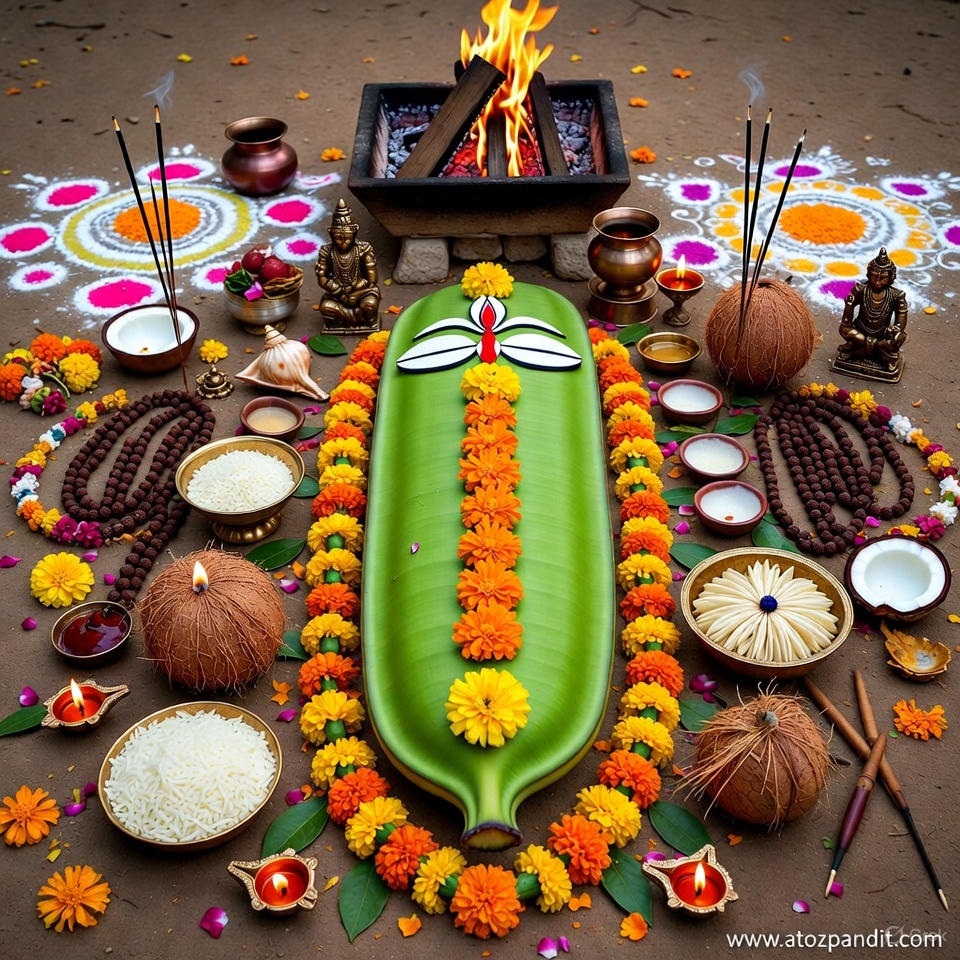
The Narayan Bali Pooja is one ceremony where families ask most urgently whether an online version can carry the weight of what is needed. The Garuda Purana provides the answer through its own logic: the souls who need this ceremony are souls who died far from home, in unfamiliar places, without their family present. The divine force of this ritual reaches across distance by its very nature. What matters is the Mantra — the specific Narayan Bali sequences from the Garuda Purana, the Nagbali mantras, and the Tripindi Shraddh recitations performed with correct Vedic tonal precision. The Samagri includes the symbolic effigy (Krusha Purusha) made from the darbha grass that represents the departed soul, the Pind offerings, and the specific materials for all three components. The Sankalpa formally takes the departed person's name, their approximate date and manner of death, your family Gotra, and your home coordinates, presenting the unfinished departure to Lord Vishnu for completion.
Our Pandit also guides you through any alternate Shastric solutions or regional variations relevant to your family tradition, ensuring the vidhi is fully personalised to your needs.
When & How This Pooja Helps Your Life
Narayan Bali Pooja is performed when a family member died by accident, drowning, suicide, in a foreign land, without proper last rites, or at a very young age. It is also performed when a family experiences persistent unexplained difficulties that a Vedic astrologer has attributed to the unrest of a specific departed soul. According to the Garuda Purana, the ceremony achieves:
• Release of the Departed Soul from Unrest: The Garuda Purana describes souls of unnatural death as being held in a state of Preta — an incomplete departed state — until the proper rites are performed. The Narayan Bali formally completes their transition, allowing the soul to enter Pitru Loka and continue its journey with the peace it was denied at death.
• Resolution of the Family's Grief and Guilt: One of the most important functions of this ceremony — though rarely spoken about — is the healing it brings to the living. Families of those who died suddenly or violently carry enormous grief and sometimes guilt about the rites not performed. The Narayan Bali provides a formal, complete, and Shastrically valid act of love and completion for the departed.
• Clearing of the Ancestral Line's Karmic Residue: The Tripindi Shraddh component of the ceremony specifically addresses three generations of ancestors who may not have received complete rites — clearing the accumulated ancestral incompleteness that the Garuda Purana describes as one of the causes of persistent family difficulties.
• Restoration of the Family's Forward Movement: The Skanda Purana describes families who performed this ceremony after an unnatural death as experiencing a perceptible restoration of positive energy and forward movement in their lives — as if a weight that had been pressing on the family was formally lifted through the ritual's completion.
The Vidhi: Step-by-Step Process of the Ritual
1. Sankalpa with Departed's Details: The ceremony opens with the most important Sankalpa in the ancestral ritual tradition — the departed person's name, approximate date of death, manner of death, and your family's Gotra and home coordinates are formally presented to Lord Vishnu as Narayan.
2. Krusha Purusha Preparation: A symbolic effigy of the departed soul is created from Darbha grass — the sacred Kusha grass — by the family members at home as directed by the Acharya. This effigy is the physical representation of the soul in the ceremony.
3. Narayan Bali Ritual: The main ceremony addresses the departed soul directly through specific Garuda Purana sequences, formally offering the soul to Lord Vishnu's care and asking him to receive and complete their transition with compassion.
4. Pind Daan for the Departed: Rice ball offerings representing the departed soul's nourishment are made — giving the soul the sustenance the Vedic tradition holds it needs to make the transition from the Preta state to Pitru Loka.
5. Nagbali Component: The second part of the ceremony addresses ancestral karma related to the harming of serpents, a karmic debt the Skanda Purana identifies as carried across generations and specifically addressed at Trimbakeshwar.
6. Tripindi Shraddh: The third component performs condensed Shraddh rites for three generations of ancestors who may not have received complete rites, clearing the accumulated deficit across the family lineage.
7. Visarjan and Narayan Aarti: The ceremony closes with the formal release of the Krusha Purusha effigy as directed by the Acharya, followed by the Narayan Aarti that formally entrusts the departed soul to Lord Vishnu's eternal care.
The AtoZPandit.com Advantage & Commitment
AtoZPandit.com has performed Narayan Bali Poojas for families across India and in over 25 countries, understanding the profound emotional weight this ceremony carries and treating it with the seriousness and compassion it deserves. This is one of our most senior Acharya ceremonies — your booking assigns a specialist in Garuda Purana ritual tradition. Your booking is confirmed within 15 minutes. The complete three-part samagri list is shared within 24 to 48 hours, with specific guidance on the Krusha Purusha preparation and the Pind Daan materials. For families unsure whether Narayan Bali or a simpler Pitru Dosh Nivaran is appropriate for their situation, our Free Second Opinion service provides compassionate guidance at no charge. We handle the expertise and the technology; you handle the prayers.