About Pitru Pooja / Tarpan
The Monthly Conversation That Keeps the Connection Alive
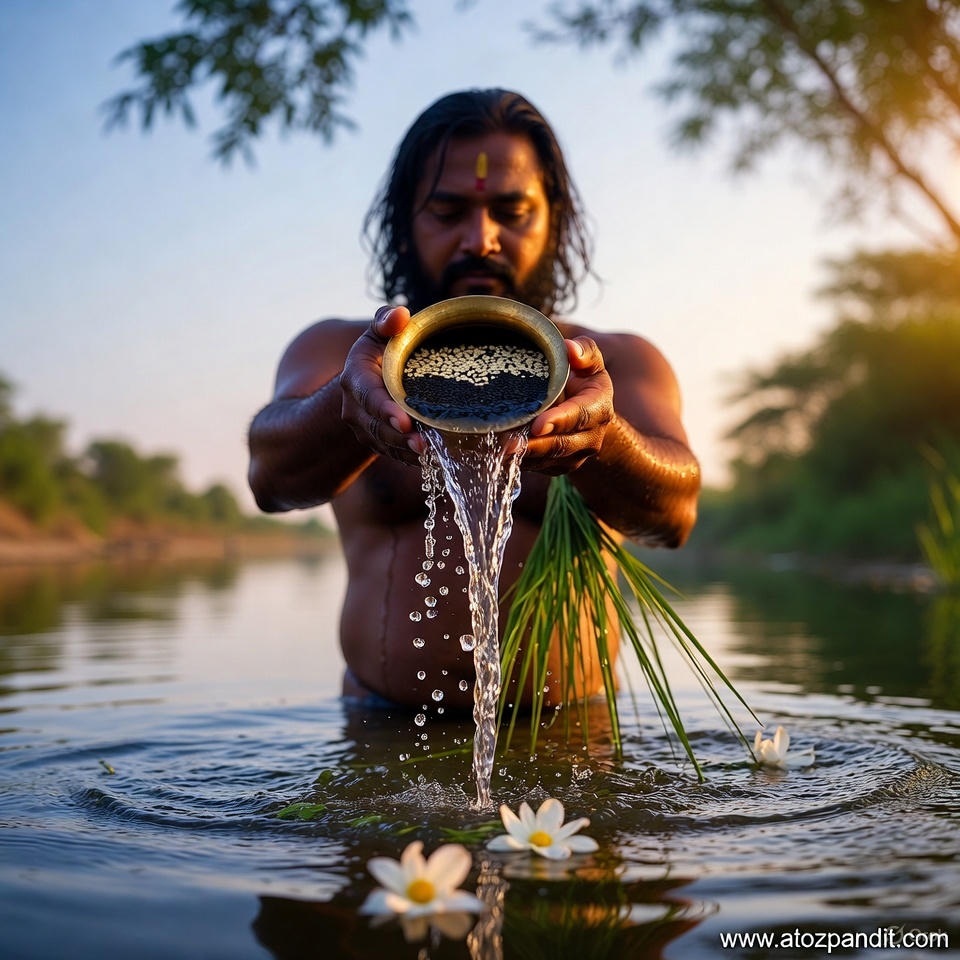
The Pitru Pooja and Tarpan practice finds its authority in the Pitru Sukta of the Rig Veda, the Manusmriti's third book on ancestral rites, and the Grihya Sutras, which together describe the Tarpan as one of the five great daily duties — Pancha Mahayajnas — that a householder owes to the cosmos. The word Tarpan comes from the Sanskrit root Tarpaya, meaning to satisfy or nourish. The offering is structurally simple: water mixed with black sesame, offered from the cupped hands with specific mantras, repeated three times for each generation of ancestors. This simplicity is intentional — the Vedic tradition designed Tarpan to be accessible enough that no family has any excuse not to perform it regularly. The Pitru Pooja expands this into a more complete ceremony that includes the invocation of the Pitru Devatas, the Vishvedeva (the cosmic deities who govern ancestral rites), and the specific naming of known ancestors across three generations. The Manusmriti specifies three separate streams of this offering — Dev Tarpan for the divine forces, Rishi Tarpan for the sages, and Pitru Tarpan for the direct ancestors — creating a complete cosmic acknowledgment that positions the living family within its full lineage.
The Power of E-Pooja: Same Ritual, Same Results
The Tarpan is, by its very design, a ceremony that can be performed anywhere. The Rig Veda's Pitru Sukta does not prescribe a specific location — it prescribes a specific intention. What the tradition requires is that the offering be made with conscious awareness, the correct mantras chanted by a knowledgeable Acharya, and the names of the ancestors spoken with love. At AtoZPandit.com, the Mantra includes the complete Pitru Sukta and the three-stream Tarpan sequence from the Manusmriti, chanted with the correct Vedic tonal form that gives each syllable its full potency. The Samagri is minimal by design — black sesame and clean water are the primary offerings, with the copper vessel that the tradition prescribes as the most appropriate medium. The Sankalpa takes your family Gotra, the names of known ancestors, and your home coordinates, formally presenting your monthly offering to the Pitru Devatas with completeness and love.
Our Pandit also guides you through any alternate Shastric solutions or regional variations relevant to your family tradition, ensuring the vidhi is fully personalised to your needs.
When & How This Pooja Helps Your Life
Pitru Pooja and Tarpan is performed on every Amavasya (New Moon day), during the sixteen days of Pitru Paksha, on the death anniversaries of specific family members, and on solar and lunar eclipse days when the Pitru veil between worlds is thinnest. According to the Rig Veda and Manusmriti, regular Tarpan:
• Nourishes and Sustains the Departed Ancestors: The Manusmriti describes the sesame-water offering as the food of the Pitrus — the substance that reaches them in their realm and provides the nourishment they need to continue their spiritual journey with comfort and strength. The simple act of offering this every Amavasya is described as an act of profound filial love.
• Maintains the Flow of Ancestral Blessings to the Living: The Grihya Sutras describe a reciprocal relationship between the living and the departed: when the living nourish the ancestors through Tarpan, the ancestors in turn bestow their blessings on the family's children, health, and prosperity. Regular Tarpan keeps this blessing-flow active and unblocked.
• Fulfils the Pitru Rina — the Ancestral Debt: The Manusmriti identifies the debt to one's ancestors as one of the three great debts every person is born carrying. Regular Tarpan is the prescribed way of acknowledging and repaying this debt with ongoing devotion rather than as a once-a-year obligation.
• Creates a Living Ancestral Practice for Children to Witness: One of the most meaningful aspects of regular Tarpan is what it teaches the next generation. Children who grow up watching their parents offer water to the ancestors with love and respect receive something the Vedic tradition considers as important as any formal education: the knowledge that life is continuous, family is larger than the living, and the departed deserve ongoing honour.
The Vidhi: Step-by-Step Process of the Ritual
1. Achamana and Purification: The ceremony begins with the purification of the participants — the Achamana, or ritual sipping of water, that clears the mind and prepares the person to make an offering with full awareness.
2. Sankalpa: Your family Gotra, the names of known ancestors, the specific Tarpan occasion (Amavasya, Pitru Paksha, death anniversary), and home coordinates are formally taken — presenting the offering with complete intentionality.
3. Dev Tarpan: The first stream of offering — water with sesame and flowers offered to the divine forces as the cosmic context within which the ancestral offering is made.
4. Rishi Tarpan: The second stream — offered to the ancient sages whose knowledge created the tradition of Tarpan itself, acknowledging the chain of wisdom that makes this practice possible.
5. Pitru Tarpan: The third and most personal stream — water with black sesame offered three times each for the father's line and the mother's line, with the names of known ancestors spoken aloud and the traditional Sapind formula used for those whose names are not remembered.
6. Pitru Devata Avahan: The Pitru Devatas are formally invited through the Pitru Sukta of the Rig Veda — the most ancient and potent hymn of ancestral invocation, acknowledging the ancestors as living presences in the cosmic order.
7. Aarti and Closing Prayer: The ceremony closes with a simple Aarti and a prayer asking the ancestors to receive the offering with love, to continue their journey with comfort, and to keep their blessings flowing to the living family members they left behind.
The AtoZPandit.com Advantage & Commitment
AtoZPandit.com performs Pitru Pooja and Tarpan for families across India and in over 30 countries, offering both single-session bookings for specific occasions and monthly Amavasya subscription arrangements for families who wish to establish a regular practice. Your booking is confirmed within 15 minutes. The minimal samagri — primarily black sesame and a copper vessel — is easily sourced anywhere in the world, and the NRI alternatives guide covers all edge cases. For families who do not know their Gotra or their ancestors' names, the ceremony is performed using the complete Sapind formula that covers all unknown ancestors. Our Free Second Opinion service helps families choose between the Tarpan, Shraddh Pooja, and Pitru Dosh Nivaran based on their specific situation. We handle the expertise and the technology; you handle the prayers.