About Rahu-Ketu Shanti Pooja
Understanding the Two Halves of the Same Karmic Serpent
The Brihat Parashara Hora Shastra and the Muhurta Chintamani both describe Rahu and Ketu not as traditional deities but as the severed halves of the serpent Svarbhanu, who drank the nectar of immortality during the Samudra Manthan. Lord Vishnu severed the serpent with the Sudarshana Chakra, but since both halves had already tasted the nectar, they became immortal forces in the sky. Rahu, the head without a body, represents insatiable desire, obsession, unconventional thinking, and worldly ambition — the energy of wanting what you have never had. Ketu, the body without a head, represents detachment, mysticism, past-life completion, and the spiritual pull away from the material world. In the Parashara system, Rahu-Ketu transit is considered one of the most significant triggers of sudden change, unexpected events, and karmic acceleration in a person's life. The Rahu-Ketu Shanti Pooja specifically addresses both forces through their respective Vedic offerings — Durva for Rahu and Kusha grass for Ketu — and through the Naga Devata invocation that connects to the serpent mythology underlying both.
The Power of E-Pooja: Same Ritual, Same Results
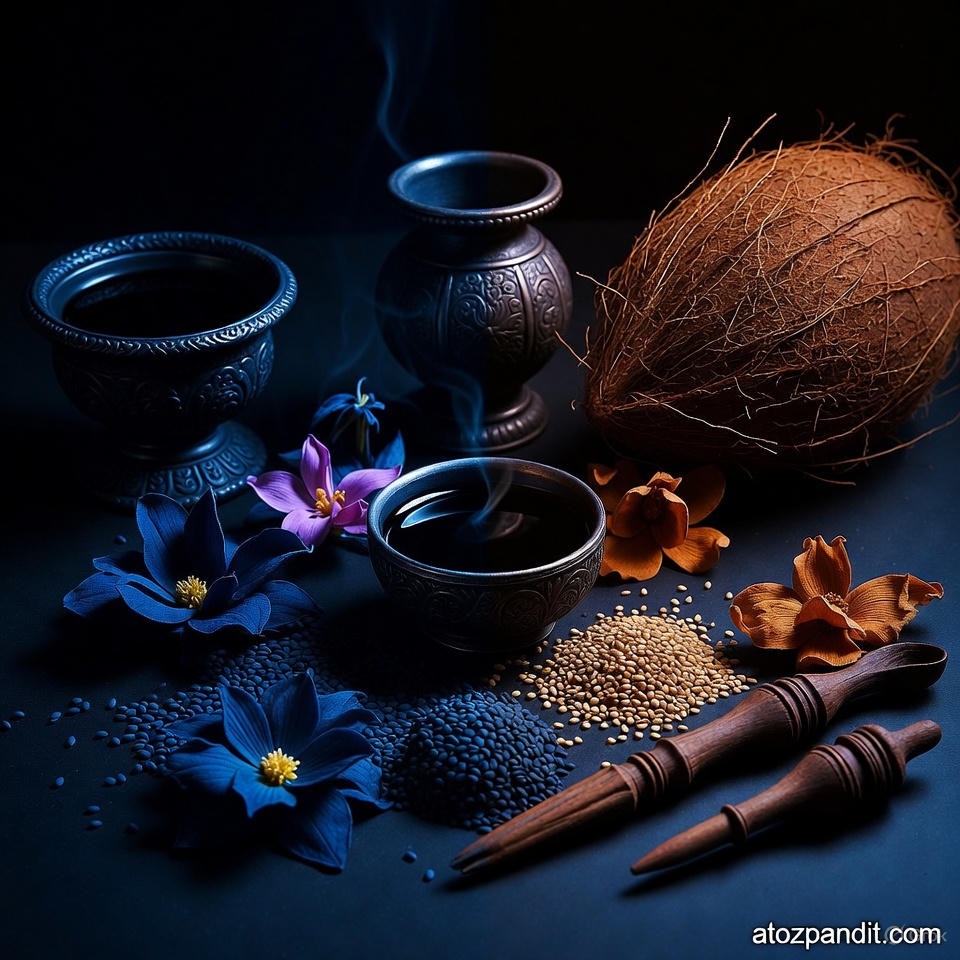
The Rahu-Ketu Shanti Pooja requires precise knowledge of the specific mantras for each shadow planet, their respective offering sequences, and the Naga Devata invocation that forms the ritual's unique backbone. This is a specialist ceremony that not all Pandits are trained to perform with full accuracy. At AtoZPandit.com, the Mantra sequence includes the Rahu Kavacham, the Ketu Kavacham, the Rahu-Ketu Stotram from the Brihat Parashara tradition, and the Naga Devata invocation performed in the correct order. The Samagri includes Durva grass for Rahu and Kusha grass for Ketu, the specific two-coloured offerings (blue-black for Rahu, multi-coloured for Ketu), and the Rahu-Ketu Yantra if being activated. The Sankalpa takes your name, birth Nakshatra, the specific Rahu or Ketu period you are in, and your coordinates.
Our Pandit also guides you through any alternate Shastric solutions or regional variations relevant to your family tradition, ensuring the vidhi is fully personalised to your needs.
When & How This Pooja Helps Your Life
Rahu-Ketu Shanti Pooja is performed during Rahu Mahadasha or Ketu Mahadasha, during the 18-month Rahu-Ketu transit across a sensitive point in the chart, after a solar or lunar eclipse affecting your birth chart, or when sudden, unexplained disruptions are occurring. According to the Parashara tradition, sincere performance brings:
• Reduction of Rahu's Obsessive and Destabilising Effects: Rahu's energy, when unaddressed, tends to create addictive patterns, sudden reversals, and an unstable quality to life's events. The Rahu Kavacham specifically asks this force to channel its ambition constructively rather than destructively.
• Resolution of Ketu's Detachment and Disconnection: Ketu's energy, when unaddressed, can create a pervasive sense of meaninglessness, unexpected losses, and a feeling of being pulled away from one's life's path. The Ketu Kavacham asks this force to complete its past-life resolution work gently rather than abruptly.
• Protection During Eclipse Periods: Solar and lunar eclipses are astronomically the moments when Rahu and Ketu are most active. The Vedic tradition recommends a Rahu-Ketu Shanti in the weeks following a significant eclipse that activates sensitive points in the birth chart.
• Clarity About the Karmic Lesson Being Delivered: The Parashara Hora Shastra teaches that Rahu-Ketu's disruptions are directional — they point the native toward what their soul needs to experience in this lifetime. The Shanti Pooja, combined with reflective self-inquiry, often brings this direction into clearer focus.
The Vidhi: Step-by-Step Process of the Ritual
1. Ganesh Puja: Lord Ganesha is invoked first, as the master of Rahu in specific traditional understandings, and to remove obstacles from the ceremony.
2. Sankalpa: Your name, birth Nakshatra, the specific Rahu or Ketu period, eclipse dates if relevant, and home coordinates are taken.
3. Naga Devata Avahan: The Naga Devatas — the serpent deities who are the cosmic relatives of Rahu and Ketu — are formally invited and asked to mediate the shadow planets' expression with grace.
4. Rahu Puja with Durva Archana: Lord Rahu is worshipped with Durva grass — his specific offering — along with the Rahu Kavacham and 108 names of Rahu, asking his ambition to be directed toward genuine growth.
5. Ketu Puja with Kusha Archana: Lord Ketu is worshipped with Kusha grass — his specific offering — along with the Ketu Kavacham and 108 names of Ketu, asking his detachment energy to bring wisdom rather than loss.
6. Rahu-Ketu Stotram: The combined Rahu-Ketu Stotram from the Parashara tradition is chanted in full — addressing both forces together and asking for the integration of their karmic teaching into the native's life.
7. Aarti and Shantipath: The ceremony closes with a Shantipath — a peace invocation specifically addressing the shadow planets — asking them to complete their work with minimal disruption to the native's daily life.
The AtoZPandit.com Advantage & Commitment
AtoZPandit.com offers Rahu-Ketu Shanti Pooja through Acharyas specifically trained in Parashara Jyotish ritual tradition, ensuring the correct sequence for both shadow planets. Your booking is confirmed within 15 minutes. The full samagri list including Durva, Kusha, and the two-coloured offerings is shared within 24 to 48 hours. For families uncertain whether their situation is primarily Rahu-driven or Ketu-driven, our Free Second Opinion service reviews the birth chart and identifies the specific axis of concern. Eclipse-period bookings are accommodated with priority scheduling. We handle the expertise and the technology; you handle the prayers.