About Shraddh Pooja
The One Day in the Year When the Departed Are Closest — And They Know If You Remembered
The Shraddh Pooja is described with extraordinary detail in the Manusmriti's third book, the Garuda Purana, and the Yajnavalkya Smriti — making it one of the best-documented Vedic ceremonies in existence. The word Shraddh comes from the Sanskrit Shraddha, meaning faith and sincere offering — the ceremony is named not for what is done but for the quality of heart with which it must be done. The Manusmriti describes the death Tithi — the lunar date of a person's death — as a cosmically significant window in which the departed soul's awareness turns toward its living descendants with particular clarity. The Garuda Purana adds that the ancestors specifically wait for this day's offering, and that a Shraddh performed with love and correct procedure reaches them with a completeness that the regular monthly Tarpan does not match. The ceremony is built around three acts: the Vishvedeva Pooja, which invokes the cosmic deities as witnesses; the Pind Daan, the offering of rice balls that represents the nourishment of the departed soul's subtle body; and the symbolic feeding of Brahmins or, in modern adaptations, the equivalent charitable offering — because the Manusmriti describes satisfied guests at a Shraddh as the conduit through which the ancestors actually receive the offering.
The Power of E-Pooja: Same Ritual, Same Results
For NRI families, the Shraddh Pooja is the ceremony most often described to us as the one they feel most guilty about missing. A parent dies in India. The children are in London or New York. The death Tithi arrives each year and they do not know how to observe it from abroad, or they defer it, or they feel the distance makes it impossible to do properly. AtoZPandit.com exists precisely for this moment. The Mantra — the Shraddh sequences from the Manusmriti and Yajnavalkya Smriti, the Vishvedeva invocations, and the Pind Daan mantras — are chanted with the correct Vedic tonal form. The Samagri includes the rice for the Pind Daan, sesame, and the specific offering materials. The Sankalpa formally takes the departed person's name, their death Tithi, your family Gotra, and your home coordinates, presenting the annual offering to the Pitru Devatas with the completeness that this important day deserves.
Our Pandit also guides you through any alternate Shastric solutions or regional variations relevant to your family tradition, ensuring the vidhi is fully personalised to your needs.
When & How This Pooja Helps Your Life
Shraddh Pooja is performed on the death Tithi (lunar death anniversary) of each departed family member, and during the sixteen days of Pitru Paksha for those whose death Tithi is not known or for a collective ancestral observance. According to the Manusmriti and Garuda Purana, the Shraddh performed on the correct Tithi:
• Delivers Complete Nourishment to the Departed Soul's Subtle Body: The Garuda Purana describes the Pind Daan as food for the subtle body that the departed soul retains in its transition between lives. The annual Shraddh's Pind Daan is described as delivering a quality of nourishment that the monthly Tarpan alone cannot — it is the full meal to Tarpan's regular sustenance.
• Formally Acknowledges the Departed's Continued Existence: The Manusmriti's prescription of annual Shraddh is rooted in the Vedic understanding that the departed do not simply cease to exist at death. They continue in another realm, aware of their descendants, and the annual Shraddh is the living family's formal acknowledgment of that continued existence and continued relationship.
• Releases the Soul's Accumulated Hunger of the Past Year: The Garuda Purana describes a departed soul as accumulating a kind of spiritual hunger through the year that is satisfied only by the annual Shraddh offering. Families who perform this ceremony consistently describe a sense that they have fulfilled their most important duty to the person they lost.
• Creates the Crow-as-Messenger Tradition — The Most Beloved Sign of the Shraddh: Among all Vedic ceremonies, the Shraddh has the most beloved folk dimension: the crow, considered the messenger of the Pitrus, is offered the first portion of the Pind Daan food. The arrival of a crow to eat this offering is considered a sign that the ancestor received the offering directly. This tradition, preserved across millennia of Indian households, is as much a part of the Shraddh's meaning as its formal Vedic structure.
The Vidhi: Step-by-Step Process of the Ritual
1. Vishvedeva Pooja: The cosmic deities — Vishvedeva — are invoked as the formal witnesses of the ceremony, establishing the divine framework within which the ancestral offering is made valid.
2. Sankalpa with Death Tithi: The Acharya takes the departed person's name, their death Tithi, their relationship to the living participant, the family Gotra, and your home coordinates — presenting the annual offering with complete formal precision.
3. Pitru Devata Avahan: The Pitru Devatas and the specific departed soul are formally invited to receive the day's offering through the Pitru Sukta verses and the Shraddh Avahana mantras.
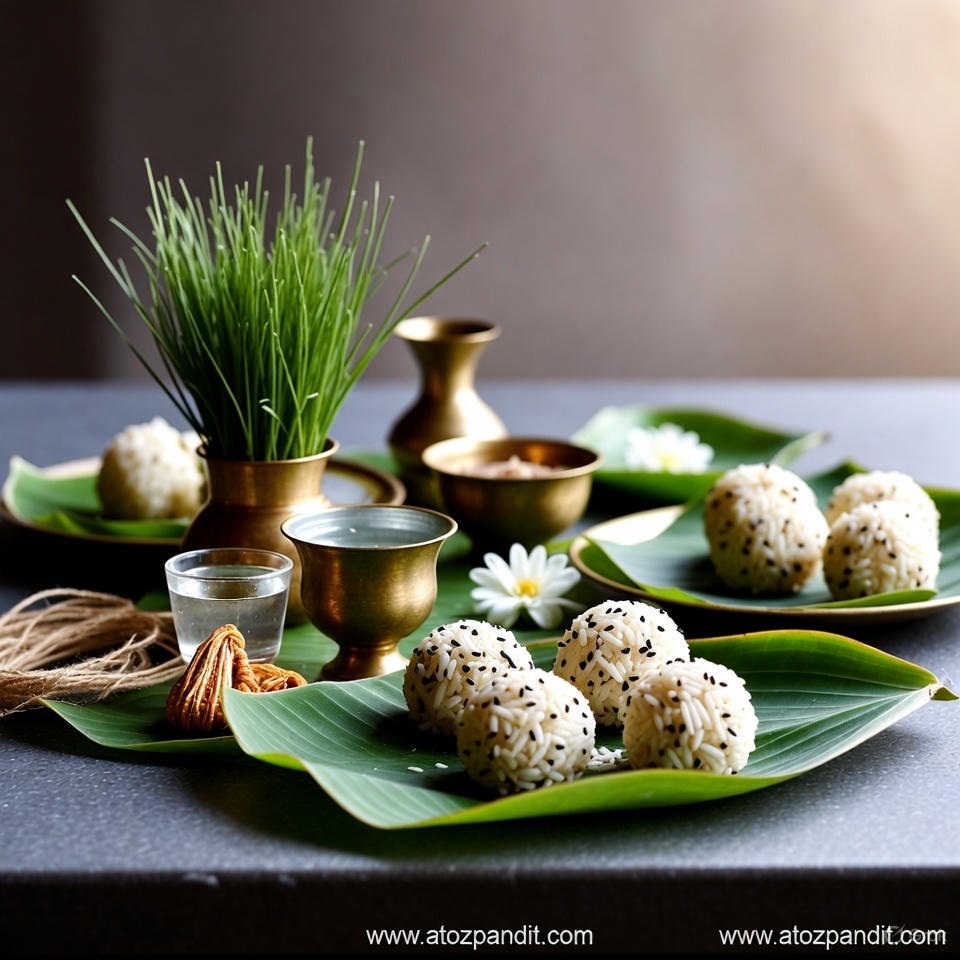
4. Pind Daan: Rice balls representing the nourishment of the departed soul are prepared at your home as directed by the Acharya and formally offered with the Pind Daan mantras from the Manusmriti — the ceremony's most important physical act.
5. Crow Offering (Kaka Bali): A portion of the food is formally set aside and offered to the crow as the Pitru messenger — the Acharya guides the placement and the brief mantras that complete this beloved and ancient tradition.
6. Tarpan: The water and sesame offering sequence is performed within the Shraddh context, completing the triple offering of food (Pind), water (Tarpan), and witness (Vishvedeva) that the Shraddh requires.
7. Brahmin Feeding (Symbolic) and Closing Dakshina: The symbolic charitable offering or Dakshina that replaces the traditional Brahmin meal in modern practice is made as directed by the Acharya, formally completing the Shraddh's three-part obligation and closing the ceremony with love.
The AtoZPandit.com Advantage & Commitment
AtoZPandit.com has performed Shraddh Poojas for families across India and in over 30 countries, understanding that for many NRI families this is the ceremony that carries the most personal weight — the annual duty that they have perhaps deferred for years and are finally ready to perform. There is no judgment in our process, only welcome. Your booking is confirmed within 15 minutes. The death Tithi is calculated from the English calendar death date if you provide it and do not have the Hindu calendar date. The complete samagri list including Pind Daan ingredients is shared within 24 to 48 hours. For families who do not know the exact death date, the Mahalaya Shraddh performed during Pitru Paksha covers all ancestors of unknown death date. Our Free Second Opinion service helps families navigate the different ancestral ceremony options with compassion. We handle the expertise and the technology; you handle the prayers.