About Wedding Rituals Pooja
A Cosmic Contract Witnessed by Fire
The Vivah Homa is described in the Rigveda’s Vivaha Sukta, the Manusmriti, and the Grihya Sutras of Ashvalayana and Gobhila as the most significant of the sixteen Vedic Samskaras. The Sanskrit word Vivah means ‘to carry across’ — not just physically, but karmically. The marriage ceremony carries two souls across the threshold of individual life into the realm of shared dharma, shared responsibility, and shared spiritual evolution. Lord Agni, the fire deity, is the eternal and incorruptible witness of this transition. The Kanyadaan, in which the father formally places his daughter’s hand into the groom’s, is considered one of the most meritorious acts a parent can perform in any lifetime. The Saptapadi, the seven steps around the sacred fire, is the moment at which the marriage is spiritually and legally binding in the Vedic tradition. Each step carries a vow — for food, for strength, for prosperity, for wisdom, for children, for health, and for eternal friendship. These seven vows, spoken before Agni, are not forgotten when the ceremony ends.
Seven Steps, Seven Vows, One Lifetime
The Power of E-Pooja: Same Ritual, Same Results
For couples whose families span continents, whose venue is abroad, or who wish to have a Vedic Acharya guide their ceremony from India while they celebrate in London, Toronto, or Sydney, AtoZPandit.com makes the Vivah Homa fully accessible without spiritual compromise. The ceremony’s power rests on three absolute foundations. Mantra — the precise verses from the Rigveda’s Vivaha Sukta, chanted with the correct Swaras (tonal inflections) that the tradition holds are essential for the ritual’s completeness. Samagri — the specific Havan offerings, the Sindoor, the Mangalsutra, and the Laja (puffed rice) that the couple offers into the fire. And Sankalpa — where both partners’ names, Gotras, birth Nakshatras, and the wedding’s exact location are taken, formally presenting the union to the divine with complete precision. The physical acts — the Saptapadi, the Sindoor Daan, the Kanyadaan — are performed by the couple and their families at the venue, guided live by the Acharya.
Our Pandit also guides you through any alternate Shastric solutions or regional variations relevant to your family tradition, ensuring the vidhi is fully personalised to your needs.
When & How This Pooja Helps Your Life
The Vivah Homa is performed on the wedding day, at the auspicious Muhurat calculated for the specific couple based on their Janam Kundlis. According to the Grihya Sutras, a properly performed Vivah Homa establishes:
• A Spiritually Complete and Witnessed Union: Lord Agni as the primary witness of the Saptapadi makes the marriage spiritually complete and binding in a way that a civil ceremony alone, by design, cannot provide. This completeness gives the couple and their families a deep sense of finality and sacred legitimacy.
• Dissolution of Past Karmas for Both Partners: The Laja Homa, in which the couple offers puffed rice into the fire together, is specifically designed to burn away the individual karmic residues of both partners’ previous lives, making space for the shared karma they are now building together.
• Establishment of a New Spiritual Household: The Vivah Homa formally creates a new Grihastha Ashram — a householder’s unit that the Vedic tradition recognises as the pillar of society and the space in which dharma, prosperity, love, and liberation are all simultaneously pursued.
• Parental Merit Through the Kanyadaan: The Kanyadaan is described in the Manusmriti as one of the highest meritorious acts a parent can perform. It is not a transaction — it is the ultimate act of trust, in which a parent places their child’s hand in another’s and asks the divine to bless what is being created.
The Vidhi: Step-by-Step Process of the Ritual
1. Ganesh Puja and Nandi Shradh: Lord Ganesha is invoked first, followed by the Nandi Shradh in which the couple’s ancestors are called upon to witness and bless the wedding — connecting the union to all who came before.
2. Vara Puja and Swagat: The groom is formally welcomed by the bride’s family as an honoured guest and future member of their lineage, with specific mantras of acceptance and joy.
3. Kanyadaan: The bride’s parents place her right hand in the groom’s right hand before Agni — the most emotionally significant act of the entire ceremony, described in the Manusmriti as an act of supreme parental devotion.
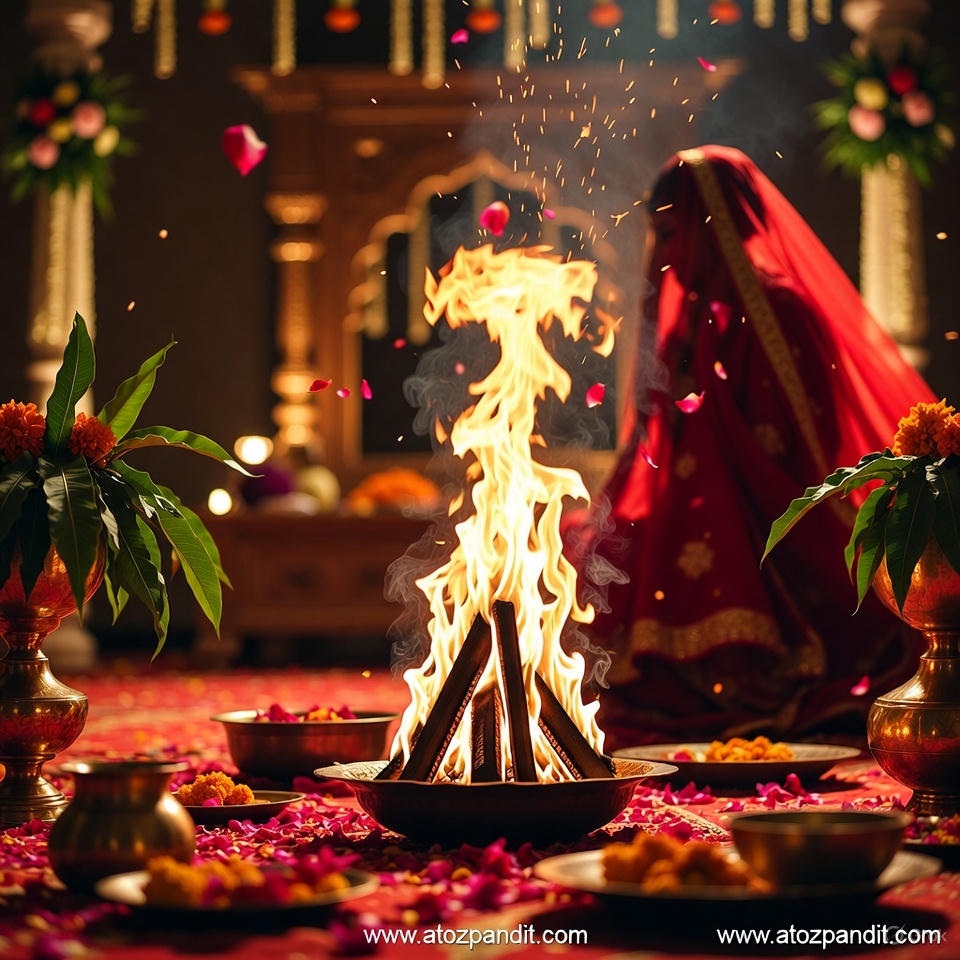
4. Vivah Homa: The sacred fire is lit and the specific Havan offerings from the Rigveda’s Vivaha Sukta are made, asking Agni to witness the union and carry the couple’s vows into the cosmic record.
5. Panigrahana: The groom formally takes the bride’s hand in his own, making the Vedic declaration of acceptance and responsibility that is the essence of the marriage vow.
6. Saptapadi: The seven steps around the sacred fire, each accompanied by a specific vow — for food, strength, prosperity, wisdom, children, health, and eternal friendship. The marriage is spiritually complete upon the seventh step.
7. Sindoor Daan and Mangalsutra: The groom applies Sindoor to the bride’s parting and places the Mangalsutra around her neck, the two visible symbols of the married state in the Hindu tradition.
8. Aashirwad and Aarti: The ceremony closes with blessings from elders and a joint Aarti, formally presenting the newly created couple to their families and to the divine as a complete and recognised household.
Our Pandit also guides you through any alternate Shastric solutions or regional variations relevant to your family tradition, ensuring the vidhi is fully personalised to your needs.
The AtoZPandit.com Advantage & Commitment
AtoZPandit.com has guided Full Wedding Rituals for Indian families in India, the UK, the USA, Australia, Singapore, Canada, and the UAE. Your booking is confirmed within 15 minutes. For such a significant ceremony, our Acharyas conduct a pre-wedding consultation to understand your regional tradition, family requirements, and the specific regional variations you wish to include. The full samagri list is shared at least 48 to 72 hours before the wedding. If any technical disruption occurs during the ceremony, our Technological Continuity protocol immediately addresses it — a wedding ceremony is never abandoned. For families unsure about Muhurat selection or whether a full Vivah Homa or a shorter ceremony suits their situation, our Free Second Opinion service is available at no charge. We handle the expertise and the technology; you handle the prayers.